
Without Food Self-Sufficiency, Indonesian Rice Prices Could Hit Rp20,000/kg
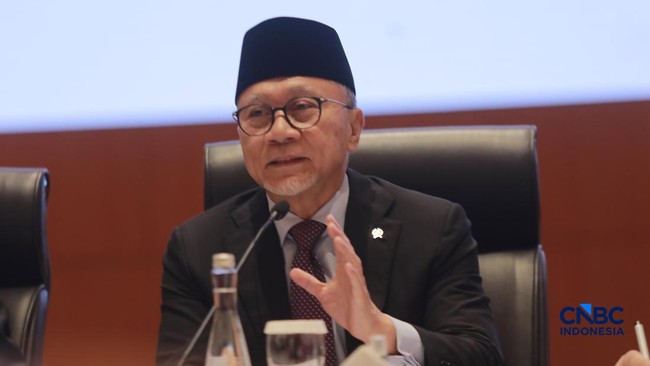
The Coordinating Minister for Food Affairs, Zulkifli Hasan (Zulhas), has warned of the risks that could arise if Indonesia continues to rely on rice imports. According to him, domestic rice prices have the potential to skyrocket to Rp20,000 per kilogram if domestic production is not strengthened.
Zulhas stated that Indonesia has previously been heavily dependent on rice supplies from abroad. In 2024, before the government achieved self-sufficiency, Indonesian rice imports were reported to have reached nearly 4.52 million tonnes.
“If we remain indifferent, our rice prices could reach Rp16,000 or even Rp20,000, while wheat prices remain cheap,” said Zulhas during the launch of the book ‘Indonesian Food: From Healthy Plates to Superior Humans’ at the Jakarta International Convention Centre (JICC), Jakarta, on Friday (4/9/2026).
Zulhas then highlighted changes in the consumption patterns of the Indonesian people. He compared national wheat consumption from when he first became a member of the House of Representatives (DPR) in 2004 to the current situation. At that time, Indonesia’s wheat consumption was around 3-4 million tonnes, but it has now increased to approximately 13 million tonnes.
One factor driving the increase in wheat consumption is the relatively high price of domestic rice. If the price of rice continues to rise while wheat-based products remain cheaper, the public may gradually shift their dietary choices.
“People will switch their diets. Why has wheat risen to 13 million? Because our rice is expensive and wheat is cheap, so they switch. They won’t eat fried rice; they will eat bread because it is cheaper. This will continue. If that happens, we will be very dependent; we certainly won’t be independent,” he said.
This warning comes amidst the issue of relatively high food production costs in Indonesia. Zulhas previously revealed that the cost of producing 1 kg of rice in Indonesia can reach Rp12,000. By comparison, rice production costs in Vietnam and Thailand are reported to be only around Rp3,800/kg.
This issue demonstrates that food security is not measured solely by the availability of rice stocks within the country. The ability of a nation to produce its own food with efficient costs is also a vital component of such independence.
“Food reflects the state of a nation’s civilisation. What a nation is like can truly be seen through this. No country progresses without self-sufficiency,” said Zulhas.
Dependence on food can become a problem when Indonesia requires supplies from other countries during difficult periods. He admitted to having personally experienced a situation during his tenure as Minister of Trade when Indonesia needed rice from abroad.
“I served as Minister of Trade, and during a difficult time, I travelled back and forth to India to buy rice, but they wouldn’t sell it to us; it was extraordinary,” he said.
Source: jawawa.id (https://jawawa.id/newsitem/without-food-self-sufficiency-indonesian-rice-prices-could-hit-rp20-000-kg-1788530094)
Originally published by CNBC Indonesia (https://www.cnbcindonesia.com/news/20260904182837-4-765100/tanpa-swasembada-pangan-harga-beras-ri-bisa-tembus-rp20000-kg), translated from Indonesian