
Without Attacking, China Seeks to Bring Taiwan Closer
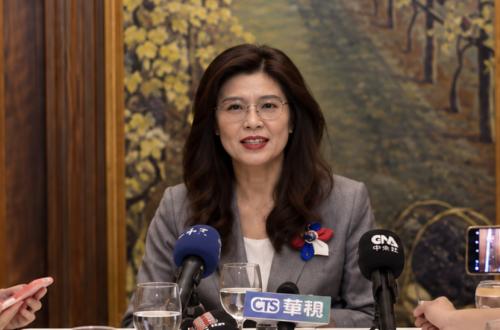
China is not relying solely on fighter jets, warships, and military exercises to pressure Taiwan. Beijing is increasingly expanding its political and information approaches to bring the population of the self-governing island closer to mainland China without necessarily resorting to open warfare first.
One of the clearest examples was seen when Kuomintang (KMT) Chairman Cheng Li-wuhan visited China in April 2026. Cheng received a high-level reception, visited Chinese technology hubs, and ultimately met directly with Chinese President Xi Jinping.
This meeting held significant political weight as the KMT is Taiwan’s main opposition party and traditionally adopts a more open approach to cross-Strait relations compared to the ruling Democratic Progressive Party (DPP).
During the meeting on 10 April, Xi stated that Beijing is willing to expand relations with parties, groups, and various elements of Taiwanese society, provided they are based on the 1992 Consensus and the rejection of Taiwanese independence. Beijing describes this approach as a path towards cross-Strait peace and the improvement of the welfare of both sides.
However, the Taiwanese government views this with suspicion. The Mainland Affairs Council (MAC) has previously warned Taiwanese political figures against becoming instruments of Beijing’s ‘United Front’ strategy, which Taipei claims aims to fracture Taiwanese society and integrate it into a ‘One China’ political framework.
Cheng as a New Bridge
Cheng has become a pivotal figure in cross-Strait political strategy due to his unusual background. He began his political career as a pro-democracy student activist supporting Taiwanese independence. Cheng later left the DPP in the early 2000s to join the KMT, before evolving over the years into a supporter of closer ties with Beijing.
Ahead of his visit to China, Cheng emphasised that KMT policy remains based on two principles: upholding the 1992 Consensus and opposing Taiwanese independence. According to Cheng, cross-Strait dialogue is necessary to demonstrate to the Taiwanese people and the world that Beijing-Taipei relations do not have to end in war.
Cheng also sought to reject the binary choice between Washington and Beijing. “Why can’t I choose both? Why must I choose one?” he remarked regarding the question of whether he is more pro-China or pro-America, as reported by The Wall Street Journal on Monday, 21 September 2026. Cheng stated that Taiwan continues to value its relationship with the United States, but described mainland China as part of a familial bond.
The KMT has denied that closer ties with Beijing mean the party is subservient to China. The party maintains that its policy is oriented towards Taiwan’s interests, the peace and stability of the Taiwan Strait, and the protection of the democracy and way of life of the Taiwanese people.
When the DPP government subsequently criticised the results of Cheng’s visit, the KMT reaffirmed that cross-Strait dialogue is intended to reduce the risk of conflict. The KMT accused the government of being too ideological in its view of interactions with Beijing.
Beijing Does Not Rely Solely on Military Might
Relations with the KMT are only one part of a broader picture. China continues to maintain military pressure around Taiwan. However, Taiwanese security reports indicate that this pressure runs alongside operations in the political, information, cyber, economic, cultural, and social media spheres.
Taiwan’s Ministry of Defence refers to these activities as a combination of military pressure and ‘cognitive warfare’. According to Taipei, Beijing uses propaganda, social media, cyberattacks, and various non-military instruments to influence public perception and exacerbate internal divisions.
Taiwan’s National Security Bureau (NSB) stated that in 2025, it discovered more than 45,000 fake or suspicious social media accounts involved in the spread of information linked to Chinese operations. This figure increased from approximately 28,000 accounts the previous year.
These operations do not always consist of overt calls for Taiwan to join China. Some instead aim to increase distrust towards the Taiwanese government, highlight the island’s military weaknesses, or spread the idea that the United States would ultimately abandon Taiwan if a conflict with China were to break out.
The Wall Street Journal reported on Tuesday, 22 September 2026, the existence of fake AI-based videos that Taiwanese officials have linked to China. The videos manipulated conversations between President Lai Ching-te and Vice President Hsiao Bi-khim with narratives suggesting that Washington might one day abandon Taiwan, while Beijing has consistently denied involvement in disinformation campaigns against the island.