
With the Introduction of 'People's Economy' Trains, Here is the Future of PSO Services
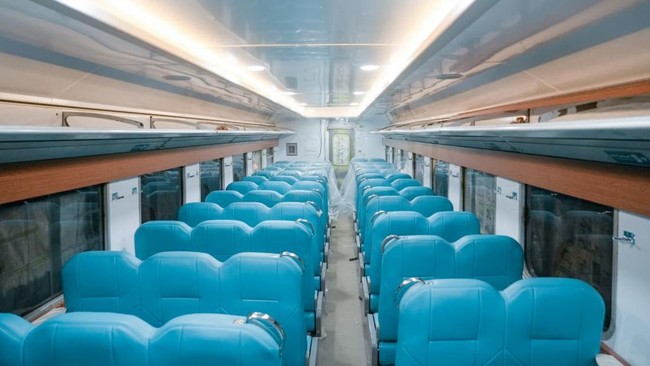
PT Kereta Api Indonesia (Persero) has begun developing railway services based on a ‘people’s economy’ concept. This service targets middle-income communities with more affordable fares while maintaining a large passenger capacity.
KAI President Director Bobby Rasyidin stated that the programme is part of the company’s efforts to provide train travel options that better suit public needs. Since its launch at the beginning of the year, passenger response to this service has been remarkably high.
“At the start of the year, we launched two trains to support the people’s economy. The first is the People’s Economy Class, with a daily capacity of 1,116 and an extraordinary occupancy rate of 155%. The daily average of passengers is 1,729, with a total of 142,566 passengers,” said Bobby during a working meeting with Commission V of the Indonesian House of Representatives (DPR RI), as reported on Saturday.
The development of these people’s economy trains is also linked to plans to reorganise the PSO (Public Service Obligation) fleet. KAI will implement changes to seat configurations to ensure available space is utilised more optimally, while also providing seats that face the direction of travel.
“The initiative for the People’s Economy Train follows instructions from the President for us to begin replacing current PSO trains—which have 106 seats per carriage—to 93 seats, with seating facing the direction of travel,” he added.
This new model will be positioned as its own class alongside existing services. Consequently, the public will have a travel option with fares lower than commercial economy class, yet with a larger passenger capacity.
“We are attempting to create classes for the middle class; for example, the people’s economy class sits below the commercial economy class. If the commercial economy capacity is 72, we are making the capacity 93,” said Bobby.
One service already in operation is the Pasar Senen–Lempuyangan route. KAI has set the fare for this service at Rp125,000, and occupancy levels continue to show high demand.
“It is already running; the Pasar Senen to Lempuyangan route is Rp125,000, and frankly, it is constantly full,” he noted.
KAI is also preparing to expand this service by converting more train sets. This step is part of the company’s plan to expand public access to rail travel at lower costs.
“We plan to convert more than 75 carriages to serve these people’s economy trains,” said Bobby.
On the other hand, the existence of people’s economy trains does not mean that PSO services will be abandoned. On the contrary, KAI is currently coordinating with the Ministry of Transport to ensure that these new services can eventually receive government subsidy support through the Public Service Obligation (PSO) scheme.
“Currently, even without subsidies, we are coordinating with the Ministry of Transport so that these will be subsidised via PSO and will be much cheaper. We believe it will be feasible once calculated,” he said.
Under this scheme, the fares paid by passengers could potentially drop from the current commercial rates. Bobby estimates that fares could fall within the range of the PSO rates currently enjoyed by the public.
“Currently, the PSO rate is around Rp80,000, so eventually, the People’s Economy Train will be Rp80,000 or even lower,” concluded Bobby.
Source: jawawa.id (https://jawawa.id/newsitem/with-the-introduction-of-peoples-economy-trains-here-is-the-future-of-pso-services-1790430704)
Originally published by CNBC Indonesia (https://www.cnbcindonesia.com/news/20260926133908-4-771149/ada-kereta-ekonomi-kerakyatan-begini-nasib-ka-pso), translated from Indonesian