
With Potential for Rare Treasure, Indonesia Has Previously Attracted Interest from UK and Canada
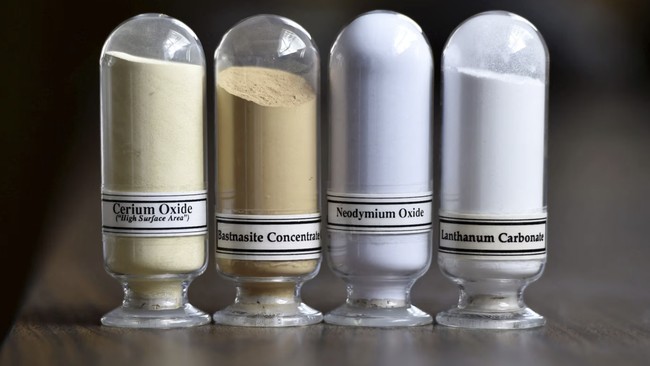
The Indonesian Mining Institute (IMI) has revealed that several global mining companies, ranging from the United Kingdom to Canada, have shown interest in developing Indonesia’s Rare Earth Elements (REE) potential. This interest stems from the vast reserves of critical minerals found as by-products of tin mining, as well as primary deposits, within the country.
Chairman of the Indonesian Mining Institute (IMI), Irwandy Arif, explained that this foreign interest was initiated through several exploration efforts regarding processing technology cooperation with PT Timah Tbk (TINS) several years ago. However, he noted that to date, these commitments have not yielded results or reached commercial agreements.
“I am recounting the early stages of cooperation undertaken by PT Timah with various global companies to process monazite to obtain rare earth elements, uranium, and thorium. There were approximately six such attempts, but no agreement has been reached so far,” he stated during a webinar hosted by the Mineral Industry Agency (BIM).
The British company, Less Common Metals (LCM), is recorded as one of the firms that has explored this potential since 2018. Irwandy noted that the initial plan involved producing rare earth-based metals and alloys by taking samples from PT Timah’s operational areas, but the project’s continuation remains uncertain.
In addition to the UK, interest emerged from the Canada Rare Earth Corporation in 2021, as well as several Malaysian companies. He added that Indonesia also facilitated communications with the Australian company Lynas Rare Earths, which operates a refinery in Malaysia, though these discussions have not yet resulted in realisation.
The lack of significant progress in international cooperation is attributed to challenges in mastering processing technologies that have not yet achieved economies of scale domestically. Currently, the government, through the Mineral Industry Agency (BML), is seeking new partners to optimise the downstreaming of these strategic minerals to ensure they do not merely remain as raw material exports.
Rare Earth Elements (REE) consist of 17 chemical elements in the periodic table with unique magnetic and chemical properties. These are classified into two main groups: light rare earth elements and heavy rare earth elements. The heavy group is rarer and holds much higher economic value.
In Indonesia, REEs are generally found as by-products of other mining activities such as tin, nickel, and bauxite. Minerals containing REEs in the country include monazite, xenotime, and zircon, which are abundant in alluvial tin deposits in the Bangka Belitung Islands. Furthermore, the government recently identified primary REE deposits in Mamuju, West Sulawesi. This discovery is a new focal point because the concentration is significantly higher than that found in by-products, offering Indonesia the opportunity to build its own strategic mineral processing industry.
Research data shows that the Mamuju find contains total REE concentrations of 4,500 to 6,000 ppm, far exceeding the 1,000 to 2,391 ppm found in Bangka Belitung. North Sumatra also holds potential with concentrations between 2 and 1,400 ppm derived from granite weathering. The use of REEs for permanent magnets is a highly strategic sector, as they are essential components for electric vehicle traction motors, wind turbines, and computer hard drives. The usage volume of REE-based magnets is projected to increase from 29% in 2023 to 41% by 2034.