
With No Pupils, Thousands of Japanese Schools Are Being Turned into Factories and Saunas
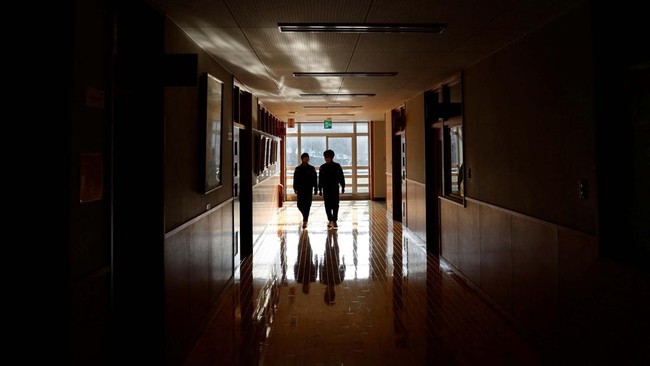
Jakarta, CNBC Indonesia — Japan’s birth rate continues to hit record lows, forcing many schools to close. With no new pupils, buildings that once served as centres of learning are being converted for a range of uses, including data centres, offices, factories, museums and saunas.
Not every former school has found a new purpose. Some buildings remain abandoned because of renovation and maintenance costs, or because no decision has been made about how they should be used.
One example of a former school being repurposed can be found in Genkai, Saga Prefecture. On the second floor of the three-storey building, which housed an elementary school that closed in 2015, rows of large computers are now neatly arranged. The machines are cloud servers that can be accessed online, installed by Highreso Co., a data centre operator headquartered in Tokyo.
Since 2025, Highreso has established data centres in two former schools in Saga and Kagawa prefectures. The company also plans to open another data centre in a closed school in Oga, Akita Prefecture, in 2027.
A Highreso representative explained the importance of making use of school buildings that are no longer in service.
“From the perspective of regional revitalisation, we want to make use of facilities that have been left idle,” the representative said, according to Mainichi, on Wednesday (25 November).
The former school’s new use is not limited to data centre operations. At the company’s site in Kagawa Prefecture, for example, part of the premises also serves as an evacuation facility.
Thousands of schools have closed in Japan
School closures are not a new issue in Japan. A survey by the Ministry of Education, Culture, Sports, Science and Technology of public schools found that an average of around 440 schools have closed each year over the past 20 years.
By 2024, a total of 7,612 schools across Japan had closed, although their buildings or facilities remained standing. Of these, 5,661 schools, or about three-quarters, had been put to other uses.
The new uses are varied. Former schools have become private offices, factories, welfare facilities for older people, art museums, cafés and saunas. Some buildings have even returned to educational use, particularly as facilities for children with special needs.
Japan’s education ministry says these facilities should be used effectively, taking local conditions and needs into account.
However, significant challenges remain. A total of 1,951 schools, or about a quarter of those that have closed, are still unused. For 1,503 of them, no decision has yet been made about the future use of the buildings.
The ageing condition of the facilities, as well as rising prices in recent years, has also made it harder to put them back to use.
Maintenance costs pose a challenge
One example is the former Tokyo Metropolitan Geijutsu High School building in Meguro Ward, which closed in March 2012.
More than 10 years later, no new use has been planned for the building. The local government has even begun planning to demolish it in fiscal 2026.
During this period, the cost of maintaining, managing and cleaning the building has reached around 1.4 million to 1.5 million yen a year, equivalent to US$8,800 to US$9,400.
In Tokyo, there have also been cases in which private businesses expressed interest in using former schools but ultimately abandoned their plans because of surging construction and demolition costs.
Source: jawawa.id (https://jawawa.id/newsitem/with-no-pupils-thousands-of-japanese-schools-are-being-turned-into-factories-and-saunas-1795679457)
Originally published by CNBC Indonesia (https://www.cnbcindonesia.com/lifestyle/20261126120435-33-788660/tak-ada-murid-ribuan-sekolah-jepang-alih-fungsi-jadi-pabrik-dan-sauna), translated from Indonesian