
With Its Screen No Longer Lit, Sinar Theatre Still Holds Traces of Its 1980s heyday
In the heart of Semarapura, Klungkung Regency, Bali, stands a building that preserves fragments of the golden age of the entertainment industry. Sinar Theatre, a legendary cinema that was a favourite in the 1980s in Bumi Serombotan, has been far removed from its heyday for decades.
For older residents of Klungkung, the cinema on Jalan Flamboyan was once the grandest entertainment venue, where people spent their Saturday nights. Long queues of filmgoers stretching into the grounds outside were a familiar sight whenever popular films were screened.
But time could not be stopped. The arrival of recorded cassette tapes, followed by the spread of digital technology and private television stations in the 1990s, gradually displaced the independent cinema owned by Nengah Natha, until it eventually closed.
When detikBali visited the building on 31 October 2026, Nengah Natha’s grandson, 39-year-old Putu Surya Adinatha, explained that his grandfather’s cinema had indeed been the favourite of its day.
“Now it’s like this. I use it as the dojang for the Bintang Muda Club (BMC) Klungkung Taekwondo team,” said Surya, a coach and administrator at the dojang.
Surya took detikBali on a tour of the remaining traces of his grandfather’s cinema. From the outside, the building’s 1980s architecture looks quiet, its paint faded and peeling.
Inside are remnants of swiftlet nests. Surya said the former cinema had once been used to farm swiftlet nests.
Although the building has been repurposed, its history as a centre for cinema in times gone by is still carefully preserved in its rooms.
At the front, the ticket office retains its diagonal-striped wooden panelling, characteristic of the 1980s. A sign reading “SINAR theatre KLUNGKUNG”, an old cigarette advertisement and a film-screening status board still hang above the ticket window, now covered in thick dust.
Nearby, a red-backed noticeboard still bears fragments of 1990s Bollywood film posters, including Izzat Ki Roti and Bhookamp, starring Jeetendra, alongside old pinholes and remnants of tape used for screening schedules.
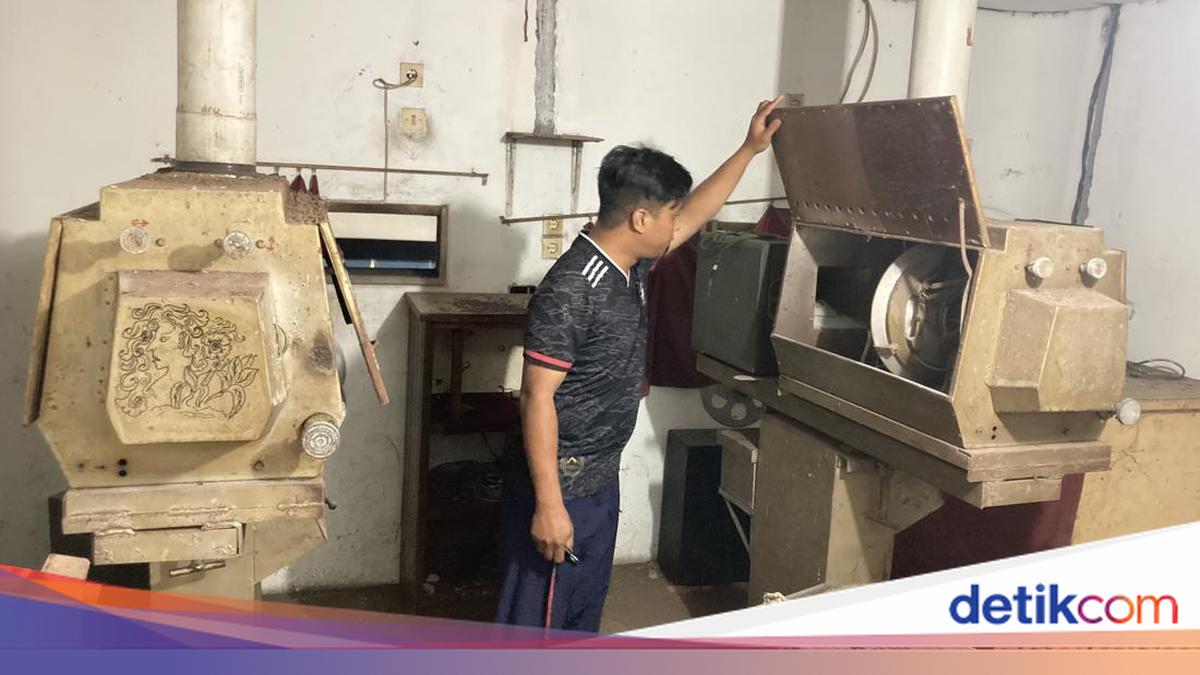
An old poster for an adult film, once a staple of cinemas at the time, is also still on display. Inside the projection room, two large metal analogue film projectors remain in place.
The machines’ compartments, decorated with figurative motifs, and their exhaust chimneys are now coated in thick brown dust after decades out of use.
A blackboard in a wooden frame also hangs in the room, still marked in white chalk with the words: “Work plan – date – time – event – and film”.
In the corner of the wooden table in the archive room, reels of analogue celluloid film lie tangled and piled in an open drawer beside an old, dusty suitcase.
“Yes, it’s all still here. I don’t know whether any of it still works or has stopped working,” Surya said.
The cinema’s main studio, or auditorium, now presents a very different scene. The enormous white screen at the front remains intact in its black frame, surrounded by acoustic walls in dark blue and bright red.
Rows of seats in the balcony still face the stage. The front section is clean and can still be used, but the back rows are covered in thick dust.
The floor at the front, beneath the screen, is now covered with red-and-blue sports mats and actively used as a taekwondo training area. Sinar Theatre stands as a silent witness to the history of culture and entertainment that once flourished in Klungkung.
“If you mention the old cinema, everyone knows this place,” Surya said.
Source: jawawa.id (https://jawawa.id/newsitem/with-its-screen-no-longer-lit-sinar-theatre-still-holds-traces-of-its-1980s-heyday-1793422228)
Originally published by detikBali (https://www.detik.com/bali/berita/d-8732202/layar-tak-lagi-menyala-sinar-theatre-masih-menyimpan-jejak-kejayaan-era-80-an), translated from Indonesian