
With Iran's Blessing, Two Muslim Countries Successfully Bypass the Hormuz Blockade
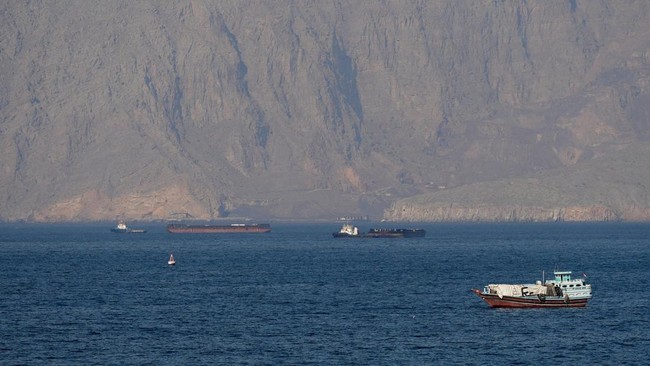
Iraq and Pakistan have reportedly reached secret agreements with Iran to ship crude oil and liquefied natural gas (LNG) through the Persian Gulf. This move provides tangible evidence of Tehran’s ability to control global energy flows amid the tight US blockade and ongoing conflict with Israel in the Strait of Hormuz.
Citing Reuters, the war between the US-Israel and Iran has slashed energy exports from the region, which normally supplies 20% of the world’s crude oil and LNG needs. Although Iran initially sought to halt all traffic through the strait, Tehran’s position has now shifted to full control of access, as stated by Claudio Steuer, an analyst from the Oxford Institute for Energy Studies.
“Iran has shifted from blocking Hormuz to controlling access to it. Hormuz is no longer a neutral transit route, but a controlled corridor,” Steuer said.
Iraq is one of the producers most affected by the strait closure, as nearly all of its crude oil exports depend on that route. Meanwhile, Pakistan, which has attempted to act as a mediator in the conflict, is also facing crippling fuel cost spikes due to its heavy reliance on energy imports from the Gulf.
In an unreported agreement between Baghdad and Tehran, Iraq secured a safe passage for two giant oil tankers (VLCCs), each carrying around 2 million barrels of crude oil on Sunday (10/5/2026).
Currently, the Iraqi government is seeking Iran’s approval for subsequent shipments to salvage state revenues, 95% of which come from oil.
“Iraq is a close ally of Iran, and any economic downturn in Iraq would also damage Iran’s economic interests in the country,” said an Iraqi oil ministry official familiar with the details of the agreement.
Meanwhile, Pakistan has also begun receiving energy supplies through the same route. Two tankers loaded with LNG from Qatar are reportedly en route to Pakistan following a separate bilateral agreement between Islamabad and Tehran to meet the country’s extremely high summer electricity demand.
According to industry sources, Qatar is not directly involved in the bilateral agreement, but Doha had previously informed the United States of the shipment plans. Interestingly, sources also stated that neither Iraq nor Pakistan made direct payments to Iran or the Islamic Revolutionary Guard Corps (IRGC) for this passage permission.
The success of Iraq and Pakistan has sparked interest from other countries, particularly in Asia’s economies, to explore similar deals to avoid supply disruptions. However, Saul Kavonic, head of research at consultant MST Marquee, warned that this phenomenon could provide long-term legitimacy to Iran’s control over the international waters.
“The more governments are willing to make deals with Iran for shipping access, the risk is that it normalises the idea that Iran will control the Strait of Hormuz permanently,” Kavonic said.
Shipping data shows that traffic in Hormuz is currently only 5% of the normal pre-war volume, which reached 3,000 ships per month. This situation has triggered a surge in Brent crude oil prices by more than 50% since late February, while LNG prices in Europe and Asia have jumped between 35% and 50%.
Iran has firmly stated its desire to retain control over the strait even after the war ends, demanding compensation and the lifting of sanctions. However, on the ground, Tehran is already formalising its control by requiring Iraq to submit complete documentation for every tanker passing under their naval supervision.
“The IRGC sometimes changes the rules midway, making it difficult to keep everything on track, but we continue to pursue it,” said a Pakistani source regarding the negotiation process, which occasionally faces hurdles.