
With 19 Knesset Seats, Arab Israelis Now Hold the Balance of Power
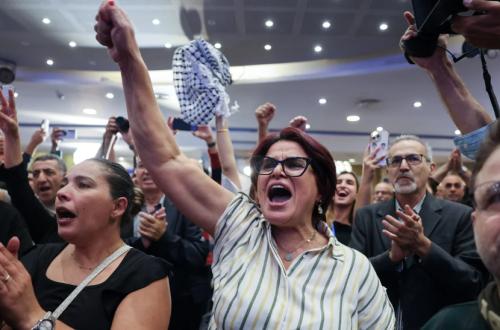
JAKARTA — Israel’s balance of power has shifted significantly after two Arab-led political groups won 19 seats in the parliamentary election on Tuesday, 27 October 2026. The historic result puts the Joint List and Ra’am in a strategically important position as Prime Minister Benjamin Netanyahu’s coalition loses its majority, while the opposition also lacks sufficient support to form a government.
Full results announced by Israel’s Central Elections Committee on Friday (30 October 2026) showed Netanyahu’s bloc with 53 seats, while the main opposition group led by Gadi Eisenkot won 48. The Joint List and Ra’am secured a combined 19 of the Knesset’s 120 seats, creating a new balance of power that could shape the future of Israel’s government.
According to Reuters and the Associated Press, the results have produced a political deadlock, as neither main bloc holds the 61 seats needed for an absolute majority. Mathematically, the opposition’s 48 seats combined with the 19 held by the two Arab-led parties would give them 67, but several opposition leaders have rejected the prospect of governing with Arab political groups.
The situation presents a serious challenge for both Netanyahu and his rivals. The incumbent coalition has lost its parliamentary majority, while the opposition is divided over whether to involve parties representing the interests of Arab citizens and Palestinian citizens of Israel.
The result is also a major development in the history of Arab political representation in Israel. The community, which makes up about 21 per cent of the country’s population, now has greater electoral strength, although the rise in seats does not guarantee direct participation in government.
A new record for Arab political representation
Israel’s Central Elections Committee confirmed that the Joint List won 11 seats, while Ra’am, led by Mansour Abbas, secured eight. Their combined 19 seats are almost double the 10 held by the two political groups in the previous parliament.
The result also surpasses the Joint List’s previous record of 15 seats, set in the 2020 election when Ra’am was still part of the alliance. The October 2026 election therefore marks the highest number of seats ever won by political groups dominated by Arab citizens in an Israeli parliamentary election.
The Joint List is led by Yousef Jabareen and brings together Hadash, Ta’al and Balad, which have different ideological backgrounds. The alliance advocates equal citizenship, protection of Arab communities’ rights and changes to Israeli policy towards the Palestinians.
Ra’am, meanwhile, is led by Mansour Abbas and is known for taking a more pragmatic approach to working with governments. The party joined Naftali Bennett’s coalition in 2021, setting a new precedent for an independent Arab party’s participation in an Israeli government.
However, the 19 seats do not mean that every member elected on the two lists is ethnically Arab. The Joint List also includes Ofer Cassif, a Jewish politician from Hadash, while Ra’am placed Yoav Segalovitz, a former senior Israeli police official who is also Jewish, on its candidate list.
The presence of Jewish politicians on both lists shows that their identities and political outlooks are not determined solely by ethnicity. Nevertheless, the Joint List and Ra’am draw most of their support from Arab Israelis seeking greater representation in the national political system.
Higher voter turnout
The gains by Arab political groups came amid high turnout across Israel. The Central Elections Committee reported a national turnout of 77.9 per cent, with 5,716,665 votes cast, making it the highest participation rate in several decades.
The rise in turnout in Arab communities was a notable factor in the election result. Reuters reported that increased voter mobilisation was linked to concerns about Netanyahu’s government policies, including discrimination, crime and tensions between communities.
In a report from Nazareth on Wednesday (28 October 2026), Reuters interviewed several Arab Israeli voters about why they had cast their ballots. Some said they wanted to curb the influence of right-wing groups in government while seeking changes to policies affecting Arab communities.
Crime is a pressing concern because of high levels of violence in several Arab-populated areas. Voters are also calling for improvements in education, local government funding, infrastructure, economic opportunities and equal treatment in public services.
The Gaza war is also part of the political context shaping some Arab voters’ views. The conflict has heightened tensions between the Israeli government and the Arab community, whose members have historical, cultural and family ties to Palestinian society.
Yousef Jabareen told Reuters that increased political representation should be used to advance community safety and equal rights. He also cited the resumption of a peace process leading to the establishment of a Palestinian state as one of the political goals he wants to pursue.
The rise in support for Arab-led groups, therefore, cannot be understood solely as a rejection of Netanyahu. It also reflects calls from some members of the community for their social, economic and security concerns, as well as their political rights, to receive greater attention in national decision-making.
Source: jawawa.id (https://jawawa.id/newsitem/with-19-knesset-seats-arab-israelis-now-hold-the-balance-of-power-1793353934)
Originally published by Republika (https://news.republika.co.id/berita/tnpqsh451/borong-19-kursi-knesset-warga-arab-israel-kini-jadi-penentu-arah-pemerintahan), translated from Indonesian