
Windows of Dreams from Rinca Island
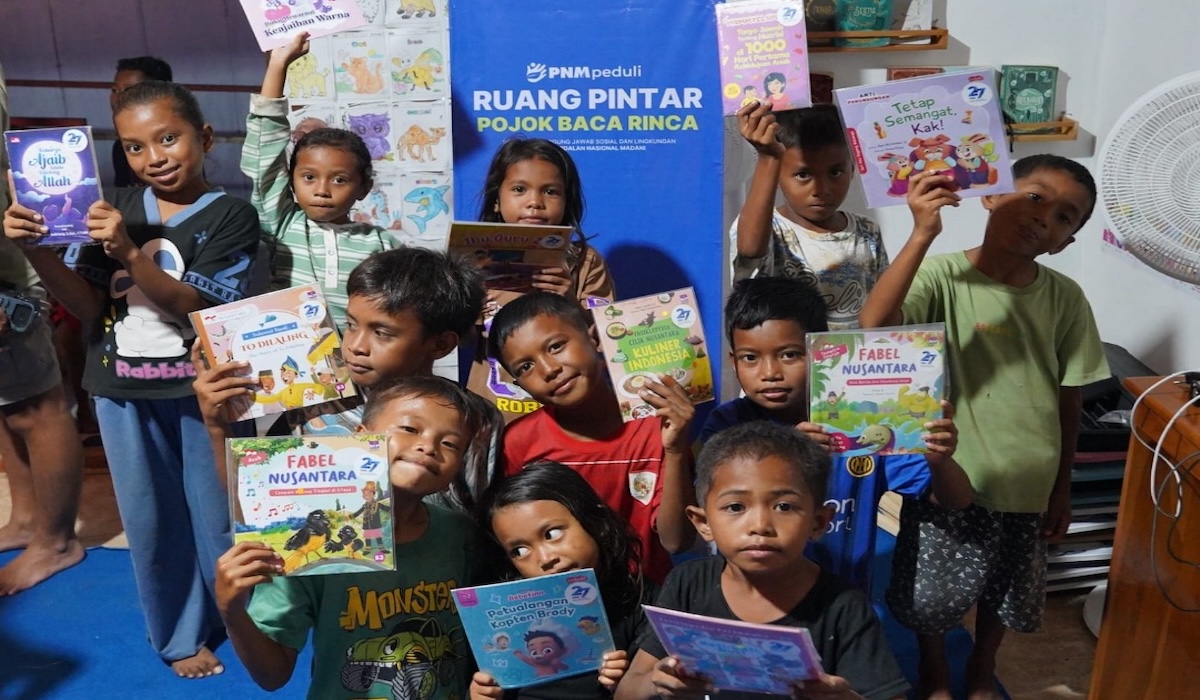
Beyond the fame of the Rinca Islands as home to Komodo dragons and captivating savannas that attract tourists, there lies another reality that rarely receives spotlight. Children growing up on this island still face limited access to educational facilities and literacy resources.
Geographical challenges are a primary cause. The significant distances between islands and limited transportation infrastructure make accessing various educational facilities difficult. This situation is exacerbated by social and economic issues, meaning informal learning spaces and reading materials are not yet distributed evenly.
Most residents of Rinca depend on the sea for their livelihoods. Fishing activities and daily labour serve as the main economic pillars for families. In such circumstances, the availability of books, comfortable study areas, or other supporting educational facilities is often difficult to obtain. Consequently, many children only know school textbooks as their primary source of reading.
Despite these limitations, the enthusiasm for learning among Rerinca’s children remains undiminished. They continue to attend school, study with peers, and utilise whatever spaces are available for reading or playing.
Efforts to provide a more adequate learning space have been realised through the construction of the ‘Ruang Pintar Pojok Baca Rinca’. The presence of this facility, established by PNM, does not merely add to the book collection but also creates a learning environment that is more friendly and closely connected to the daily lives of coastal children.
The development of this literacy space involved Irka, a local youth who has been active in driving literacy activities in his village. The involvement of local figures is considered vital as they understand the needs and character of the children targeted by the programme.
According to Irka, attention towards the education of children in Rinca has historically not been as significant as the attention given to the island’s tourism potential. “What I see is that PNM did not just come to provide financing to women or assist community businesses here. They also thought about the children. That is what I find different, because education and literacy for children on islands like Rinca also need attention,” he said.
He noted that the children’s enthusiasm was evident as soon as the reading room was equipped with various new books and learning aids. For many, reading illustrated storybooks or studying in a comfortable place is an experience they had rarely encountered before.
“The children here actually have great curiosity. When a comfortable and enjoyable learning space is provided, they are very happy to come, read, and even just gather to study together. This assistance from PNMS provides them with a new space to dream,” said Irka.
The reading room is designed as both a study area and a gathering space. In addition to providing children’s storybooks, general knowledge, and other educational materials, the space serves as a platform for children to discuss, play while learning, and discover new things beyond the environment they have traditionally known.
In many 3T areas (frontier, outermost, and least developed), educational issues cannot always be resolved simply by building schools. The presence of alternative learning spaces is one way to expand literacy access while broadening children’s horizons regarding various future possibilities.
From these simple bookshelves, children are beginning to recognise diverse ambitions, professions, and a world much wider than the island where they were raised. Meanwhile, the economic empowerment received by their families is also helping parents prepare a better future for their children.