
Will To Lam Transform Vietnam into China?
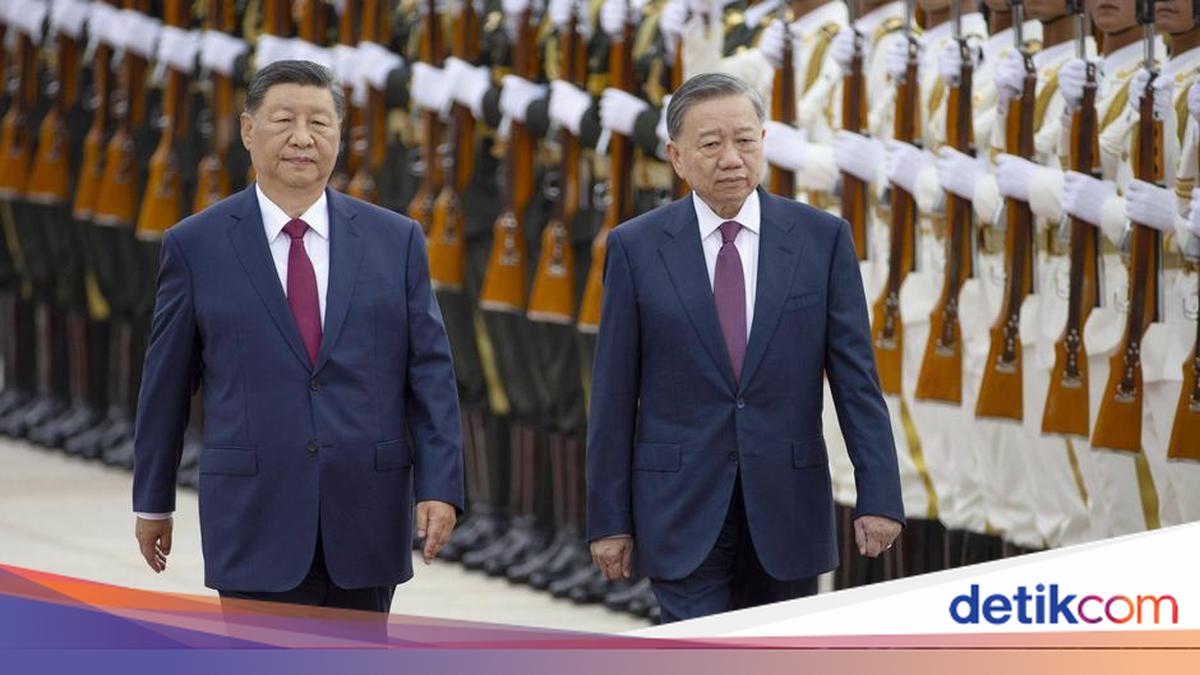
To Lam, leader of the Communist Party of Vietnam, has officially become president following a vote approved by Vietnam’s National Assembly. However, this appointment contradicts the norms of political elites in Hanoi to date. Until now, the Communist Party of Vietnam (CPV) has sought to avoid excessive concentration of power in a single party leader. Unlike China, where since the 1990s the top party leader has often held the concurrent position of state president, Vietnam has preferred a collective leadership style known as the “four pillars” system. In this system, power is divided among the party general secretary, president, prime minister, and National Assembly chairman. This system is not the same as the separation of powers in liberal democracies. However, it creates domestic political balance and reduces the risk of domination by a single individual in government. Shifting power balance Experts assess that this balance is beginning to change. “To Lam’s election will bring Vietnam’s political system closer to China’s politics, dominated by President Xi Jinping,” Alfred Gerstl, an Indo-Pacific international relations expert from the University of Vienna, told DW. “With power concentration, To Lam may be able to swiftly implement his ambitious reforms. However, there is a risk that checks and balances mechanisms will cease to function, and differing opinions within the party will become increasingly rare.” Norms and formal rules of the political system Vietnam’s political system has long relied on unwritten norms as well as formal rules. In addition to the “four pillars” system, there are also retirement age rules for state leaders to regulate elite turnover. However, both rules have often been violated in recent years. The CPV now grants exceptions to retirement rules for senior leaders and even adds new power roles to them. For example, former party leader Nguyen Phu Trong successfully secured a third term in 2021. He had violated the rule of a maximum two-term leadership. He previously held concurrent positions as party leader and president from 2018 to 2021, after the previous official passed away. Trong himself remained as Communist Party leader until his death at age 80 in 2024. Emulating China in civil surveillance To Lam previously served as Minister of Public Security. His name rose during his role in Trong’s government’s anti-corruption efforts. He sidelined hundreds of officials and helped reorganise Vietnam’s political hierarchy. Like Trong, To Lam held two positions concurrently before being forced to step down and become president. In January, he was elected as party leader at the Communist Party congress for the next five years. A few months later, he also successfully obtained a five-year term as president. Under To Lam’s leadership, Vietnam has also shown interest in implementing a security and surveillance model like China’s, Gerstl said. This trend will “align with new bilateral agreements between the two countries. These efforts will further limit freedom of expression in Vietnam.” AI camera network to spread across Vietnam Vietnam is one of the countries most restrictive of freedom of opinion in Southeast Asia, even before To Lam came to power. The country ranks 173 out of 180 in the World Press Freedom Index by Reporters Without Borders. Human rights advocacy groups state that the Vietnamese government has increased pressure on civil society in recent years. This is reflected in the already very limited space for expression being further constricted. Vietnam also plans to establish a state-managed data exchange managed and overseen by the Ministry of Public Security, “resembling China’s data centralisation model,” according to a Reuters report last week. The Vietnamese government is also expanding an electronic identification system that allows authorities to identify individuals through an AI camera network being installed nationwide. This monitoring effort has also long been carried out by China. Recent government documents also mention the construction of a “national firewall” or national data filtering fortress system. Coupled with new laws that allow internet service providers to collect users’ personal data. To Lam welcomed by Xi Jinping This week, To Lam visited China in his first diplomatic visit since becoming president. This agenda is a tradition of previous Vietnamese leaders as a form of showing that the two countries are “friends and socialist brothers.” During the visit, Xi Jinping emphasised solidarity and strategic communication between the two countries. According to Chinese state media, Xi stated that maintaining socialist ideology in the Communist Party’s governance is a shared strategic interest. Security issues were also a main agenda in the visit. In addition to To Lam, Vietnam’s Minister of Public Security, Luong Tam Quang, separately met with three Chinese security officials. This demonstrates the strengthening of relations between the two countries in bolstering security systems to maintain the current political control. Challenges for Vietnam’s new president Nevertheless, Vietnam still has constraints compared to China. “Vietnam has not purged Stalinist thinking from its senior generals like Xi Jinping did, or spread fear to the wider public,” Hunter Marston, a researcher from the Institute for Global Affairs, told DW. “Vietnam is still far from sustainable democracy, although they have not implemented excessive repression like that used by China to ensure the continuity of Xi Jinping’s party and government,” he added. In other words, although Vietnam is an authoritarian country under the power
Source: jawawa.id (https://jawawa.id/newsitem/will-to-lam-transform-vietnam-into-china-1776844291)
Originally published by detikcom (https://news.detik.com/dw/d-8455953/apakah-to-lam-akan-membuat-vietnam-menjelma-jadi-china), translated from Indonesian