
Will the Houthis Drag Yemen into the Vortex of the Middle East Conflict?
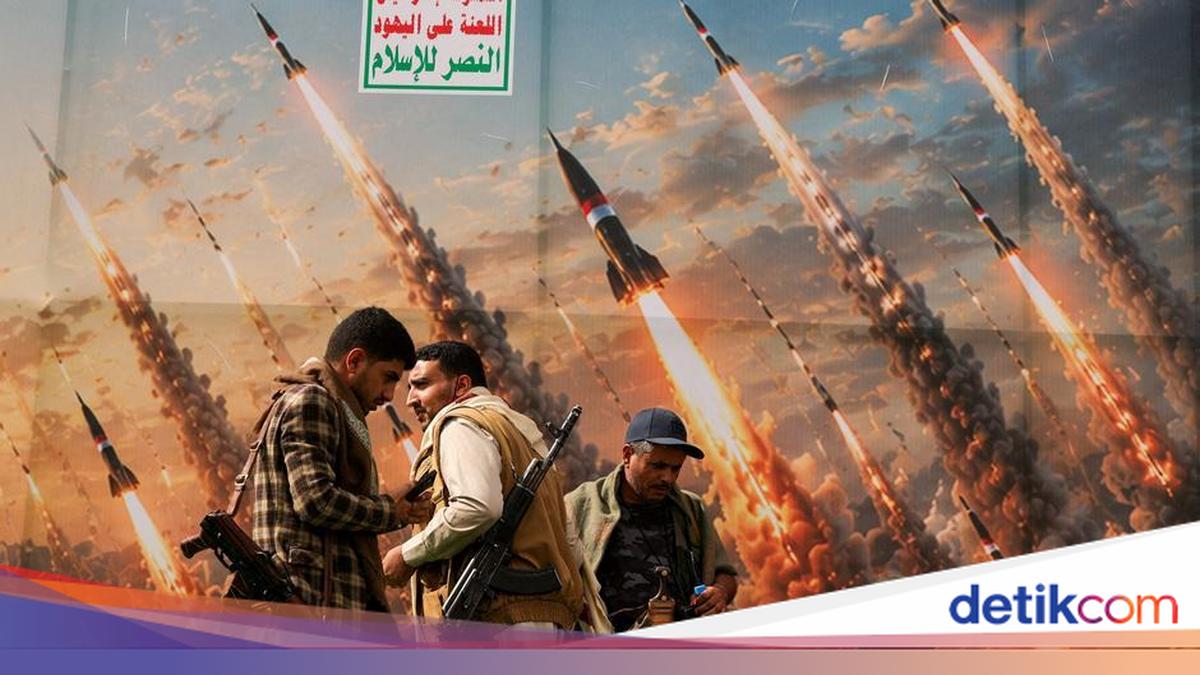
Yemen is slowly being dragged back into full-scale conflict. On Monday (24/8), Houthi militia again attacked a crude oil tanker in the Red Sea, off the coast of Saudi Arabia. The attack followed a series of previous strikes on Saudi oil infrastructure and other vessels around the Bab el-Mandeb Strait. These waters connect the Red Sea with the Gulf of Aden and serve as an alternative route for oil exports from Saudi Arabia and other Gulf states affected by Iran’s blockade of the Strait of Hormuz.
Throughout August, the Houthis attacked areas under the control of the Saudi-backed Yemeni government, particularly the port city of Mokha. In retaliation, the internationally recognised Yemeni government then targeted Houthi infrastructure. “Mokha overlooks the Red Sea and the Bab el-Mandeb Strait, which has important strategic significance for the Houthis,” Hisham Al-Omeisy, a Yemeni conflict analyst, told DW. “In the long term, the Houthis want to weaken government control over the Red Sea coastal areas and they are aiming for full control over Al-Hudeydah Province [which includes Mokha] to continue their strategy of pressuring global maritime trade,” he said.
The latest military upheaval ends four years of relative calm between the Houthis and the internationally recognised, Saudi-backed Yemeni government. However, according to Al-Omeisy, two other aspects are also driving the Houthi group’s latest strategic shift. After the 2022 ceasefire, Saudi Arabia consistently channelled financial and military aid to the Yemeni government. The monarchy in Riyadh also never fully lifted the air and port blockade on areas under Houthi control. Nevertheless, the Houthis succeeded in consolidating their position as the de facto rulers of Yemen. According to Al-Omeisy, the Houthis now hope to obtain additional concessions from Saudi Arabia.
“The Houthis are under great domestic pressure to fulfil their promises, for example reforming governance, paying salaries, and improving living standards,” Al-Omeisy said. He therefore assesses that the Houthis are exploiting the wider war in the Middle East to divert attention from their failure to meet those promises by “saying that we are now busy with another war.”
According to Al-Omeisy, the Houthi attacks are also timed with careful calculation. “They are learning from the way Iran has essentially succeeded in dominating the Strait of Hormuz,” he said. He added that the blockade of oil imports and exports places Saudi Arabia in a highly vulnerable position.
Saudi manoeuvres to face the Houthi militia
“Instability in Yemen is no longer merely a matter on Saudi Arabia’s southern border,” Alice Gower, director of geopolitics and security at the London-based consultancy Azure Strategy, told DW. “Ultimately, Saudi Arabia wants a safer Red Sea, but it also wants to achieve that without being trapped in another war in Yemen,” she said.
“Saudi Arabia’s priority is to protect its economic transformation through Vision 2030. This also explains why Saudi Arabia increasingly views the Red Sea as one interconnected region, rather than as separate crises in Yemen, Sudan, and the Horn of Africa,” Gower said. She noted that Houthi attacks threaten shipping, raise insurance costs, deter investors, and disrupt infrastructure that is increasingly central to Vision 2030.
Gower also noted that Saudi Arabia has updated its defence policy. In a recent opinion article, she wrote that “Riyadh is focused on building a broader security architecture, which can reduce the burden of protecting its maritime interests.” In early July, Saudi Arabia spearheaded the formation of a multinational Maritime Defense Alliance comprising more than 14 countries, including Saudi Arabia’s strong ally and Iran’s rival, the United States.
“The new Saudi-led maritime coalition is part of that approach because it allows Riyadh to share the security burden, strengthen regional deterrence, and address threats in the Bab el-Mandeb, the Red Sea, and the Gulf of Aden as part of the same security problem,” Gower said. However, she added, the coalition’s effectiveness remains to be proven. In August, Saudi Arabia also joined a defence pact with Pakistan and Turkey, the Mecca Joint Defence Agreement. Yet analysts again assessed that the new pact has not yet demonstrated “operational relevance”.
For Mohammed al-Basha, founder of the US-based risk advisory firm Basha Report, international coalitions and alliances will not truly help Saudi Arabia avoid being dragged back into war in Yemen. In an interview with the Financial Times, he said that “they could give the Houthis US$5 billion and let them fly directly to Tehran, allow them to dock any ship in their ports, and hope they do not return in a few years to ask for US$10 billion… or you use that US$5 billion to support an anti-Houthi Yemeni coalition to push the Houthis down from their high position and negotiate.”
Depending on a peace roadmap
For the people of Yemen, none of the conflict resolution scenarios offers hope of lasting peace. According to the United Nations, Yemen still faces one of the world’s worst humanitarian crises after years of war from 2014 to 2022. More than half the population requires humanitarian assistance. “I urge all parties to immediately halt any actions that risk bringing Yemen back to full-scale conflict,” UN High Commissioner for Human Rights Volker Türk said in a recent statement. “It is difficult to imagine worse conditions for the people of Yemen today,” said Niku Jafarnia, Yemen researcher at Human Rights Watch.