
Will Taiwan Fight China? Just Ask Its People
The people of Taiwan, a democratic island at the centre of a great power rivalry between the United States and China, are now facing a critical calculation about their future. A major question arises: Should Taiwan move closer to China or stand firm against Beijing’s efforts to subjugate the island?
The answer for some is shaped by how they view themselves—whether as solely Taiwanese or also as Chinese. Some are driven by a desire to preserve their way of life. However, all are targets of a Chinese campaign that uses military threats and other means to convince the island’s 23 million residents to submit to Beijing.
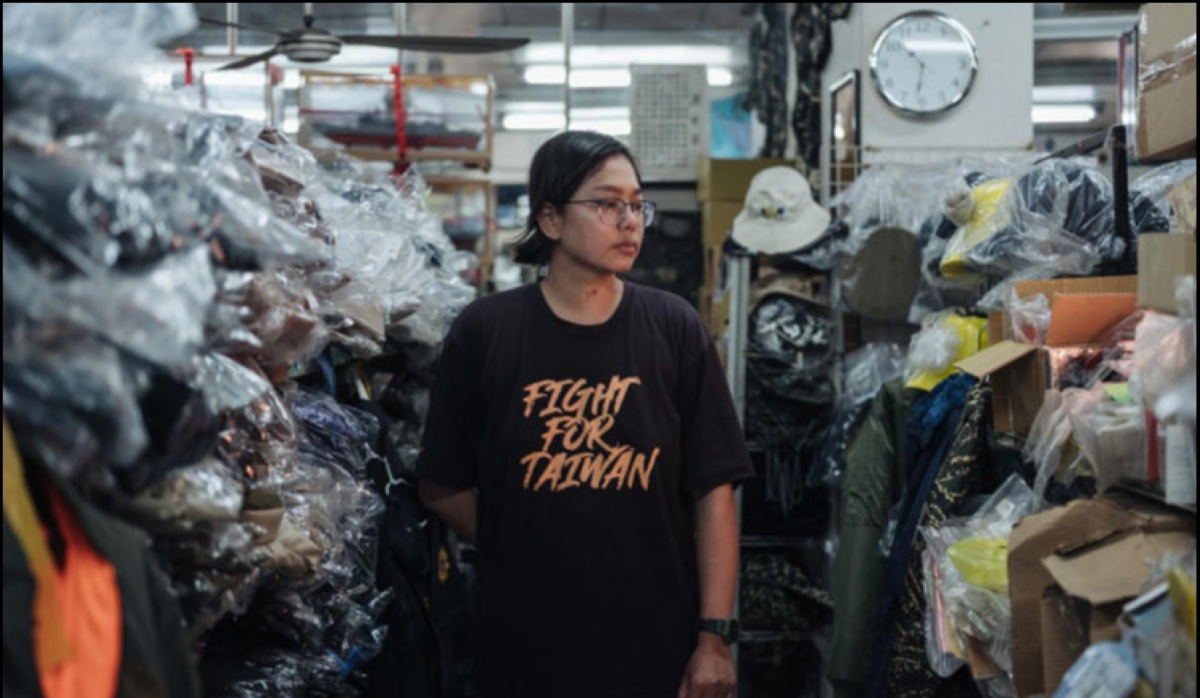
Cony Hsieh, a 33-year-old gender studies researcher in Kaohsiung, expressed her readiness to fight if China attacks. As a graduate of Taiwan’s main officer training school and a member of the military reserves, Hsieh has a strong determination to be on the front line. “If China really attacks and the army needs me back on the front line, there is not a shred of doubt in my mind about doing it,” Hsieh asserted. She is also active in promoting civil defence through a podcast to counter Chinese infiltration and disinformation. Hsieh doubts whether the US under Donald Trump’s leadership would send troops to defend Taiwan. Her main concern is actually the 2028 election, when a victory for the opposition Kuomintang (KMT) could, in her view, hand Taiwan over to China.
For Dov Lin, 54, defending Taiwan’s democracy is non-negotiable. This is not only due to a fear of a communist takeover, but because he once experienced life under the KMT’s military dictatorship during the White Terror era. Lin grew up during the martial law period of the 1970s and 80s. He was taught to identify as Chinese. However, as democracy opened up, a Taiwanese identity consciousness grew. “Society opened up and everyone started speaking publicly about Taiwanese consciousness,” Lin said. Although not opposed to cultural and business exchanges with the mainland, Lin stressed he would fight to the end if an invasion occurred. “If this is the land we call home, why should we choose to run or surrender?”
Hsu Mei-chih, a 27-year-old artist, defined her identity as Taiwanese after understanding the history of the democratic struggle on Green Island, where her father was born. Although her mother is from Qingdao, China, Hsu feels no identity ties to the mainland. “I cannot call myself Chinese because I do not know that place well. I do not speak their dialect, but I speak Taiwanese,” she revealed. For her, family connections with relatives on the mainland do not mean they come from the same country.
On the other hand, Ben Chen, 63, proposed a Chinese Commonwealth solution, where Taiwan, China, Hong Kong, and Macau live under the same umbrella but each retains its own flag and military. Chen, who has a family background from the mainland, believes Taiwan should not treat China as an enemy given Beijing’s current global strength.
Meanwhile, Eric Li, 25, represents the voice of a younger generation that prefers the status quo. Li argues that peace is the top priority and Taiwan should adopt a more humble attitude in its relationship with Beijing, including learning from China’s technological advances. “Gaining advantages while accepting small (symbolic) losses is absolutely fine with me,” Li said, referring to the use of the name Chinese Taipei in international events for the sake of maintaining peace.