
Will Syria Be Dragged into Becoming a Conflict Zone Between Israel and Turkey?
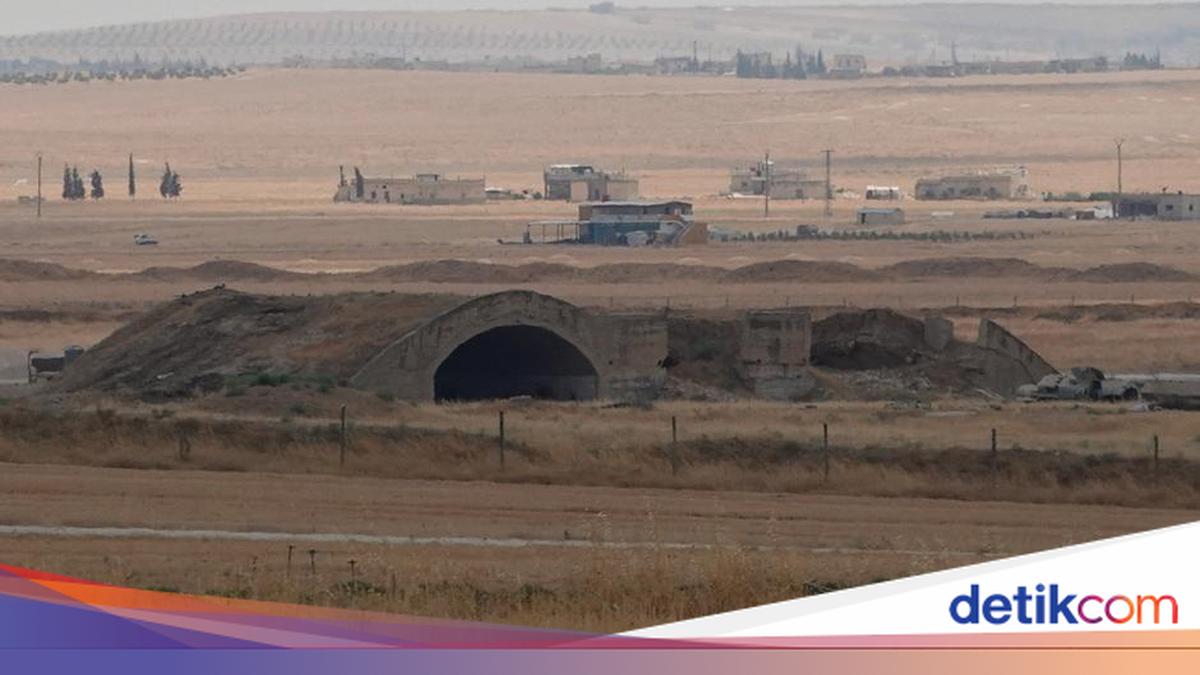
Following mediation by the United States, representatives of Syria and Israel met in Jordan last weekend for the first time in several months. The talks aimed to ease tensions caused by Israel’s latest attack on Syrian territory, while also preventing hostilities between Israel and Turkey from spreading into Syria.
The escalation was triggered by an Israeli strike on the Abu Duhur military airbase in Idlib Province, Syria, on 18 August. According to Syrian sources, the attack hit the runway and storage facilities without causing casualties. Israel stated that Syria had violated, or at least threatened to violate, a previous security agreement by allowing Turkish forces to use the airbase. The Syrian and Turkish governments rejected this accusation.
The United States criticised its ally Israel’s attack as an ‘unnecessary escalation’. In diplomatic language, this represented fairly clear rhetorical support for Ankara and Damascus.
Israel views Turkey’s military presence in Syria as a red line. However, it is unclear whether such a deployment was indeed planned for the long term, or even whether it was already due to take place when the attack was launched. Evidence on this matter is not publicly available.
Nevertheless, since April 2025, the Reuters news agency has cited anonymous sources saying Turkey had inspected at least three airbases in Syria as locations for troop deployment under a planned joint defence pact. Israeli air strikes have been occurring since then.
The Washington-based think tank Foundation for Defense of Democracies (FDD), which is seen as pro-Israel, justified the attack on the grounds that: ‘Israel is concerned that Ankara could ultimately use its military presence in Syria as a platform to pressure or threaten Israel, and remains wary of the close relationship between Syrian President Ahmad al-Sharaa and the Turkish leadership.’
Syria, Turkey and Israel differ over the future order
For Bente Scheller, a Syria expert from the Heinrich Böll Foundation affiliated with Germany’s Green Party, that explanation is not sufficient.
‘There is no evidence yet that Turkish forces were actually supposed to be stationed there,’ she told DW. Although Israel may have its own intelligence, the latest attack should be seen in the context of Israel’s overall policy towards Syria and Turkey’s growing regional role, she added.
Marcus Schneider, a Middle East analyst from Germany’s Friedrich Ebert Foundation, which is affiliated with the Social Democratic Party (SPD), based in Beirut, also pointed out that a struggle for power and influence is taking place in Syria and the wider region.
‘This attack raises questions about what kind of military order will take shape in Syria going forward,’ he told DW. In his view, Israel wants to keep Syria weak, because a sovereign state controlling its own airspace would limit Israel’s military freedom of action.
‘The corridor for attacks on Iran passes through Syria,’ Schneider explained. A sovereign Syria could therefore become a strategic obstacle for Israel.
Following the Hamas terror attack on Israel on 7 October, Israel’s heightened security concerns are understandable, Scheller added. Moreover, Israel is also watching with concern a development that goes beyond the Syrian context.
‘Israel is undoubtedly aware of how Turkey is currently seeking to position itself as a regional hegemon,’ Scheller said. The attack on Abu al-Duhur therefore ‘is clearly also a message to Turkey.’
Turkey supports Syrian President al-Sharaa and is committed to a united Syria, including the north-eastern region inhabited mostly by Syrian Kurds. For years, Turkey has attacked the former Kurdish-led autonomous zone along its southern border. On Tuesday, the commander of the Kurdish-led Syrian Democratic Forces announced the group’s official dissolution.
An analysis from the US think tank Carnegie Foundation described the situation as a strategic rivalry between Israel and Turkey: ‘The north-east is also a primary arena where two externally driven strategic visions collide.’
The International Crisis Group likewise views Syria as a fault line between Turkey as a rising regional power and Israel.
Syria’s improving relations with the US
Syria’s improving relations with the US offer new prospects for the country, even though its leader, President Ahmad al-Sharaa, has an Islamist past. In the summer of 2025, the US began gradually lifting sanctions, and in November of that year al-Sharaa was received by President Trump at the White House. The two met again on the sidelines of the NATO summit in Ankara in July 2026. In early 2026, the US withdrew its forces from Syria, and on Monday (24/08), the US officially removed Syria from the list of state sponsors of terrorism.
But under current conditions, Syria appears to be relying more on itself, including in its relationship with Turkey. For analyst Marcus Schneider, a potential Turkish presence cannot be compared with Iran’s presence during the Assad regime era.
Contrary to Israel’s view, he said Ankara is primarily interested in a stable Syria and securing its southern border. ‘The idea that Turkey, a NATO member, would attack Israel, a nuclear-armed state, is absurd,’ he said. The real problem, in his view, is that Israel increasingly regards Turkey as a strategic adversary and interprets Turkey’s capabilities as evidence of hostile intent.
Al-Sharaa seeks foreign policy support wherever he can find it, Scheller said. ‘In recent months, Turkey has increasingly become one of the countries from which Damascus expects concrete assistance.’ This is not only about security: Ankara wants to expand its regional influence and at the same time has an interest in maintaining stability along its border.