
Will Single-Gate Export Harm Investments? Nickel Companies Hope Not
Will Single-Gate Export Harm Investments? Nickel Companies Hope Not
Reporter
June 25, 2026 | 11:08 am
TEMPO.CO, Jakarta - Arif Perdana Kusumah, the chief of the Indonesian Nickel Industry Forum, hopes that the single-gate export policy through PT Danantara Sumberdaya Indonesia (DSI) will not harm investors’ interest in entering the country.
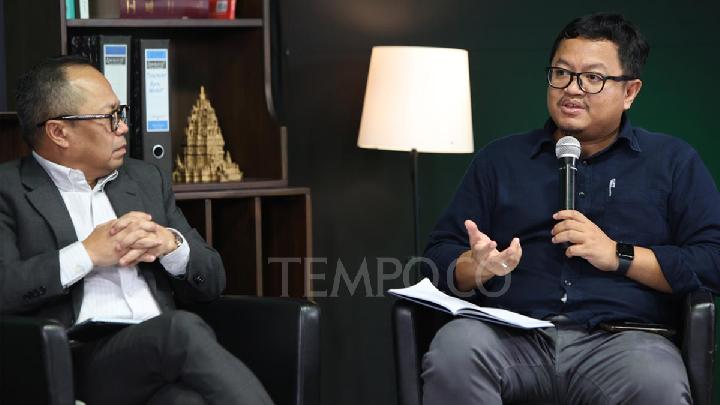
“This mustn’t reduce the appeal of ongoing expansion projects,” said Arif during a discussion session at Tempo’s office in Jakarta on Wednesday, June 24, 2026.
Arif made this statement in a discussion session held by Tempo Inti Media Impresario titled ‘Single Export Policy and the Future of the National Palm Oil and Mining Industries’ (Ekspor Satu Pintu dan Masa Depan Industri Sawit dan Tambang Nasional).
According to Arif, nickel industry players acknowledge why the government would implement the single-gate policy on account of under-invoicing, transfer pricing, and improving foreign earnings.
But the industry has at least five key concerns regarding the newly adopted policy. First of all, he said, the new export scheme must not interfere with long-term contracts already made by business players with buyers. “We need to start thinking about the continuity of these long-term contracts,” he said.
Second, industry players hope the single export mechanism will not erode the producers’ margins due to additional costs. Especially now, according to Arif, the nickel industry is facing global pressure, resulting in a surge in raw material and energy prices. In addition, there is also internal pressure from the government’s policy to raise the benchmark price of nickel ore.
Another important request according to Arif is for the single export policy not to diminish the appeal of ongoing project expansion. Especially since there is new investment value in the nickel industry worth US$20 billion that will enter during 2026-2028.
Arif also mentioned the dynamic nickel and derivative product markets. Price mechanisms, transaction speed, and logistical flexibility are the keys to Indonesia’s current competitiveness. He shared hope for Indonesian nickel to be absorbed not only by China, the world’s largest consumer, but also by America, Europe, Korea, and Japan.
He also shared the concern about price determination because Indonesia implements two price indexes for nickel thus far: the London Metal Exchange (LME) and the Shanghai Metal Market (SMM).
“Will we have a new mineral exchange? That might be one of the factors that will determine whether we will have our own price index,” he said.
Read: The Nickel Curse Strikes Pomalaa
Click here to get the latest news updates from Tempo on Google News