
Will Schools in China Remove English from Core Subjects?
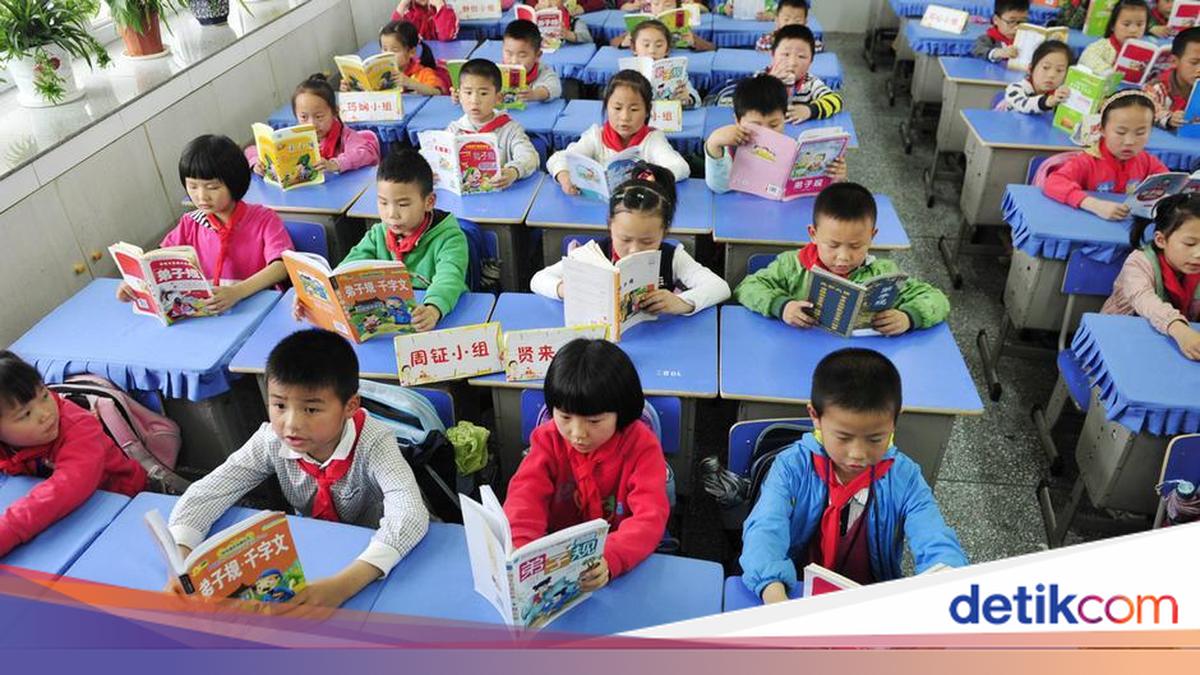
From economics and science to social media and entertainment, English is considered the dominant language of the world, with one in five people globally actively using it. In China, a mathematics professor specialising in vector algebra is questioning this foreign language dominance. Tang Jiafeng argues that English should be removed from the core subjects in primary schools, secondary schools, and universities in the People’s Republic of China.
Tang believes that no other country in the world places as much value on English as China does. “Our children struggle to learn English even before they have fully mastered their own mother tongue. Yet, we are a civilisation that is thousands of years old. English is merely a tool; it is enough if we can use it. The tradition of worshiping and imitating Western culture must end,” the mathematics professor explained.
English is currently a compulsory subject starting from Year 3. In China, it is weighted equally with Mandarin and mathematics in secondary school entrance exams, junior high national exams, and senior high school final exams. In the senior high school final exams, the maximum score achievable is 150 points.
“How much resource and time are our children, parents, and schools investing in a subject that is completely irrelevant to the professional lives of most people?” the expert remarked. The professor gained fame after helping many students achieve perfect scores in national mathematics exams; for the 2011 cohort alone, six students from a single class achieved perfect marks.
Tang’s views spread rapidly across the internet. “Why must we memorise English if Artificial Intelligence (AI) can translate everything in seconds?” commented a netizen from Beijing. Another suggestion from a netizen in Guangdong province was to adjust the scoring system, for instance, reducing the maximum score from 150 to 120 points in the senior high school final exams.
Many parents invest significant funds into private tutoring specifically for exam preparation. Furthermore, all undergraduate students must pass an English exam to be admitted to master’s programmes. Tang suspects that this could cause many talented young scientists in the field of science to fail, despite having high potential to become leading researchers.
There is no doubt that English is also vital for STEM subjects (Science, Technology, Engineering, and Mathematics). In research regarding futuristic themes, studies are usually published in English. Concerns are circulating online that reducing English teaching hours could lead to a decline in China’s competitiveness. One supporter of English as a compulsory subject is Hu Xijin, the former editor-in-chief of the state-owned newspaper “Global Times,” who is well-known for his nationalist statements.
Hu emphasised that mastering a foreign language is essential for everyone in the world, “Because we primarily live in the present,” while referencing the debate regarding history exams in China, which are not factored into final scores.
“The present is characterised by globalisation. China’s opening up is not just a state policy, but also expands the scope of society and the reach of their diverse interests, both material and non-material,” Hu explained.
Therefore, connections with the outside world cannot be equated with the historical intellectual ties of the past, Hu continued. “Forcing an opposition between foreign languages and traditional Chinese culture by insisting on which is more important risks setting the wrong priorities and unnecessarily politicising public discussion,” the former editor-in-chief asserted.
For Hu, openness in interacting with the outside world is a top priority. Keeping English as a core subject would increase opportunities. Children in rural areas would also gain access to an important foreign language and access to the global world.
Studies in languages are becoming less popular. Chinese universities with specialised foreign language departments are under pressure to adjust their educational goals and prepare students for the future job market.
For example, fewer high school graduates are interested in studying or pursuing German studies, as explained by an anonymous lecturer from Beijing to DW. Consequently, the new curriculum at the Beijing Foreign Studies University has adopted a model of “foreign language with specialised studies,” such as combining English with law, information technology, or economics.
A similar debate occurred during the Self-Strengthening Movement of the Qing Dynasty, China’s last imperial dynasty, in the late 19th century. “Learn from the advantages of foreign nations so that you may eventually surpass them,” said Wei Yuan, a court scholar at that time. Learning from abroad is indeed more effective if using the language spoken there.
Although currently, in several fields, it appears that other countries are actually learning from China, ranging from battery technology for the automotive industry to humanoid robotics.