
Will Non-Subsidised Fuel Prices Rise on 1 November 2026?
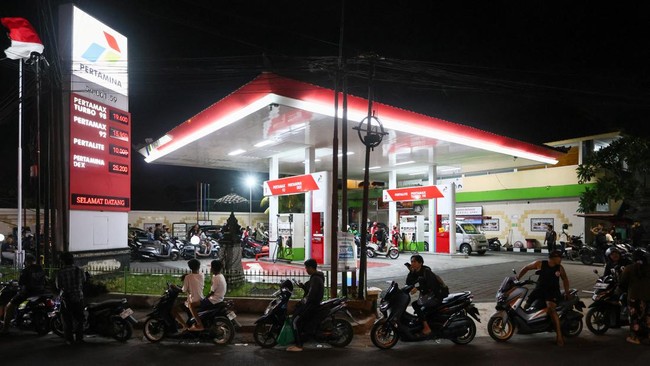
Jakarta, CNBC Indonesia – Non-subsidised fuel prices could be raised, or at least held steady, from tomorrow, 1 November 2026.
The prospect follows an increase in average global crude prices and a sharp fall in the rupiah against the US dollar. These two factors will determine any adjustment to non-subsidised fuel prices.
Data from Refinitiv show that the average Brent crude price in October 2026 was US$108.34 a barrel, up 8.4% from the September 2026 average of US$107.7 a barrel.
Meanwhile, the average price of the West Texas Intermediate (WTI) benchmark stood at US$96.94 a barrel in October 2026, up 0.65% from US$96.32 in September.
By contrast, the rupiah was battered in October, falling 1.4% over the month.
Oil prices continued to surge throughout October. Geopolitical tensions mounted after the Houthi group claimed it had attacked several Saudi Arabian oil facilities. At the same time, diplomatic efforts by the United States and Iran to ease the conflict were continuing.
Global oil supplies also faced uncertainty over the flow of Saudi Arabian exports. Data from ship-tracking companies varied, while several tankers switched off their tracking signals amid rising security risks in the Strait of Hormuz.
Outside the Middle East, disruption to an oil pipeline in Libya halted flows of around 15,000 barrels a day. The combination of geopolitical threats, supply disruptions and uncertainty over distribution has kept oil prices high.
What will fuel prices be in November 2026?
The government sets fuel prices using a specific formula. Its two main variables are international oil or fuel-product prices and the rupiah exchange rate, given Indonesia’s substantial need to import oil.
Under Energy and Mineral Resources Ministerial Decree No. 187 K/10/MEM/2019 on the basic price formula for calculating retail prices of general petrol and diesel fuels, the formula uses the average Mean of Platts Singapore (MOPS) price, measured in US dollars per barrel.
The reference period runs from the 25th of the month two months before the pricing month through to the 24th of the preceding month.
As an approximation, movements in Brent and WTI over that period can indicate the direction of pressure on non-subsidised fuel prices.
For September–October 2026, the average Brent price was US$108.02 a barrel, considerably higher than the US$107.42 average for the previous reference period, August–September 2026.
WTI also rose. Its average price during September–October 2026 was US$96.63 a barrel, up from US$96.03 in the August–September reference period.
The exchange rate also weakened. The rupiah averaged Rp17,976 per US dollar during September–October 2026, compared with Rp17,966 in August–September 2026.
Non-subsidised fuel prices could therefore rise again from 1 November 2026, or at least be kept unchanged.
This comes after Pertamina made no adjustment to non-subsidised fuel prices on 1 October 2026, despite the surge in global oil prices.
Source: jawawa.id (https://jawawa.id/newsitem/will-non-subsidised-fuel-prices-rise-on-1-november-2026-1793443856)
Originally published by CNBC Indonesia (https://www.cnbcindonesia.com/research/20261031162755-128-781156/hitung-hitungan-harga-bbm-non-subsidi-per-1-november-2026-bakal-naik), translated from Indonesian