
Will Israel Expand Its Control in Southern Lebanon?
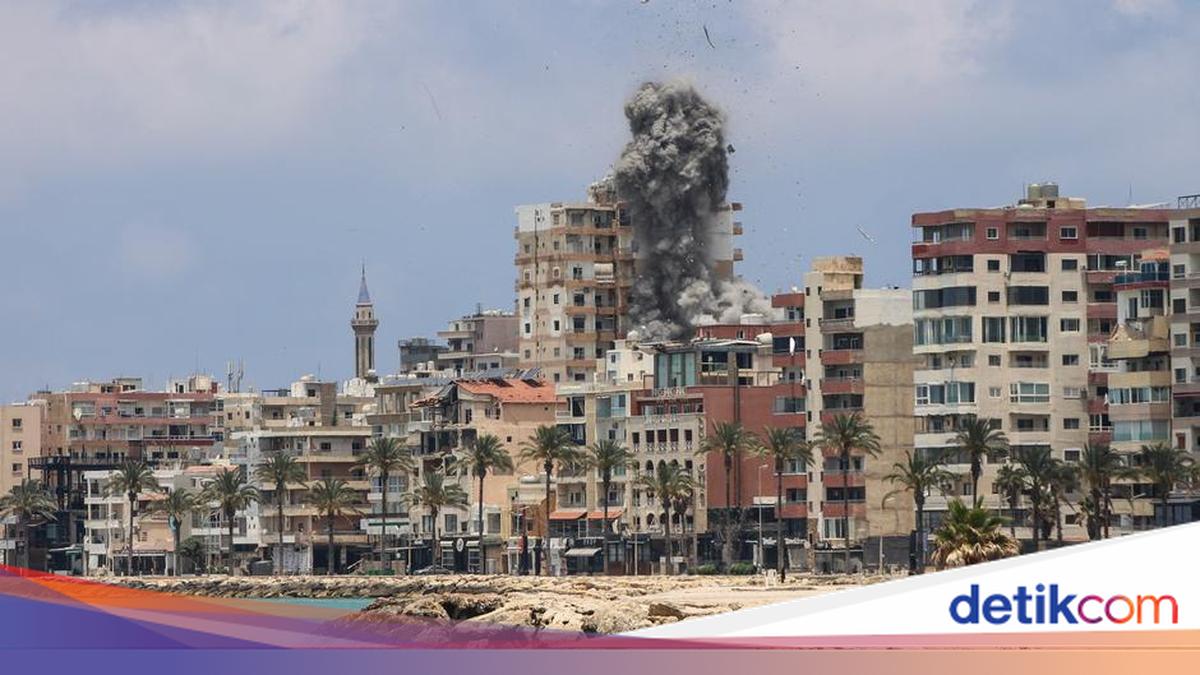
Repeatedly, the Israeli army has asked residents of Tyre to evacuate the city in southern Lebanon, which was previously inhabited by more than 100,000 people and around 10,000 refugees from surrounding areas. But Lily’s father and family members remained, said Lily, a social worker from Tyre. Lily, who declined to give her full name for security reasons, is now living with friends in Beirut. However, whenever there is a chance, the 29-year-old woman returns to Tyre to deliver medicine and food. “Tyre is like a ghost town now,” she told DW. Since early March, continuous Israeli airstrikes have caused residents to leave gradually. Drone and artillery strikes have also continued this week, with Israel stating it is targeting Lebanese militant groups, despite a new ceasefire between Iran and Israel. “Three weeks ago, there was only one pharmacy open every two or three days, then it closed again for security reasons,” Lily continued. “There are a few grocery stores still open, but they can be counted on one hand. And getting supplies is very difficult. Nobody wants to go to Tyre by road because it’s too dangerous,” she explained. Sometimes the Israeli military gives a warning before striking a building, Lily said. “However, the reality is they end up hitting four buildings. Or the building that was warned about isn’t struck until a week later. So there is no certainty of timing, and that makes everyone anxious because they don’t know what will happen,” she recounted. At other times, strikes occur without any warning at all, she added. On Sunday, a historic family home belonging to her close friend, located near the area designated by UNESCO as a world heritage site, was razed to the ground. “There was no warning, but luckily nobody was there,” said Lily. She added that her friend, a 32-year-old woman who once volunteered for the Red Cross, happened to be in the process of moving to France for a new job. The main victims of the strike were a dozen cats cared for by the family. “She is devastated,” Lily said. “We are all devastated. And we question, why. Because there are no military targets there. Unless cats are now considered military targets.” The questions many residents of southern Lebanon are asking, Lily said, are whether they can return home, how long Israeli troops will be on their land, and whether the Israeli army might continue moving deeper into Lebanese territory. This March, Israeli Defence Minister Israel Katz stated that residents would not be able to return to southern Lebanon until “the safety and security of Israeli citizens in the northern region is guaranteed.” Israel has established a “yellow line” which it calls the boundary of a security buffer zone to protect its citizens from attacks by the Lebanon-based Hezbollah group. That line is about 10 kilometres from the border. However, there are reports that Israeli forces are operating beyond that yellow line up to the Litani River, for the first time since 2006. Besides Tyre, Israel recently also issued evacuation orders for another southern Lebanese city, Nabatieh, which also lies outside the yellow line. In late May, Israeli Prime Minister Benjamin Netanyahu said he wanted his troops to “strengthen and expand” their control in Lebanese territory. The Israeli government has also previously stated it wants “freedom of operation” in Lebanon, though experts argue this largely refers to airstrikes. In a June report, experts at the US-based risk consultancy Institute for Applied Geopolitics stated that all this marks “a shift from limited border defence to a strategy of territorial control and deterrence.” “The scale and symbolism of these operations are reminiscent of the 1982 Israeli occupation, and suggest the potential establishment of a long-term security zone,” the report stated. However, this was denied by Yossi Kuperwasser, head of the Jerusalem Institute for Strategy and Security and former chief of Israeli military research. According to him, Israel has not actually gone that far into Lebanese territory yet. “The distance the military wants to reach in Lebanon, and which the government has approved, is about 10 kilometres from the border—so that our communities on the southern side of the border are protected from direct anti-tank missile fire,” Kuperwasser told DW. He acknowledged that there is indeed debate about whether they need to go further into Lebanon. “We are paying a heavy price from drone attacks almost every day, and there are casualties, so that might influence the debate,” he said. “But as far as I know, there has been no new decision to exceed the yellow line.” Even so, he added that the concerns of southern Lebanese residents remain justified. “Because the greater the pressure placed on Israel, the greater the likelihood that Israel will re-evaluate that policy.” For now, according to David Wood, senior Lebanon analyst at the think tank International Crisis Group, Lebanese citizens are not overly worried about the possibility of “the Israeli occupation expanding all the way to Beirut.” However, they remain anxious that Israeli forces could move further into other areas of southern Lebanon, such as Nabatieh. “I think the gist of what is happening now is that they (Israel) feel they have freedom of action,” said H.A. Hellyer, senior fellow at the Royal United Services Institute for Defence and Security Studies in London and the Center for American Progress. “But they know this freedom of action won’t last forever, not under the Trump administration, and certainly not under anyone after.”