
Will Iran's Authority Shift from Clerics to the Military?
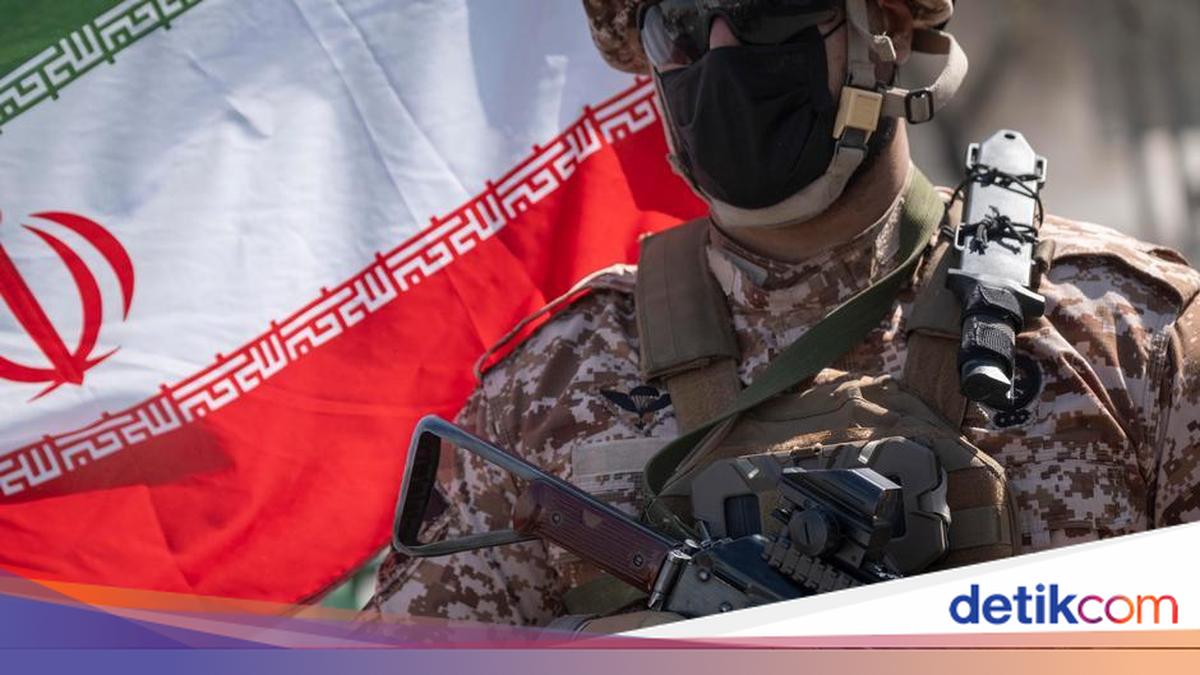
Analysts in Iran are now debating whether the Islamic Republic is on the verge of a historic transition: from a theocratic system to a form of rule dominated by the military. The Islamic Revolutionary Guard Corps (IRGC), formed in 1979 to protect the Islamic revolution, has transformed from a mere military faction into a massive economic and political force. Through its affiliated companies, the IRGC reportedly controls around half of Iran’s oil wealth and holds extensive interests in sectors ranging from construction and telecommunications to exports worth billions of dollars. This transformation has been underway for decades, but the war has reportedly accelerated it drastically.
“Although within the context of the state of emergency that has existed since the outbreak of war on 28 February 2026, strategic and operational command of the country has officially been handed over to the war headquarters and the top generals,” said political analyst and author Faraj Sarkohi. “That in no way means the system has transformed into a pure military dictatorship,” he added, noting that one of the main foundations of this power remains the principle of Wilayatul Faqih, the concept introduced by Ayatollah Khomeini. This concept grants supreme authority to a senior Shiite Islamic jurist, or marja’, believed to possess deep knowledge of sharia and social justice.
Following the death of Supreme Leader Ali Khamenei in an Israeli attack on 28 February, Iran’s Assembly of Experts, reportedly under pressure from the Revolutionary Guard, appointed his son, Mojtaba Khamenei, as the new Supreme Leader. Analysts view this decision as reflecting a shift in power towards security institutions. Researcher at The Hague Institute for Geopolitics, Damon Golriz, sees the appointment of Mojtaba as a turning point in Iran’s history. “The appointment of Mojtaba Khamenei as Supreme Leader reinforces the reality that in the Islamic Republic, political calculation and the balance of power, rather than religious legitimacy, have become the determining factor,” he stated.
Mojtaba Khamenei is a 56-year-old cleric who has never held a senior religious position nor played a prominent role in Iran’s electoral politics. “His appointment was based more on his extensive network of relationships and internal power structures than on qualifications,” Golriz said. “He may sit in the leader’s chair, but at the same time, he empties the position from within. He is a leader in name, but in reality, he is merely a decorative figure.” Mojtaba Khamenei’s ties to the security apparatus date back to the war period, when he joined the Revolutionary Guard in 1987 and served in the Iran-Iraq War within the Habib Ibn Mazahir Battalion under the IRGC’s 27th Mohammad Rasoul Allah Division. This battalion later became the starting point for a network that, over the following decades, formed the core elite of the IRGC’s intelligence and leadership. For more than two decades, this military-rooted network has functioned as the security extension of the Office of the Supreme Leader.
According to Golriz, since 2009, Mojtaba has also played a direct role in coordinating commanders and mobilising the Basij militia, a paramilitary group under the Revolutionary Guard used to suppress public protests. “He took over the direct leadership of the Basij organisation during the suppression of the 2009 protests and moved various security meetings to the Office of the Supreme Leader, thereby building key institutional relationships with the power centres that are now the dominant actors,” he added. Golriz stated that although executive power officially rests with President Masoud Pezeshkian, “real power lies with Mojtaba Khamenei and a new generation of military and security figures.” “Behind this clerical facade, the centre of power has shifted from the theological seminaries to the military sphere. Mojtaba provides the ideological umbrella, while the Revolutionary Guard carries out the actual functions of governance.”
Amidst these geopolitical and internal upheavals, economic data paints a worrying picture of poverty in Iran. Even if a shift in the form of government from absolute theocracy to military junta occurs, this condition is deemed likely to trigger mass protests. The International Monetary Fund (IMF) estimates Iran’s economy will contract by about 6% in 2026, with inflation reaching 68.9%. This surge in inflation, coupled with a rising poverty line, has drastically suppressed the purchasing power of workers and the labouring class. “The regime has long lost its intellectual and ideological hegemony,” Sarkohi said, referring to the chasm between the government and society. “The vast majority of society stands in stark opposition to the state’s culture and has largely detached itself from it in both social and private life.” Golriz reinforced this with sharper data. “Around 80% of Iranians harbour a deep rejection of the system. With an average age of under 35, Iran today is a post-revolutionary society, a society that did not choose this political order and has spent much of the last decade in the streets fighting against it,” he said. “The mass killing of peaceful demonstrators in January 2026 has definitively destroyed the remaining social contract between the regime and the people.” Sarkohi added that even state institutions are now anticipating the resurgence of spontaneous waves of rebellion in Iran, unrest that could drive people back into the streets over a single small trigger. He also mentioned the existence of “organised civil, labour, and democratic movements, including teachers.”
Source: jawawa.id (https://jawawa.id/newsitem/will-irans-authority-shift-from-clerics-to-the-military-1781319065)
Originally published by detikcom (https://news.detik.com/dw/d-8530186/akankah-otoritas-iran-beralih-dari-ulama-ke-militer), translated from Indonesian