
Will Iran Withdraw from the Nuclear Non-Proliferation Treaty?
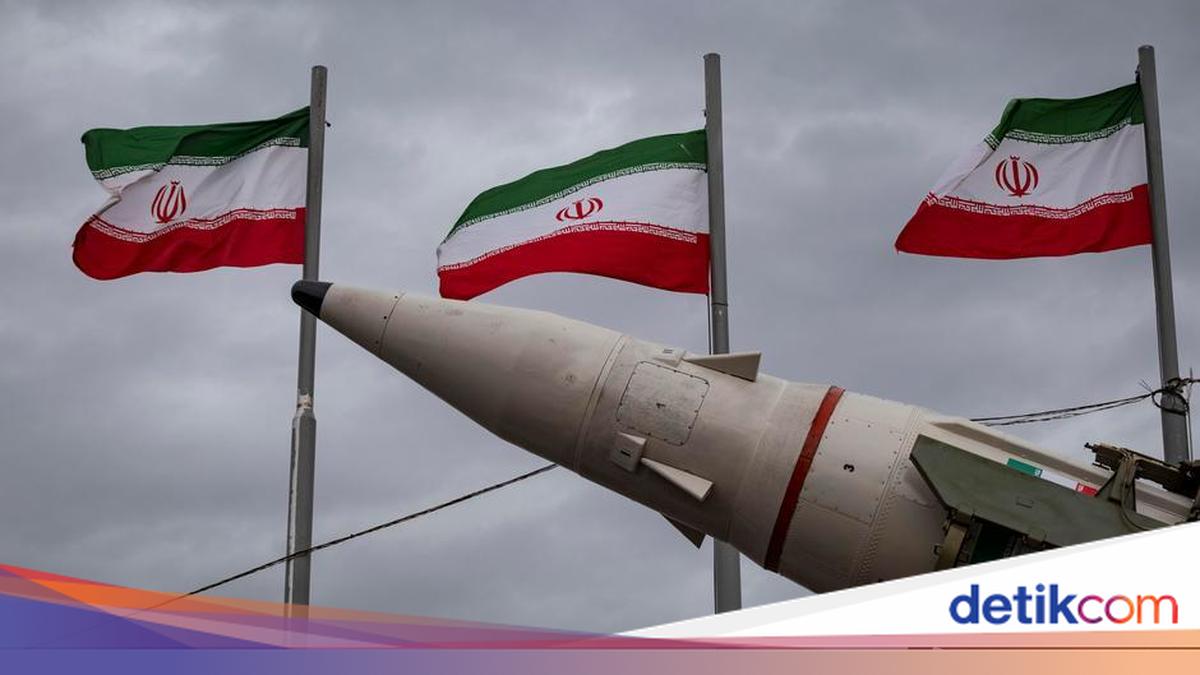
Members of parliament in Iran are again discussing the possibility of Iran withdrawing from the Nuclear Non-Proliferation Treaty (NPT) as tensions surrounding Tehran’s nuclear programme and its confrontation with the United States continue. Iranian MP Ghasem Ravanbakhsh said that a proposal to withdraw from the historic treaty has been submitted and is being considered. Ebrahim Rezaei, a member of the parliament’s National Security and Foreign Policy Commission, said that withdrawal from the treaty would be the best response to increasing US economic pressure.
The idea is not new. Iranian officials and MPs have repeatedly raised it during tensions with Western governments. However, it remains unclear whether Tehran has actually prepared to leave the treaty or merely wishes to issue a threat.
Iran signed the NPT in 1970, thereby committing not to develop nuclear weapons. The NPT has 191 member states and is based on efforts to prevent the spread of nuclear weapons, encourage nuclear cooperation for peaceful purposes, and achieve nuclear disarmament. Any member state may withdraw if it believes the NPT has endangered its national interests or security. The state is required to give three months’ notice to other member states and the UN Security Council and provide explanatory reasons. Legally, leaving the treaty is possible.
Behrooz Bayat, a nuclear expert and former consultant to the International Atomic Energy Agency (IAEA), told DW that the process would take time. “Withdrawal would almost certainly be viewed internationally as a signal that Iran intends to keep open the option of developing nuclear weapons or moving in that direction,” Bayat said. He said such a perception could sharply increase political and economic pressure and potentially raise the risk of further military action. For that reason, Bayat believes Tehran’s repeated threats are more useful as a diplomatic bargaining tool than as a policy it genuinely wishes to pursue.
Shahin Modarres, an international security analyst and researcher at LUISS University in Rome, told DW that the renewed debate should be seen in the context of stalled negotiations over uranium enrichment and Iran’s stockpile of highly enriched uranium. According to the IAEA, Iran has around 440 kilograms (972 pounds) of uranium enriched to 60% purity. Technically, that is only one step away from the 90% purity level required to make it weapons-grade nuclear material. Inspectors from the UN nuclear watchdog have been unable to verify the location of much of that material after US and Israeli strikes on Iranian nuclear facilities in June 2025.
Iran has drastically reduced international oversight. In July 2025, Iranian President Masoud Pezeshkian signed a law to suspend IAEA inspectors’ access to the country until the security of its nuclear facilities is guaranteed. According to Modarres, that position is potentially more advantageous for Tehran than formally withdrawing from the treaty. “Withdrawal would remove ambiguity without providing any advantage, turning a dispute into an explicit statement of intent,” the analyst told DW. “By formally remaining in the NPT while restricting inspections, Iran can maintain uncertainty about its capabilities and intentions without openly abandoning the global non-proliferation system,” he added. “Withdrawal would remove much of that uncertainty.”
Withdrawal could also affect Tehran’s security. Under Article X of the treaty, states must give three months’ notice before withdrawing. That period would give Israel, the United States and other governments time to reassess Iran’s intentions. Some analysts argue that governments already concerned about Iran’s stockpile of uranium enriched to 60% could interpret withdrawal as a sign that Tehran is moving closer to nuclear weapons capability.
Bayat said that makes withdrawal from the treaty less attractive than threatening to do so. He added that leaving the treaty could also “complicate Iran’s civilian nuclear cooperation.” Membership in the treaty “provides a broader legal and political framework that allows non-nuclear states to gain access to nuclear technology for peaceful purposes,” he said. “Russia remains engaged in Iran’s civilian nuclear sector, particularly at the Bushehr nuclear power plant,” Bayat added. “Formal withdrawal from the treaty could make future cooperation far more difficult politically and legally, although existing agreements would need to be evaluated.”
There is no clear consensus in Iran. Rahman Ghahremanpour, a Tehran-based analyst who has written extensively about Iran’s nuclear programme, told DW that withdrawal from the treaty has been discussed repeatedly but has never become government policy. “The issue of leaving the NPT is not new and has been raised many times before,” he said. “At present, there are significant legal and political obstacles, and there is still no full consensus within Iran.” Ghahremanpour said the international community would scrutinise the move closely.