
Will Indonesian Palm Oil Remain Competitive in Global Markets? These are the Requirements
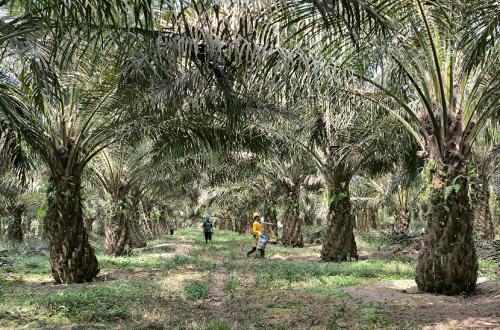
The Indonesian palm oil industry is assessed to need strengthened sustainability aspects to remain competitive in global markets. In addition to increasing productivity, industry players are encouraged to accelerate downstreaming and strengthen governance and environmental aspects to maintain competitiveness.
Zaid Burhan Ibrahim, Director of Finance, Risk Management, General, and Compliance at the Plantation Fund Management Agency (BPDP), stated that the palm oil industry can no longer rely solely on production and exports. According to him, the sector is also linked to economic, social, energy, environmental, and geopolitical aspects, thus requiring sustainable management.
“Sustainability is no longer an option, but a necessity so that the Indonesian palm oil industry remains able to compete and provide benefits to the community,” said Zaid while opening a discussion on the sustainable palm oil industry in Pangkalan Bun, Central Kalimantan, on Wednesday (29/07/2026).
Zaid noted that downstreaming is one of the main strategies to strengthen national palm oil competitiveness. Currently, more than 80 per cent of Indonesia’s palm oil exports are in the form of downstream products, providing greater added value to the national economy.
On the same occasion, the Director of Customs Facilities at the Directorate General of Customs and Excise, Yetty Yulianty, stated that the government continues to support the development of the palm oil downstream industry through Bonded Zone facilities. According to her, these incentives are provided to intermediate and downstream industries to increase the competitiveness of value-added products.
“We provide facilities especially for intermediate and downstream companies. For upstream factory companies, we do not provide facilities because our goal is downstreaming,” said Yetty.
She explained that companies in Bonded Zones receive several facilities, such as suspension of import duties, exemption from import taxes (PDRI), excise exemptions, and no collection of VAT or Luxury Goods Sales Tax (PPnBM) for goods used in the production process.
To date, there are 77 CPO and derivative product companies utilising Bonded Zone facilities. The government has provided these facilities since 2001 to encourage the strengthening of the palm oil downstream industry.
According to Yetty, approximately two-thirds of CPO and derivative product exports originate from companies receiving Bonded Zone facilities. In 2025, these companies contributed approximately 63 per cent of export volume and nearly 80 per cent of the national CPO export value, amounting to around 23.7 billion US dollars.
Yetty added that studies by the Directorate General of Customs and Excise show the cost-benefit ratio of Bonded Zone facilities reaches 1.47. This means that every Rp1 of fiscal incentive can generate approximately Rp1.47 in fiscal benefit, indicating that the policy remains effective in strengthening downstreaming, increasing investment, and driving exports for the national palm oil industry.