
Will AI Replace Humans in the Workplace? The Impacts and Explanations
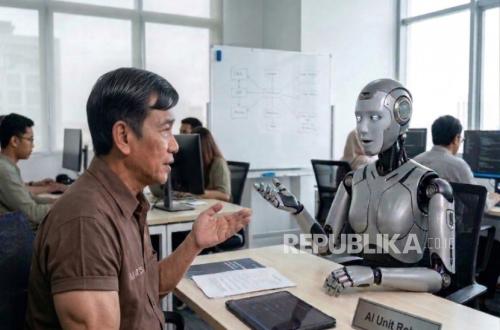
REPUBLIKA.CO.ID, JAKARTA – The rapid development of artificial intelligence (AI) has raised a major question in society: will AI replace humans in the workplace? As the use of this technology increases across various fields, concerns about job losses are increasingly discussed. However, is it true that AI will completely take over human roles? Or does this technology instead transform work methods to be more efficient and strategic? Amid these changes, it is important to examine more deeply how AI actually works and the extent of its influence on human activities in the professional world. This understanding is key to addressing various concerns while identifying potential opportunities that may not yet be realised. What Is AI and Its Role in the Workplace AI is a technology designed to mimic human intelligence capabilities, such as learning from data, recognising patterns, and making decisions automatically. In recent years, AI development has accelerated and has been applied in various sectors, from business and healthcare to the creative industry. In the workplace, AI is widely used to assist in completing repetitive tasks that require high speed. For example, the use of chatbots in customer service, recommendation systems on digital platforms, and the analysis of large amounts of data to support decision-making. With these capabilities, AI can enhance work efficiency and reduce human error potential. Nevertheless, the presence of AI in the workplace cannot be separated from the various changes it brings. This technology is beginning to affect how humans work, interact with systems, and make data-based decisions. These changes naturally give rise to various perspectives, both as opportunities and challenges, which continue to evolve alongside the utilisation of AI in various fields. The Impact of AI on Human Jobs AI development brings various impacts to the workplace, both positive and challenges that need to be addressed. On one hand, AI can increase work efficiency and productivity. Tasks that previously took a long time can now be completed faster with technological assistance, such as data processing, automated customer service, and predictive systems in business. However, on the other hand, the use of AI raises concerns regarding changes in the types of jobs required. Some routine and repetitive jobs are starting to shift because they can be performed automatically by systems. This makes the need for skills in the workplace change, adapting to existing technological developments. Nevertheless, this development is also accompanied by the emergence of new opportunities in various fields. The need for workers with skills in technology, such as data analysis, system development, and understanding of AI, is increasing. This situation shows that the changes occurring not only reduce certain types of jobs but also open new possibilities that were previously not widely known. Does AI Replace Humans? Fundamentally, AI does not completely replace human roles in the workplace. This technology can indeed take over certain routine and data-based tasks, but human roles are still needed in more complex aspects. Abilities such as creativity, empathy, and value-based decision-making become strengths that cannot be fully replaced by AI. Therefore, the relationship between humans and AI is more towards collaboration to create more effective and efficient work methods. In line with the transformation of the workplace in the AI era, the Information Technology Study Programme at Cyber University, also known as the Indonesian Cyber University, encourages strengthening student competencies in AI, data science, software development, and information systems. Through a practice-based curriculum and industry collaboration, Cyber University is committed to producing adaptive, innovative graduates ready to face technological developments. Overall, AI development brings significant changes to the workplace, both in terms of efficiency, job types, and required skills. Although some jobs are shifting, the presence of AI also opens new opportunities that encourage humans to continue adapting. Therefore, understanding the role of AI and enhancing competencies is an important step to remain relevant amid ongoing technological transformation. Cyber University, known as The First Fintech University in Indonesia, continues to commit to producing superior digital talent ready to compete in the technology era. Through an innovative learning approach oriented towards industry needs, Cyber University becomes the right choice for the young generation who want to develop in technology and digital fields.