
Will 3 Kg LPG Be Replaced? Government Develops DME and CNG
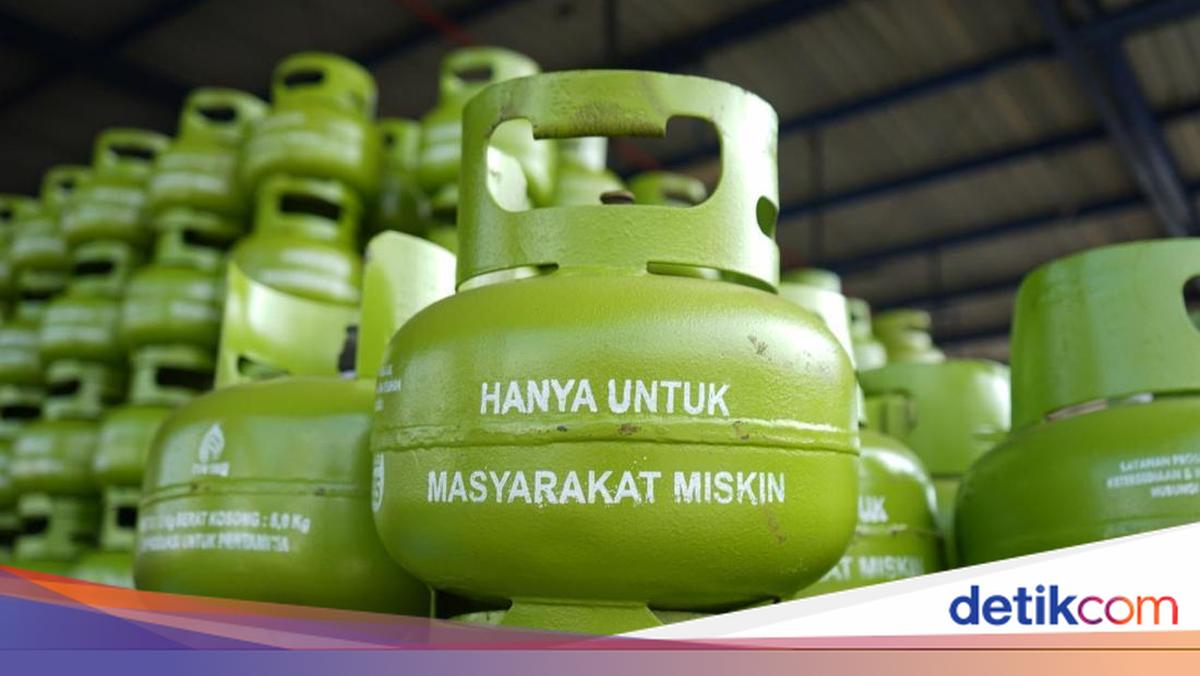
The government is preparing several measures to reduce dependence on imports of 3-kilogramme (kg) LPG. Two initiatives currently being developed are the downstreaming of coal into Dimethyl Ether (DME) and the utilisation of Compressed Natural Gas (CNG) in 3 kg gas cylinders.
According to detikFinance, Minister of Energy and Mineral Resources (ESDM) Bahlil Lahadalia stated that the development of these two projects aims to curb national LPG imports, which currently stand at around 7 million tonnes per year.
He said that for these LPG imports, the government must spend foreign exchange amounting to Rp 130 trillion to Rp 140 trillion. Of this, around Rp 80 trillion to Rp 87 trillion consists of subsidies borne by the government.
“Our foreign exchange every year is just for buying LPG, around Rp 130 to Rp 140 trillion. Especially if world oil prices are like now, it will definitely be even larger. And our subsidy is Rp 80 to Rp 87 trillion,” Bahlil said when met at the Ministry of ESDM in Jakarta on Wednesday (6/5/2026).
Here are the two projects to replace 3 kg LPG:
- Coal into Dimethyl Ether (DME)
For context, this DME project is not a new initiative planned by the government as a substitute for LPG. The project has long been planned but has not yet been implemented due to various reasons.
Now, in President Prabowo’s administration, the DME project will finally proceed. This is marked by the groundbreaking of 13 National Downstreaming Projects Phase II worth Rp 116 trillion.
Among these 13 projects, one is the development of a DME production facility with a capacity of 1.4 million tonnes per year in Tanjung Enim (South Sumatra).
“In my opinion, this is quite historic and very proud, namely the groundbreaking of the second phase of downstreaming, which includes 13 strategic downstreaming projects worth approximately Rp 116 trillion, covering five projects in the energy sector, five in the mineral sector, and three in the agricultural sector,” said Prabowo, quoted by detikFinance from the virtual inauguration on Wednesday (29/4/2026).
For him, downstreaming is the path to the resurgence of the Indonesian nation. He also stated that downstreaming projects are not instantaneous, as their foundation has been nurtured by previous presidents.
“We are doing it in many fields in the first year of the government I lead; what we are doing is strengthening the foundation that has been laid by previous presidents from the first president to the seventh,” said Prabowo.
So, what is DME as an alternative energy source to replace LPG?
According to the Ministry of ESDM website, DME has similarities in both chemical and physical properties to LPG. Because they are similar, DME can use the existing LPG infrastructure, such as cylinders, storage, and handling.
DME has a calorific value of 7,749 Kcal/kg, while LPG has 12,076 Kcal/kg. Nevertheless, DME has a higher density, so in terms of calorie comparison between DME and LPG, it is around 1 to 1.6.
The selection of DME as a substitute energy source also considers environmental impacts. DME is considered easily degradable in the air, thus not damaging the ozone layer and minimising greenhouse gases by up to 20%.
In addition, the flame quality produced by DME is bluer and more stable, does not produce particulate matter (PM) and NOx, and contains no sulphur.
DME is the simplest ether compound containing oxygen with the chemical formula CH3OCH3, which is in gaseous form, so its combustion process occurs faster than LPG.
- Utilisation of CNG
The utilisation of Compressed Natural Gas (CNG) as a replacement for LPG is being trialled for use in 3 kg cylinders before widespread implementation to the public.
Bahlil said that CNG usage is already in place. However, it is only for 12 kg and 20 kg cylinders.
“But for CNG, the 12-kilogramme and 20-kilogramme ones are already running, for use in hotels and restaurants. And it’s good, and more efficient. But we can’t possibly ask the people to use the heavy ones, 20 kilogrammes… Now, this is what we’re working on. And we’ve actually been working on it for a year. But to get the technology for the 3-kilogramme one, we’re testing it. That’s it,” Bahlil explained at the Ministry of ESDM in Jakarta on Wednesday (6/5/2026).
Bahlil said that CNG will later be subsidised, like 3 kg LPG. This subsidisation is in line with President Prabowo Subianto’s directive to ensure affordable prices for the public.
“The President’s directive, whether CNG or LPG, will always prioritise helping the people who indeed need our help. Thus, I assure you that subsidies will still be necessary for the people,” said Bahlil.
On a separate occasion, Bahlil stated that CNG prices are claimed to be 30% cheaper than LPG.
“CNG has already been studied. The price is much cheaper, around 30% cheaper,” said Bahlil at the Presidential Palace Complex in Central Jakarta on Tuesday (5/5/2026).
According to him, CNG is cheaper because the raw material supply is abundant in Indonesia. Unlike LPG, which is expensive due to imports, CNG does not require large transportation costs for imports.
“Why is it cheaper? Because first, the gas is available here, and the industry is in the country. So, we don’t import. The transportation cost alone can cover it. And second, it is located in almost all regions with gas sources, so it is far more efficient,” said Bahlil.