
Wild Animals Preying on Livestock Terrorise Gunungkidul Again
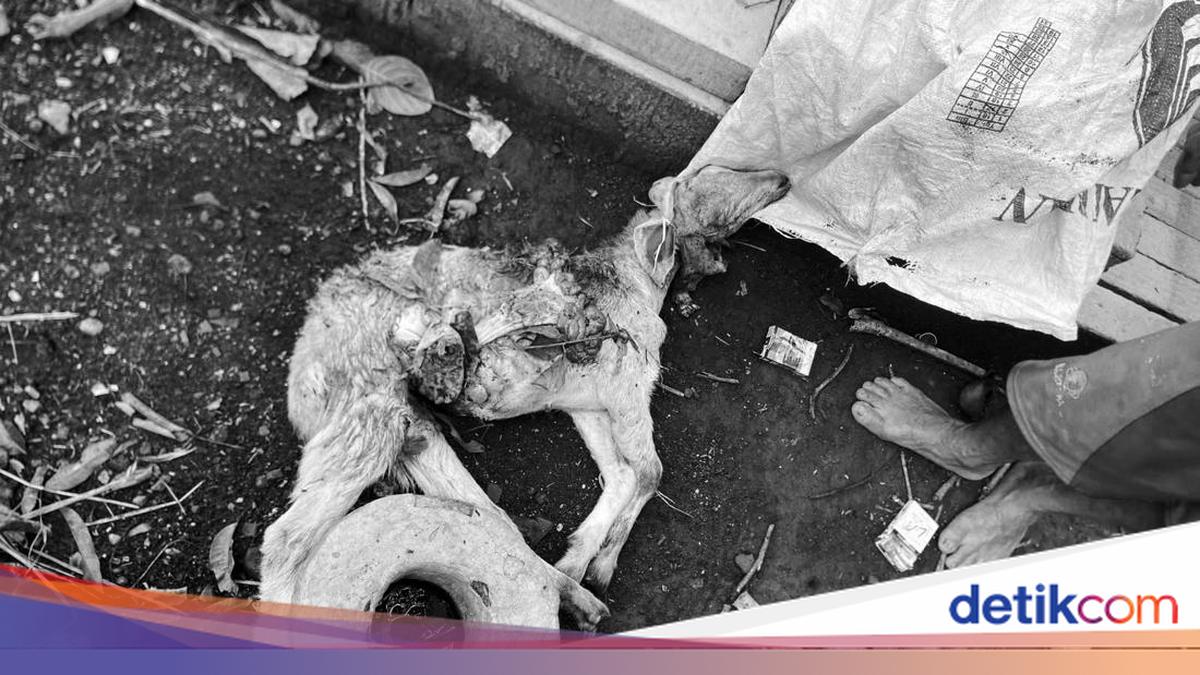
Livestock-killing animals have terrorised Gunungkidul Regency again. This time, eight goats were reported dead and mauled in Botodayaan Village, Rongkop District.
“There are indeed eight goats dead in Botodayaan, Rongkop. The suspected cause is an attack by stray dogs,” Gunungkidul Police Public Relations Officer First Inspector Tukiran told detikJogja by phone on Thursday (5 November 2026).
Eight Goats Found Dead in Botodayaan
The eight goats belonged to three residents and were kept at separate locations. Tukiran said three belonged to Ngatijan, 54, a resident of Jati, Botodayaan, whose pen was in Alas Plelet, Botodayaan.
Another three belonged to Lartowiyono, 68, also a resident of Jati, and were kept in Alas Plonjoro, Condong, Botodayaan. The remaining two belonged to Gina, 67, a resident of Botolor, Botodayaan, and were kept in Alas Ndilem, Condong, Botodayaan.
“The eight dead goats were found at three different locations. They were in their pens and had been mauled,” Tukiran said.
Tukiran explained that Ngatijan discovered the incident when he went to Alas Plelet to feed his goats at 6.30am on Thursday (5 November). The pen is about 500 metres from his home.
“When he arrived at the pen, the owner, Ngatijan, was shocked to see that three of his goats had died in a gruesome condition,” he said.
Ngatijan then heard from Lartowiyono and Gina that their goats had also been found dead in their pens.
“The eight dead goats had bite wounds on their necks, stomachs and hind legs,” Tukiran said.
The three owners reported the incident to the Botodayaan village administration. They then went to the scene with staff from the Rongkop Animal Health Centre (Puskeswan).
“The pens are about 500 metres from residential areas. The lack of lighting and supervision by the owners may have allowed stray dogs, which struggle to find water during the prolonged dry season, to prey on livestock in the fields,” Tukiran said.
The community police officer also urged residents whose livestock are kept in fields to bring them home.
“Livestock still being kept in pens in the fields have been asked to be brought home to prevent similar incidents from happening again,” he said.
Nine Goats Found Dead in Bohol
Previously, nine goats belonging to a resident and kept at Bulak Belang, Bamban Hamlet, Bohol Village, Rongkop District, were found dead in a gruesome condition on Wednesday (28 October).
“The nine goats in Rongkop died because of an attack by stray dogs,” Tukiran told detikJogja by phone on Wednesday (28 October 2026).
“At the time, a witness, Hardi Suwito, saw two adult dogs. When he threw something at them, they ran west, away from the pen,” he added.
Tukiran said the owner, Hardi Suwito, 82, discovered the deaths at 5.30am on Wednesday (28 October). The goat pen was about 500 metres from his home.
“When he arrived at the pen, the witness was shocked to see his eight goats dead in a gruesome condition: they had been mauled and had bite wounds on their necks, stomachs and hind legs,” he said.
Recurring Attacks by Wild Animals Since 2017
According to the Gunungkidul Agriculture and Food Agency (DPP), attacks by wild animals on livestock have been a recurring threat in parts of Gunungkidul since 2017. The incidents usually occur when water sources such as lakes dry up.
“Wild-animal attacks on livestock in Gunungkidul have occurred since 2017 and have recurred every year,” DPP head Rismiyadi told detikJogja by phone on Monday (26 October 2026).
Rismiyadi made the statement in response to the deaths of two goats, found mauled in Saptosari, Gunungkidul, on Wednesday (21 October).
He said the DPP had recorded livestock attacks in Wonosari, Purwosari, Saptosari, Tepus, Girisubo and Karangmojo districts. Other parts of Gunungkidul could also be at risk.
“These attacks by wild animals usually occur when water levels in springs, particularly lakes, fall,” he said.
Rismiyadi said measures were needed to protect livestock, particularly goats, and ensure their survival in the face of attacks by wild animals. This required residents to take preventive security measures.
The agency has issued a letter to district and village heads across Gunungkidul on preventing wild-animal attacks on livestock. Measures include moving animals from distant fields to areas near homes and organising night patrols.
“Attacks generally occur in mountainous areas and fields far from residents’ homes,” Rismiyadi said.
If these measures cannot be taken, he said, early vigilance through observation and monitoring of livestock kept in hilly areas is still necessary.
“Residents can also conduct regular checks through patrols or night watches. They can raise the fences and reinforce the walls of pens so wild animals cannot get in, and install lighting around the pens,” he said.
Prevention could also include more Communication, Education and Information (KIE) activities to inform residents about the patterns and cycles of these attacks, enabling them to prepare in advance.
“Residents should also report any wild-animal attacks on livestock to the nearest officials as soon as possible, either through the local technical unit or animal health centre, or via the hotline on the LaporDok app,” he said.
Farmers Promised Assistance
The Gunungkidul Agriculture and Food Agency has also said that assistance is available for farmers whose livestock have been attacked.
“Yes, there is. For livestock bitten by wild animals, the scheme is through Baznas. We will submit an application, and the assistance will take the form of a goodwill payment,” Rismiyadi said.
The goodwill payment scheme is being handled through Baznas because there is no regulation governing compensation for residents whose livestock die in wild-animal attacks. The existing Regent Regulation No. 10 of 2025 sets out procedures for compensation and/or assistance in eradicating infectious animal diseases, as well as compensation for healthy animals culled to control disease. That compensation is funded from the regional budget’s contingency fund (BTT).
“At present, the regulation only covers livestock that die from infectious animal diseases. So, although there is no regulation yet, we are trying to use another funding source—in this case, Baznas,” he said.
The district administration will collect data on livestock killed by wild animals in its area and report it to the Regent. The regency government will then coordinate with Baznas.
“We have submitted a proposal to Baznas for goodwill payments related to livestock killed by wild-animal attacks,” he said.
He said Baznas would determine the amount after verification. Eligibility would also be assessed using household welfare deciles to ensure that assistance reached the intended recipients.
“Baznas will decide the amount. But it is likely to be lower than the goodwill payment for livestock that die from infectious animal diseases,” he said.
Similar incidents have occurred before. Between August and September 2026, such cases were reported in Playen, Tepus and Panggang. In Tepus, seven goats died, while in Panggang two cows were reported to have died, allegedly after being attacked by wild animals.
Source: jawawa.id (https://jawawa.id/newsitem/wild-animals-preying-on-livestock-terrorise-gunungkidul-again-1793922622)
Originally published by detikJogja (https://www.detik.com/jogja/berita/d-8740442/hewan-liar-pemangsa-ternak-kembali-teror-gunungkidul), translated from Indonesian