
WIFI Targets 70 Million Indonesian Households Through Internet Rakyat Service
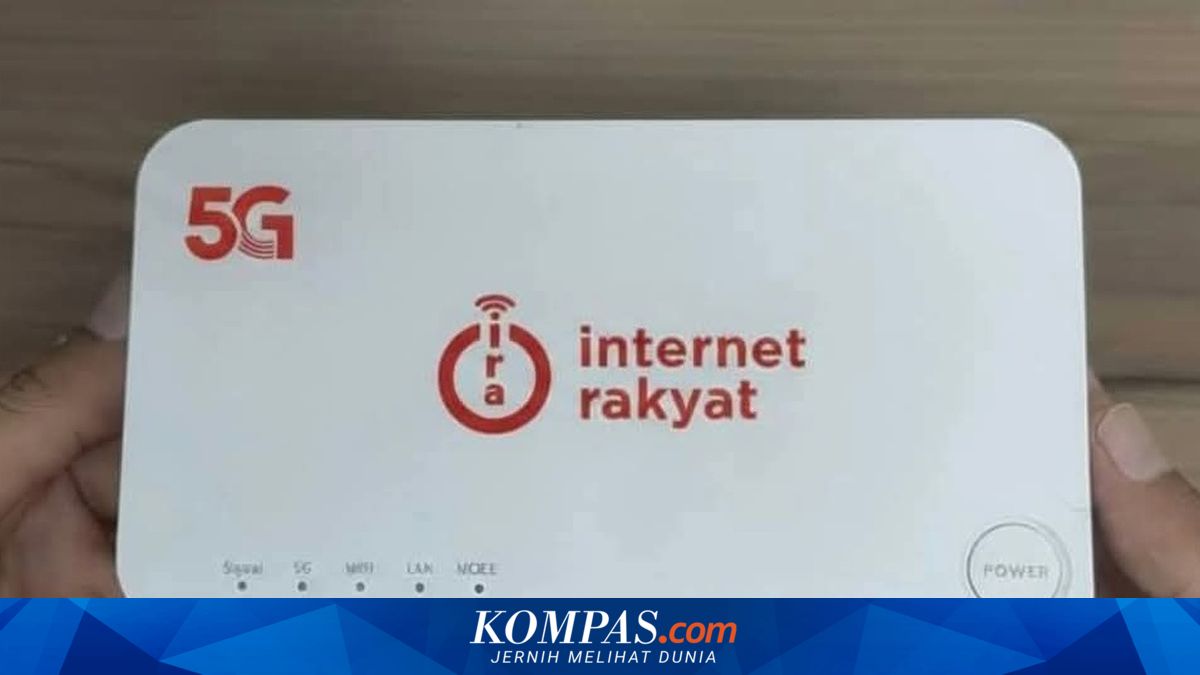
PT Solusi Sinergi Digital Tbk (WIFI) is optimistic that its Internet Rakyat (IRA) service will become a new player reshaping the national fixed broadband industry landscape. Targeting the lower-middle-income segment previously underserved by home internet, the company aims to capture over 70 million households across Indonesia. IRA was officially launched by WIFI through its subsidiary, PT Telemedia Komunikasi Pratama (Telemedia), with simultaneous rollout in Region I covering Java, Maluku, and Papua. Telemedia’s President Director and WIFI Director, Shannedy Ong, stated that Indonesia’s fixed broadband market remains substantial with current penetration at just 20-22 per cent. He noted that while overall internet penetration in the country stands at 85 per cent, the majority stems from mobile usage rather than fixed broadband home services. This situation presents a significant opportunity for IRA to enter the underserved lower-middle-income market. “The 85 per cent internet penetration in Indonesia refers to mobile usage, not fixed broadband at home. That is why Indonesia lags far behind neighbouring countries, where penetration rates exceed 50 per cent,” he said. With a home internet service offering speeds up to 100 Mbps at Rp100,000 per month, the company is confident it can boost national fixed broadband penetration and aggressively expand its customer base. Converting this potential market into active customers would significantly impact the company’s revenue. For instance, if IRA reaches 5 million customers by 2026, the company’s total revenue potential can be calculated from this figure. “At Rp100,000 per customer, say 5 million this year, and more next year, the total revenue can be easily estimated,” he added. Amid intense competition in the internet service provider (ISP) industry, Ong said IRA has a distinct business approach. The company has overhauled its business model, network design, and distribution strategy to deliver affordable internet without compromising quality. “We have studied all ISP business models and designs over the past five to ten years. Our approach is different,” he added. One efficiency strategy involves a different network design and split ratio compared to other operators. Additionally, the company collaborates with local ISPs through revenue-sharing schemes to expand market penetration more efficiently. If the company used traditional approaches like most existing operators, offering internet at Rp100,000 per month would be unfeasible.