
Widespread Lay-offs Reflect Major Changes in Indonesia’s Economy, Deputy Coordinating Minister Says
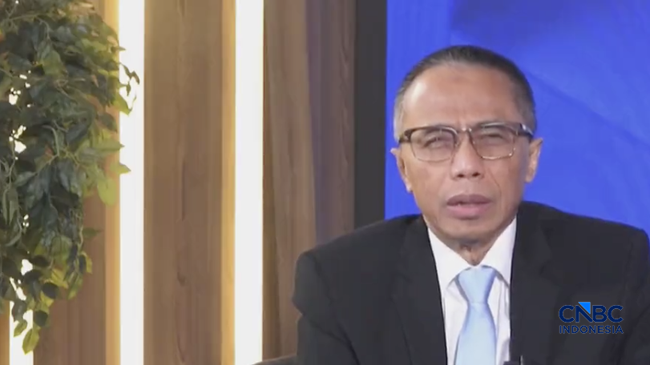
Jakarta, CNBC Indonesia — Deputy Coordinating Minister for Economic Affairs Dradjad Hari Wibowo said changes in Indonesia’s economy were disrupting demand for labour.
One consequence has been a continuing wave of lay-offs. According to data from the Ministry of Manpower, 72,336 people had been laid off between January and October 2026.
“Our economy is now transforming. So, to all of you in business: because of technological disruption, various other factors, AI and geopolitical changes, we are experiencing an economic transformation that we may not realise is happening now,” Dradjad said in an interview with CNBC Indonesia, quoted on Friday (6 November 2026).
Dradjad also said household spending patterns were changing. In his view, younger generations no longer stock up on household necessities in large quantities at the beginning of each month.
Instead, they buy necessities as needed, and many also shop online.
This trend has left major shopping centres quieter than in previous periods. At the same time, Dradjad said, small retailers were becoming more widespread.
“After studying it, we found that some people, especially the younger generation and newly formed households, do not shop monthly and pile everything up at home the way we used to,” Dradjad said.
“Housing is getting more expensive, and land is getting more expensive, so homes are not as spacious as our parents’ houses. As a result, they manage their space more efficiently. They would rather use it for creative equipment and items that meet the needs of millennials and Generation Z,” he added.
Dradjad also said the number of workers in the services sector was growing, driven by technological disruption and the increasing use of artificial intelligence (AI).
However, Indonesia’s education, vocational training and employment systems were not yet prepared for the transformation caused by this disruption.
As a result, traditional industrial sectors have weakened and activity has shifted elsewhere, including away from textiles and textile products.
Statistics Indonesia (BPS) data show that consumption of textiles and textile products grew by only 3–4%. Telecommunications, transport, hotels and restaurants, meanwhile, grew by nearly 6–7%.
Source: jawawa.id (https://jawawa.id/newsitem/widespread-lay-offs-reflect-major-changes-in-indonesias-economy-deputy-coordinating-minister-says-1793958634)
Originally published by CNBC Indonesia (https://www.cnbcindonesia.com/news/20261106140408-4-782992/phk-marak-wamenko-dradjad-sebut-ada-perubahan-besar-di-ekonomi-ri), translated from Indonesian