
Why the US Dollar Remains the World's Strongest Currency After 250 Years
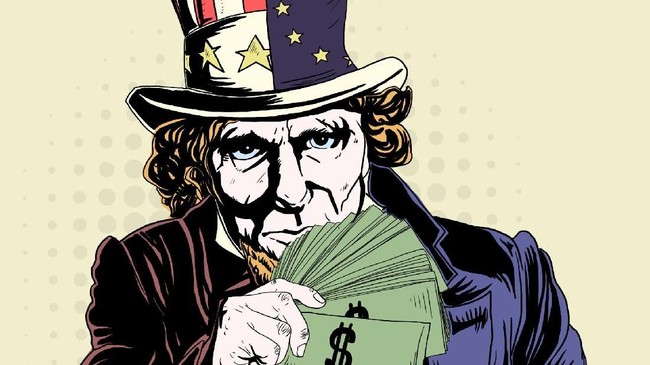
The United States celebrated its 250th Independence Day on Saturday, marking a quarter of a millennium since 1776. Despite its age, one symbol of American influence remains paramount: the US dollar. The dollar is not just the currency used by Americans for daily transactions. It is also used by central banks, corporations, investors, and governments across the globe to store foreign exchange reserves, pay for imports, issue debt, and conduct foreign exchange transactions. Global data underscores the dollar’s dominance. It remains the largest currency in global foreign exchange reserves, is used in more than half of global export invoices, and is on one side of the majority of foreign exchange transactions worldwide. The dollar became the official monetary unit through the Coinage Act of 1792, which established the US Mint. However, in its early days, the dollar was not a major global currency. The centre of world trade and finance was in Britain, and the pound sterling was more widely used in international transactions. This began to change in the 20th century. During World War I, European nations required massive amounts of food, raw materials, industrial equipment, and war supplies from the US. These large-scale purchases weakened Europe’s financial position while strengthening America’s, transforming the US from a country dependent on European capital into a global financial centre. This shift laid the foundation for the dollar’s rise. A pivotal moment came after World War II with the 1944 Bretton Woods Conference, where 44 nations agreed on a new monetary system. Under this system, participating countries pegged their currencies to the US dollar, which was in turn pegged to gold at $35 per ounce. This made the dollar the centre of the international financial system, as countries could link their currencies to the dollar rather than directly to gold, with the US guaranteeing its convertibility. The US was in a uniquely strong position, with a robust economy and large gold reserves, while other major economies were rebuilding after the war. Although the Bretton Woods system ended in 1971 when President Nixon suspended the dollar’s direct convertibility to gold—an event known as the Nixon Shock—the dollar’s dominance did not wane. The world moved to fiat currencies and floating exchange rates, but the dollar remained the primary global currency. A contributing factor was the energy trade, with crude oil largely traded in dollars, creating consistent global demand for the currency. However, analysts note there was never a formal treaty mandating this; the petrodollar system is more a function of economic relationships, market practices, and the recycling of oil revenues into US financial assets. The dollar’s post-1971 strength stems from the size of the US economy, the depth of its financial markets, its widespread use in trade, and market confidence in dollar-denominated assets. According to IMF data, the dollar still accounted for around 57% of global foreign exchange reserves in the first quarter of 2026, far outpacing the euro, yen, pound sterling, and Chinese yuan. The Brookings Institution notes the dollar is used in approximately 54% of global trade invoices. Its dominance in foreign exchange markets is even more pronounced, with the Bank for International Settlements recording the dollar on one side of 89.2% of all global forex transactions in April 2025, up from 88.4% in 2022. A key reason for the dollar’s enduring strength is the depth and liquidity of US financial markets, particularly the market for US Treasury bonds, which provides a safe and easily tradable asset for global central banks and large investors. While other nations may have large economies, they lack a financial market of comparable depth and liquidity. For instance, China’s renminbi is not yet fully convertible, limiting its use as a global reserve currency.