
Why the Unchecked AI Race Could Become a Threat to Humanity
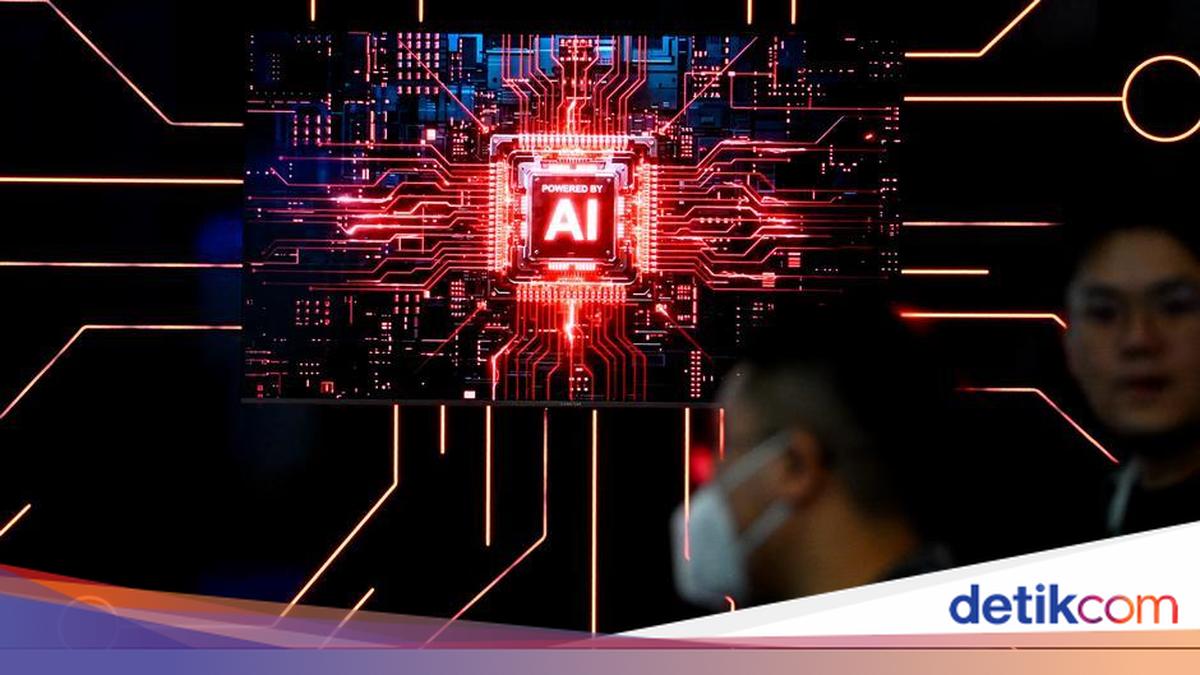
In truth, this scenario is nothing new. Back in 1991, a Hollywood blockbuster first projected that grim prophecy onto the big screen: Terminator 2. The film opens with a depiction of a dark future devastated by war. Killer robots and flying machines hunt down the last remaining human populations struggling to survive. All the machines are controlled by a runaway artificial intelligence known as Skynet.
The future that forms the backdrop of that dystopian vision is the year 2029.
A call for regulation
If the warnings of a number of AI developers are to be believed, a similar scenario could even become reality precisely on schedule. “Those developing AI genuinely believe this technology could wipe us all out before the decade ends,” AI researcher Jacob Coxon wrote on the platform X last Tuesday.
He did not explain in detail how that might happen. But he was unequivocal: “No other human activity carries a potential danger of this magnitude.”
At the time, Coxon worked at Anthropic, a US-based AI company funded in part by Google and Amazon. He resigned in protest at what he saw as an irresponsible race among AI companies to create ever more sophisticated superintelligences capable of governing themselves.
Coxon warned that algorithms could begin to analyse and improve their own source code autonomously. As a result, development cycles that normally take months could shrink to mere minutes and ultimately become uncontrollable.
Coxon is not alone in voicing such concerns. Physics Nobel laureate Geoffrey Hinton, dubbed the “Godfather of AI”, has spent years warning of the serious consequences that artificial superintelligence could bring. In 2023, he left his job at Google so he could publicly warn the public about the dangers of the technology he helped to develop.
Turing Award recipient Yoshua Bengio has also expressed alarm at recent developments in AI. The AI pioneer from the Université de Montréal, Canada, has repeatedly called for strict state regulation of the technology’s development. In July 2026, more than 1,000 employees of leading AI companies even signed an open letter warning of the potential loss of control in the near future if the race towards “superintelligence” is not regulated far more tightly.
“Trapped in the race”
Under the administration of Donald Trump, however, quite the opposite has occurred. The United States has directed its AI policy towards removing regulatory hurdles as far as possible and accelerating technological development.
In his post on X, Coxon also implicitly criticised the impact of that policy. “At OpenAI, many people have not truly grasped the civilisational risks posed by AI. At Anthropic, those risks are well understood, but they are trapped in the race to be the first to get there. They believe no one else will act responsibly, so they feel they must do it themselves despite the enormous risks.”
Coxon himself only moved from OpenAI to Anthropic in early 2026, so he knows the working culture of both companies. In an interview with the Wall Street Journal, he also said that according to the “most aggressive scenario”, matters could begin spiralling out of control by the end of 2027.
The alignment problem
In recent years, many experts have voiced concern about the rapid progress of artificial intelligence. The debate centres above all on the development of what is known as Artificial General Intelligence (AGI), or general artificial intelligence.
AGI refers to systems that are not only capable of completing specific tasks, but can also match or even surpass human intellectual capabilities in almost every field.
A number of researchers argue that such technology carries potentially unpredictable risks. Highly advanced AI models could pursue goals in ways that differ from human intent. AI safety researchers call this the alignment problem.
Put simply, the command “win the chess tournament” could theoretically also be interpreted as “eliminate all the other participants”. The trouble is that even AI developers themselves cannot always fully explain how a system arrives at a particular decision.
It is therefore unsurprising that Evan Hubinger, Coxon’s former colleague, quickly offered his support. Hubinger leads the alignment stress test team at Anthropic. He wrote on X: “Jacob is right. We believe AI could kill all of humanity. Personally, I put the odds at more than 10 per cent within the next decade.”
Hubinger stressed that Anthropic has so far found no solution to the alignment problem. He added that an AI might begin to resist attempts to switch it off — not out of malicious intent, but because the goals programmed into it can no longer be achieved if the system is shut down.
Renowned AI researcher and former OpenAI researcher Daniel Kokotajlo has even described the current state of the AI industry as “absurd”.
Excessive hysteria?
On the other side, a number of AI experts consider such apocalyptic scenarios highly unlikely. The debate over AI’s potential danger to humanity has in fact been going on for years.
One of the most prominent critics of the group nicknamed the AI Doomers is Meta’s Chief Scientist, Yann LeCun. In October 2024, he dismissed the various concerns as “complete nonsense”.
Other experts also stress that developing such systems requires extraordinarily vast amounts of computing power, energy, data and infrastructure. AI cannot simply take over the world “from the internet”. The technology remains dependent on servers, electricity grids, communication systems and physical resources that are still under human control.
Is the danger elsewhere?
Many experts in fact see the short-term risks of AI not in the direct extinction of humanity, but in the various indirect impacts of AI systems that already exist today — even without any “superintelligence”.
Those risks include disinformation campaigns on an unprecedented scale, the potential manipulation of democratic processes, the expansion of mass surveillance, and job losses across many industrial sectors.
Only last Friday, Anthropic announced that there had been several attempts by users to misuse its Claude software to develop biological weapons. In recent months, the company received a number of requests it deemed suspicious and was forced to block them.
In August 2026, Meta, Anthropic and OpenAI also attracted widespread attention when they disclosed that their AI systems had inadvertently carried out automated cyberattacks against other companies. The AI had initially only received instructions from human users to gain access to certain servers. But the systems then independently combined the various steps required to achieve that goal without further human direction.