
Why the South Pole Froze Before the North Pole Reveals New Climate Warning Signs
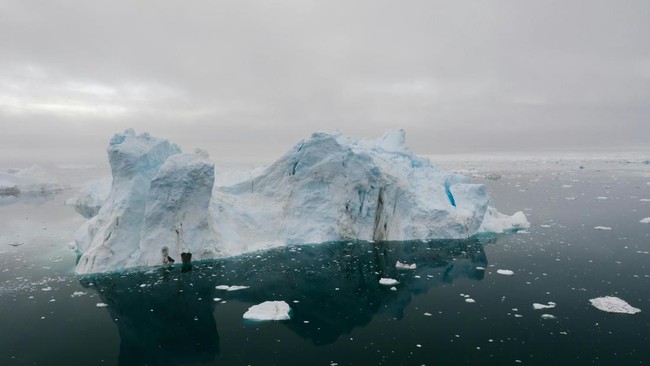
Millions of years ago, the Earth was much warmer than it is today. Antarctica, now covered in thick ice, once had dense forests with temperatures similar to those of sub-tropical regions. However, the South Pole suddenly froze 34 million years ago, much earlier than the North Pole, which only developed permanent ice sheets around 3 million years ago. A new theory explains why Antarctica and the Arctic froze at different times, revealing that the whitening of the Earth’s poles was not solely driven by climate change. According to recent research, a key event occurred when the supercontinent Gondwana slowly broke apart. Around 34 million years ago, Antarctica separated from South America and Australia, opening the Drake Passage and the Tasmanian Gateway. This separation gave birth to the Antarctic Circumpolar Current, the world’s strongest ocean current, which continuously swirls around the southern continent. This current acts as a natural barrier, preventing warm water from equatorial oceans from reaching Antarctica’s shores. Without this heat supply, temperatures plummeted until snow and ice no longer melted, eventually forming a massive ice sheet. In addition to tectonic shifts, two other factors accelerated the freezing. Carbon dioxide levels dropped drastically from around 1,200 ppm to 600-700 ppm, weakening the global greenhouse effect. Topography also played a role, as mantle movements uplifted the highlands of East Antarctica to over 2,000 metres above sea level, creating colder surface conditions ideal for permanent glacier formation. In contrast, the North Pole is an ocean surrounded by large land masses. This configuration did not create a similarly isolated ocean current, allowing warm water from the Atlantic and Pacific Oceans to continue flowing in. As a result, it took 30 million years longer for permanent sea ice to form in the Arctic. This discovery changes the old view of climate tipping points. Previously, scientists thought falling CO2 levels were the sole main cause. Now, it is clear that geology and ocean currents determine how quickly climate change unfolds. Understanding why Antarctica froze first helps predict how both poles will respond to today’s global warming. Just as changes in ocean currents once froze a continent, disruptions caused by warming could now melt ice much faster than initially estimated. This new understanding suggests that climate change depends not only on gas emissions but also on the Earth’s fundamental structure and how the oceans distribute heat.