
Why the Singapore Dollar is So Strong, Crushing the Rupiah Without Mercy
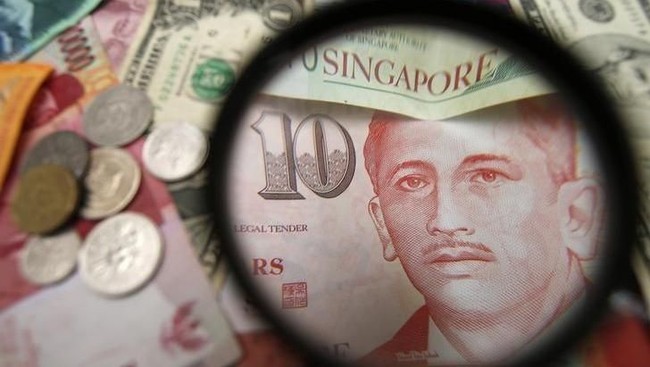
Jakarta, CNBC Indonesia – The Singapore dollar has been one of Asia’s strongest-performing currencies this year. The Lion City’s currency has not only strengthened against the US dollar but also decisively outperformed several regional currencies, including the rupiah.
According to Refinitiv data, on Friday, 29 May 2026, the Singapore dollar stood at SGD1.277/US$, a marginal 0.12% decline against the US dollar. However, year-to-date, it has still appreciated by 0.65% against the greenback.
The SGD’s performance against the rupiah has been even more impressive. During Friday’s intra-day trading, the Singapore dollar briefly breached the Rp14,000/SGD level.
This level marked the rupiah’s weakest ever against the Singapore dollar, while signifying the SGD’s strongest position against the Garuda currency.
This strength of the Singapore dollar indicates that the SGD is not merely benefiting from the rupiah’s weakness.
The currency has demonstrated robust resilience amid global pressures, particularly as many Asian currencies remain shadowed by geopolitical uncertainty, energy price surges, and more cautious capital flows.
So, why is the Singapore dollar so strong?
The answer lies in three key factors: Singapore’s exchange rate-based monetary policy, the Singapore dollar’s status as an Asian safe haven, and the country’s solid economic fundamentals as assessed by global investors.
Central Bank Allows Singapore Dollar to Strengthen
A primary reason for the Singapore dollar’s strength is the monetary policy of its central bank, the Monetary Authority of Singapore (MAS).
Unlike many other central banks that control inflation through interest rates, Singapore uses the exchange rate as its primary monetary policy instrument.
The MAS manages the Singapore dollar’s movement against a basket of its major trading partners’ currencies through a mechanism known as the Singapore dollar nominal effective exchange rate (S$NEER).
Under this system, the Singapore dollar is not left to fluctuate freely. The MAS regulates its movement within a policy range that is not publicly disclosed.
The central bank can adjust its policy direction in three ways: modifying the slope of the currency’s appreciation path, shifting the midpoint of the policy range, or widening or narrowing the Singapore dollar’s movement corridor.
On 14 April 2026, the MAS tightened its monetary policy for the first time since 2022. It increased the slope of the S$NEER appreciation path, allowing the Singapore dollar to appreciate more rapidly.
This move followed surging oil and natural gas prices due to the Iran conflict, which heightened import inflation risks in Singapore.
Strong SGD to Contain Import Inflation
Singapore is a small nation with a highly open economy. Much of its domestic needs come from imports, including energy, foodstuffs, consumer goods, and various production inputs.
Thus, when oil, gas, and imported goods prices rise, Singapore is highly vulnerable to imported inflation.
This is where a strong Singapore dollar becomes crucial.
A stronger currency helps suppress import costs. Goods from abroad become relatively cheaper in Singapore dollars, preventing inflationary pressures from soaring too sharply for consumers.
The MAS has raised its 2026 inflation forecast. Headline and core inflation are now projected at 1.5% to 2.5%, up from the previous estimate of 1% to 2%.
The MAS also noted that Singapore’s import energy costs have risen, with prices of other imported goods and services expected to increase over the coming quarters. As a result, core inflation is anticipated to rise and remain elevated in the near term.
Under these conditions, the Singapore dollar’s strength is not merely a market-driven phenomenon. The SGD’s appreciation is part of the MAS’s policy strategy to mitigate the impact of surging import prices.
Singapore Dollar as Asia’s Safe Haven
Beyond MAS policy, the Singapore dollar benefits from Singapore’s reputation as a highly stable and secure nation.
Amid global uncertainty, investors typically seek safer assets. While the US dollar remains the world’s primary safe haven, in Asia, the Singapore dollar is often viewed as a key alternative.
Singapore boasts a credible financial system, strong governance, substantial foreign reserves, and the highest credit ratings. These factors make investors more comfortable holding Singapore dollars during global market turbulence, such as recent Middle East conflicts.
As energy prices rise and geopolitical risks escalate, many emerging market currencies face increased pressure. Meanwhile, the Singapore dollar remains relatively resilient, bolstered by its stability reputation and lower risk profile.
Singapore Also Attracts Capital Flows
Singapore’s position as a global financial hub further supports the Singapore dollar.
As one of Asia’s largest financial hubs, Singapore often attracts capital flows when investors seek safer and more stable destinations. During geopolitical tensions, capital fleeing risky regions tends to flow into countries perceived as safer.
Singapore also has additional appeal from high-growth sectors. Before the Iran conflict escalated, the economy was already supported by industries related to artificial intelligence products and services.
Growth in these sectors has boosted demand for the Singapore dollar. As business activity, investment, and financial transactions increase, the need for SGD rises accordingly.
The strength of the Singapore dollar also
Source: jawawa.id (https://jawawa.id/newsitem/why-the-singapore-dollar-is-so-strong-crushing-the-rupiah-without-mercy-1780039792)
Originally published by CNBC Indonesia (https://www.cnbcindonesia.com/research/20260529112638-128-738687/ini-alasan-dolar-singapura-perkasa-libas-rupiah-tanpa-ampun), translated from Indonesian