
Why the Resale Value of Company Operational Cars Plummets
The process of rejuvenating or selling a company’s operational cars often becomes a tiring moment for internal teams. Intending to obtain optimal fresh funds for the company’s coffers, what happens in the field is often the opposite. When dealing with potential buyers, companies frequently find themselves in a weak position and are forced to accept car price offers far below expectations.
Based on consumer behaviour survey data in the national used car market, approximately 65% to 70% of potential buyers (including dealer networks) are very interested in ex-corporate cars. The main reason is the guarantee of clear document legality, as well as a periodic maintenance track record that is considered more consistent and bound by a strict schedule compared to privately owned vehicles. However, this high market interest often clashes with asset depreciation.
Recognise the critical points and negotiation tricks often used by buyers to push prices as low as possible by exploiting signs of physical wear, even though the vehicle’s legality is highly sought after. “Many companies actually lose tens of millions in value not because the car is bad, but because they don’t have data that can prove the vehicle’s condition professionally. As a result, the price is continuously pushed down during negotiations,” said Ardy Alam, CEO of Garasi.id.
For internal company teams, understanding which parts are often targeted by buyers to bid cheaply on assets is a crucial first step. Here are some critical points for vehicles aged 4–5 years that must be watched: Professional buyers will be very keen to see the straightness of body lines, traces of re-welding, or uneven paint. If a collision is suspected (even just a minor knock), they will immediately cut the selling price by tens of millions of rupiah. In operational cars that often face long traffic jams, transmission components are prone to fatigue. Subtle symptoms like a slightly jerky gear shift (delay) are often used by buyers as a reason to request a large price cut on the grounds of expensive transmission repair costs. Strange noises or wear on the suspension, tierod, and bushings due to high-intensity use are very easy to detect during a test drive. This is often used by buyers as an argument that the car “needs a lot of new components”. This is often exaggerated by buyers as an early sign of gasket or cylinder damage requiring a large engine overhaul cost, even though the condition may still be very reasonable.
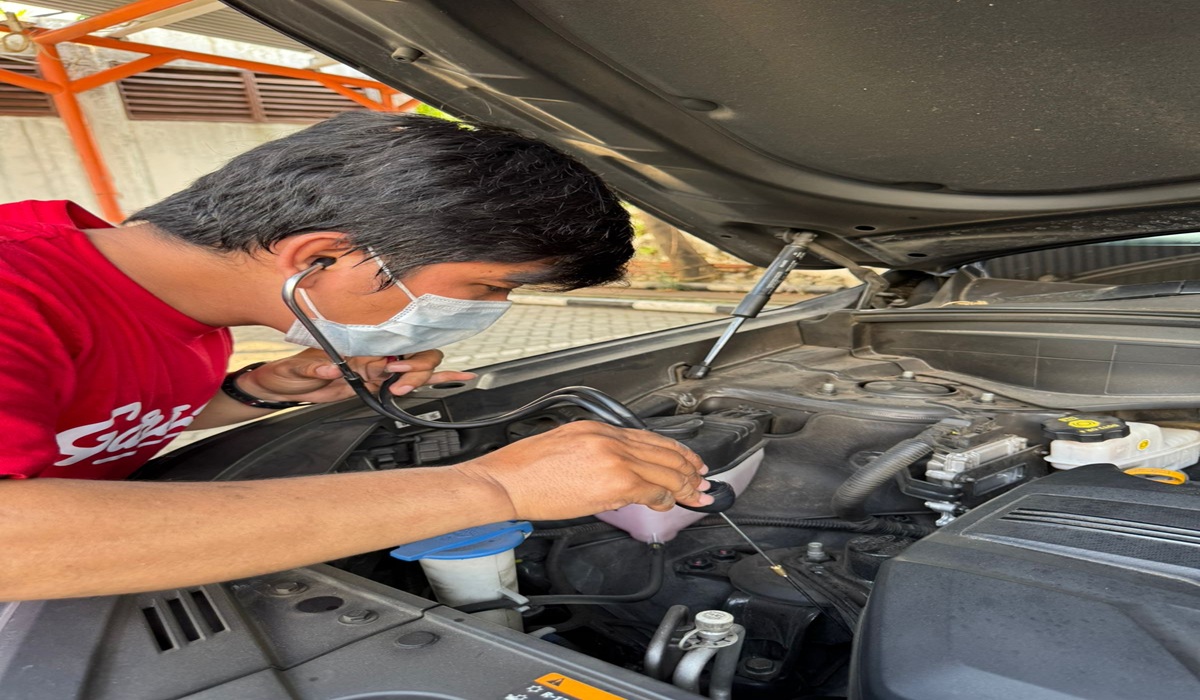
To break these negotiation tricks and maximise the high market interest, companies need data transparency. Answering this need, the car inspection service Garasi.id provides an independent solution by offering a comprehensive report on up to 170 checkpoints in detail and professionally. With an objective inspection certificate, the company has authentic, strong evidence to defend the best selling price. The existence of this transparent inspection data will change the company’s bargaining position; individual buyers who are already highly interested will feel much more confident, and showrooms can immediately execute a fair transaction without needing to make unilateral price cuts. The car inspection service helps companies make asset disposal decisions in a more measured, transparent, and data-based manner so that vehicles retain optimal value before their price falls too deeply.