
Why the Death Penalty Hasn't Eradicated Corruption: An Explanation
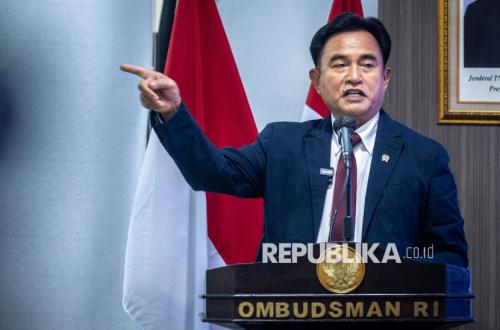
REPUBLIKA.CO.ID, JAKARTA – Coordinating Minister for Legal Affairs, Human Rights, Immigration and Corrections (Menko Kumham Imipas) Yusril Ihza Mahendra has affirmed that strengthening national ethics is an essential foundation in efforts to eradicate corruption. According to him, a strong legal apparatus must be underpinned by the moral awareness of every citizen.
While delivering a public lecture at the Institute of Domestic Governance (IPDN) campus in Jatinangor, Sumedang, West Java, on Monday, Yusril said Indonesia already has various legal instruments to handle criminal acts of corruption. However, the existence of such instruments is insufficient if it is not accompanied by strengthening ethics in national and state life.
“Laws that are already so harsh, even life imprisonment, the death penalty, and yet corruption still happens. Therefore, I believe there is no other choice but to strengthen the nation’s ethics, and that is why Pancasila is so important,” said Yusril.
He explained that Indonesia’s corruption eradication apparatus includes the Law on the Eradication of Criminal Acts of Corruption, the Corruption Eradication Commission (KPK) Law, the Corruption Crime Court (Tipikor), and law enforcement powers exercised by the Indonesian National Police, the Attorney General’s Office, and the KPK.
Nevertheless, Yusril assessed that law enforcement must be balanced with character-building and moral responsibility. In this way, eradicating corruption does not rely solely on legal mechanisms, but is also supported by each individual’s awareness to avoid behaviour that contradicts ethics.
On that occasion, Yusril also emphasised the importance of internalising the values of Pancasila, particularly the first principle, Belief in the One and Only God, as a moral guide in national and state life according to each person’s religious faith.
“The principle of Belief in the One and Only God must be deeply felt and practised according to the religious beliefs of each faith that exists in our country. Let us imbue our national and state life based on the principles of religious ethics,” he said.
According to Yusril, ethics is an essential element so that the law does not stop at being merely written rules, but is applied with consideration of the values of justice and the public interest.