
Why Tens of Millions of Students Want the Free Nutritious Meal Programme to Continue
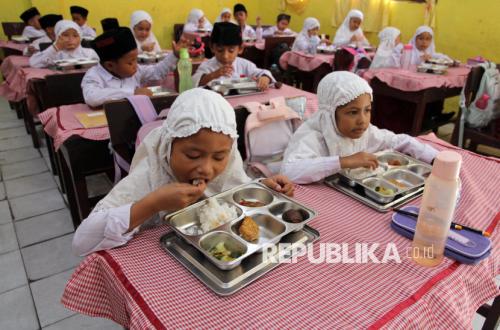
The Free Nutritious Meal (MBG) programme has once again become a hot topic of public discussion. The trigger was a statement by the Minister of Primary and Secondary Education, Abdul Mu’ti, who revealed that around 43 million students across Indonesia have benefited from MBG. The majority of them want the programme to continue. According to the minister, students have felt the real benefits of MBG on improved attendance, learning motivation, and academic achievement at school.
A survey by the Ministry of Primary and Secondary Education on the Seven Habits of Great Indonesian Children, conducted from mid to late 2025, showed that the MBG programme had a positive influence in reducing concentration problems caused by hunger and increasing student focus. Meanwhile, a January 2026 survey by Indikator Politik revealed that 72.7 percent of the public were satisfied with the MBG programme, with the strongest support coming from Generation Z at 80.7 percent. A Poltracking Indonesia survey conducted from 11 to 17 May 2026 revealed that 51.9 percent of the public wanted the MBG programme to continue.
These survey results should not be read merely as a series of statistics. Behind the figure of 43 million students lies a humanitarian message: the basic food needs of Indonesian children still require serious government attention. When a nutritional fulfilment programme receives such an enthusiastic response from students, it proves that schools are now not only places for learning but also spaces for social protection and the fulfilment of basic human needs.
Referring to Abraham Maslow’s (1943) hierarchy of needs, physiological needs such as food and drink are the most fundamental requirements. They must be met before a person can progress to higher levels, including learning and achievement. It is difficult to imagine a child being able to concentrate and absorb lessons in class if they arrive at school on an empty stomach. For children from low-income families, a plate of nutritious food at school is an absolute guarantee that they receive proper nutritional intake every day. This programme does not merely alleviate hunger but also provides a sense of security and inner calm during the teaching and learning process.
Various global studies confirm this urgency. A 2024 report by the World Food Programme asserts that school feeding programmes are proven effective in increasing attendance rates, improving concentration, and boosting learning outcomes. A 2025 UNESCO report also states that improved nutrition and food security contribute significantly to the sustainability of children’s education in various parts of the world. Domestically, a 2025 study by Rahmah and colleagues found a positive correlation between the MBG programme and student attendance and focus in class. Meanwhile, research by Widyasari and colleagues in 2025 showed that this programme has great potential in reducing stunting and anaemia rates, which have long overshadowed the academic performance of young people.