
Why Singapore and the US Are Upset About Indonesia's Proposal to Toll the Malacca Strait
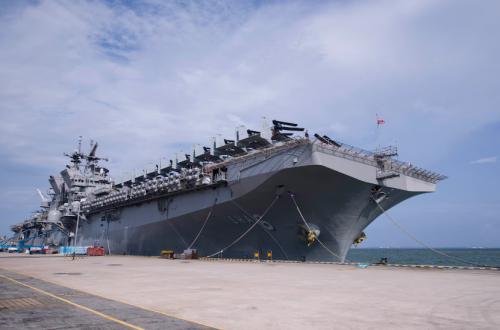
Following tensions in the Strait of Hormuz, the idea of tolling the Malacca Strait has been raised by Indonesian officials. Singapore has firmly rejected the proposal, while the United States continues to traverse the strait under the pretext of freedom of navigation.
Singapore’s Foreign Minister Vivian Balakrishnan on Wednesday (22/4/2026) reiterated that Asian countries along the Malacca Strait have a strategic interest in keeping the vital waterway open.
“The right to transit is guaranteed for all countries. We will not participate in any efforts to close, intercept, or impose duties in our surrounding areas,” Balakrishnan told CNBC.
Singapore borders the Malacca Strait directly, along with Malaysia and Indonesia. This shipping route is one of the world’s most important global trade paths, with its narrowest point about two nautical miles wide, making it a crucial hub for energy distribution in East Asia, including exports to China.
The Malacca Strait connects the Indian Ocean and the Pacific Ocean, and its strategic role is often compared to the Suez Canal and the Strait of Hormuz.
Previously, Indonesia’s Finance Minister Purbaya Yudhi Sadewa proposed the possibility of imposing tariffs on ships passing through the strait. According to Purbaya, if a similar scheme were implemented, Indonesia could gain additional state revenue. That income, he said, could be shared with Malaysia and Singapore as countries sharing the Malacca Strait territory.
“Ships passing through the Malacca Strait aren’t charged by us. Now Iran charges ships passing through the Strait of Hormuz. If we split it three ways—Indonesia, Malaysia, Singapore—it would be substantial, right?” he stated at the PT SMI 2026 Symposium in Jakarta on Wednesday (22/4/2026).
Nevertheless, Purbaya emphasised that Indonesia is not in a position to exploit the strategic route for levies. “If it could be like that, but it’s not,” he said.
He likened the revenue sharing to being adjusted according to each country’s territorial length. In this case, Indonesia and Malaysia are said to potentially receive a larger portion compared to Singapore.