
Why Saudi Arabia Does Not Celebrate the Prophet Muhammad's Birthday
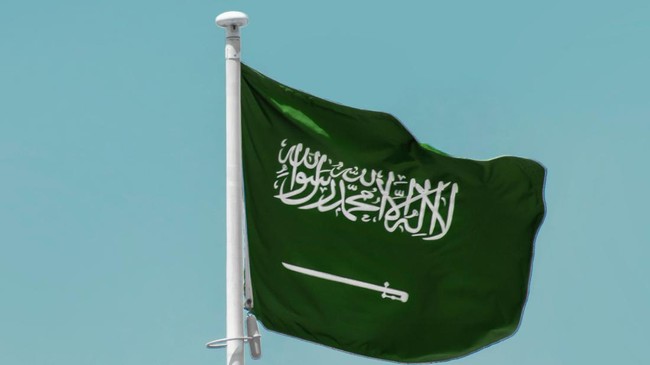
The Prophet Muhammad’s birthday, known as Mawlid al-Nabi, is an important occasion observed by Muslims in various countries. However, not all Muslim-majority nations designate it as a national holiday or celebrate it formally, including Saudi Arabia.
Mawlid al-Nabi, also referred to as Mawlid Al Nabi, Mawlid Al Nabawi, Al Mawlid, or Milad, is the day when Muslims around the world commemorate the birth of the Prophet Muhammad. According to the Marhaba Qatar Information Guide, Mawlid falls on 12 Rabiul Awal, the third month of the Islamic Hijri calendar. The observance takes place in many Muslim-majority countries, with several nations declaring it an official public holiday, including the United Arab Emirates, Egypt, Morocco, Malaysia, Indonesia, and Sudan.
However, the situation differs in Saudi Arabia. Mawlid al-Nabi is not designated as a national holiday and is generally not celebrated as an official observance in the country. This is linked to the view that commemorating the Prophet’s birth is not commanded in the Qur’an or Islamic teachings. Mawlid is also not regarded as an obligation established within Islamic doctrine, and some Muslims therefore choose not to observe it.
There is also a perspective that considers the celebration an innovation in religious practice and therefore inappropriate. Nevertheless, the practice of commemorating Mawlid al-Nabi varies across different countries and Muslim communities. In several nations, Muslims mark the occasion by decorating homes and streets, participating in processions, singing religious songs, holding communal meals, and attending lectures at mosques that recount the life of the Prophet Muhammad.
In countries such as Egypt, Sudan, Pakistan, India, and Indonesia, Mawlid celebrations or festivals may even be held several days before the actual commemoration date. Various foods and snacks also form part of the tradition, with sesame, caramelised nuts, pistachios, and assorted sweet nuts among the items sold to the public during Mawlid celebrations in several countries. There are also special treats known as Halawat Al Mawlid or Halawiyat. Turkish delight and ma’amoul, a pastry filled with date paste or nuts, are also popular foods during the Mawlid period.
In the Islamic calendar, Rabiul Awal is the third month after Muharram and Safar. The name Rabiul Awal literally refers to the ‘first spring’. This month is known as the birth month of the Prophet Muhammad, with Mawlid al-Nabi observed on 12 Rabiul Awal by many Muslim communities.
The Hijri calendar consists of 12 months: Muharram, Safar, Rabiul Awal, Rabiul Akhir, Jumadil Awal, Jumadil Akhir, Rajab, Syakban, Ramadan, Syawal, Zulkaidah, and Zulhijah. Unlike the Gregorian calendar, which follows the sun’s orbit, the Islamic calendar is based on the lunar cycle. The start of each Hijri month is linked to the appearance of the new moon and the sighting of the crescent, or hilal. Consequently, a month in the Hijri calendar may consist of 29 or 30 days, with the determination depending on the visibility of the moon, astronomical position, and weather conditions.
Thus, the notion that Saudi Arabia does not make Mawlid al-Nabi an official celebration is indeed correct. However, this difference is inseparable from the diverse views and traditions among Muslims regarding how to commemorate the birth of the Prophet Muhammad.