
Why Sachet Packaging Is a Major Challenge for Indonesia's Sustainability
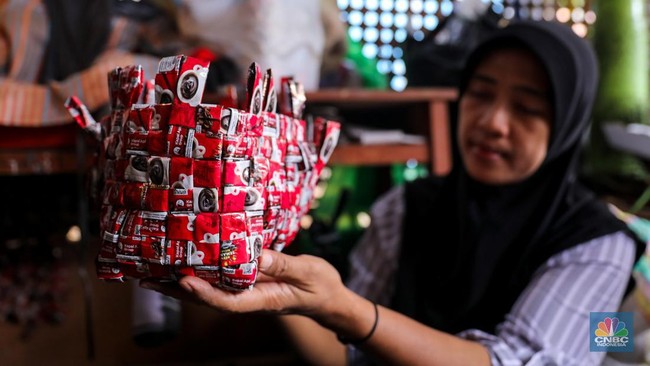
Every time the issue of plastic waste is discussed, the conversation is almost always the same: bring a tumbler, use a tote bag, refuse plastic straws, and reduce single-use plastics. All of these suggestions are important. However, one question rarely arises: does everyone genuinely have the option to do so?
During my sustainability studies at Harvard University, I learned about a concept known as the poverty penalty. This concept explains how low-income communities often end up paying more for daily necessities when calculated per unit of product. The reason is simple: they do not have enough money to buy large packs, so they are forced to purchase products in small sachets.
This phenomenon has long been a subject of business and development studies because it concerns both market access and social justice. Ironically, the group with the lowest purchasing power has to pay a higher price for the same product.
In Indonesia, this phenomenon is very easy to find. From shampoo, coffee, cooking oil, and soy sauce to detergent, everything is available in sachet packaging priced at just a few hundred to a few thousand rupiah. For many families, buying sachets is not a preference but the only option that fits their financial situation.
On the other hand, sachet packaging has become one of the biggest challenges in waste management. Most sachets use multilayer plastic, which is extremely difficult to recycle with currently available technology. As a result, the vast majority ends up in landfills, polluting the environment, or even entering rivers and the ocean.
However, blaming consumers is not the solution. When someone only has enough money to buy one sachet of cooking oil for that day, the option to buy a one-litre bottle never really existed. In such conditions, the issue is no longer about environmental awareness but about limited economic access.
This is why sustainability is not just about changing individual behaviour; it is also about justice. As long as poverty restricts people’s choices, we cannot expect change solely through lifestyle campaigns.
Consequently, the greatest responsibility cannot be placed entirely on consumers. The government needs to create policies that encourage a more inclusive distribution system. Industry must invest in packaging designs that are easier to recycle or distribution models that allow people to obtain products at affordable prices without generating more waste. At the same time, innovation must be directed towards delivering solutions that consider the economic realities of society, not just environmental idealism.
If our goal is to reduce plastic waste, the root of the problem does not stop at the plastic itself. We also need to look at how poverty shapes the consumption choices of millions of people every day. Ultimately, sustainability is not just about protecting the environment; it is also about ensuring that everyone has an equal opportunity to make more sustainable choices.