
Why Reflection is Crucial in Deep Learning
In many conventional classroom processes, learning is considered complete and finalised once the bell rings or students submit their assignments. Students then move on to the next subject, while teachers immediately prepare materials for another class.
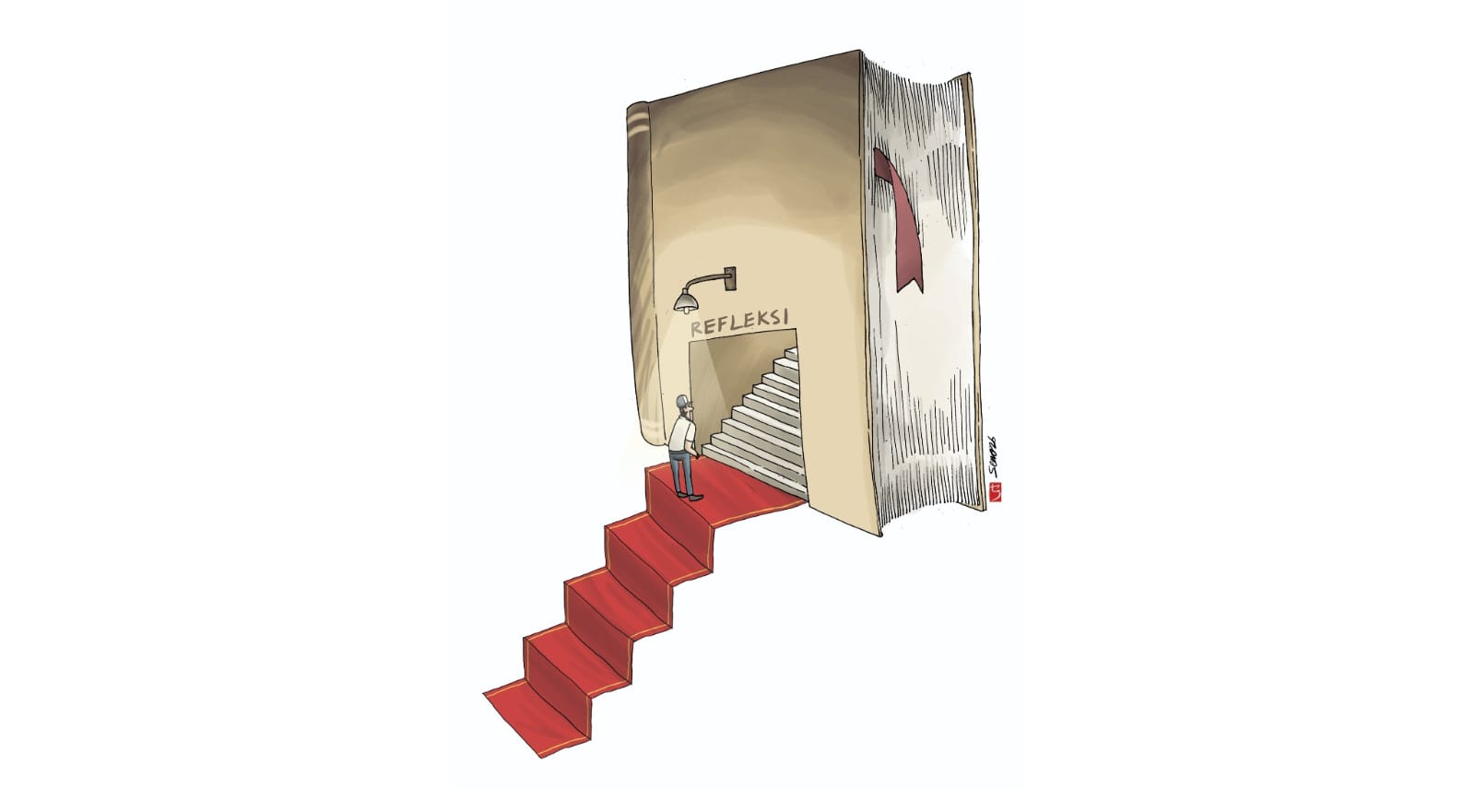
However, between one learning experience and the next, there is a vital space: reflection. Without reflection, learning easily transforms into a mere series of completed tasks, rather than a journey of self-understanding, a process of acquiring knowledge, or a way of learning how to learn.
In the context of deep learning, reflection is not an additional activity at the end of a lesson. Reflection is an integral part of the learning experience that allows students to realise what they have understood, what they have not yet mastered, how they learn, and what steps they need to take next. At the same time, for teachers, reflection serves as a professional mirror to assess whether the lesson just conducted truly stimulated thought, engaged emotions, and motivated students to take action.
Two Different Objectives
For students, reflection aims to build learner awareness. Students are not only required to provide correct answers but must also be able to explain why they understand something, which parts remain confusing, which strategies helped them, and what assistance they require. This is where students learn ‘how to learn’. They do not rely solely on the teacher for assessment but gradually develop metacognitive abilities: the ability to monitor their own thinking processes.
Therefore, reflection questions for students should not merely ask, “Did you enjoy learning today?” While useful, such questions are too shallow on their own. Teachers need to encourage students to ask themselves: “What is the most important idea I understood today?”, “Which part was initially difficult but later became clearer?”, “How did I find the answer?”, “What mistakes did I make and what can I learn from them?”, “Where can I apply this knowledge in life?”, and “What is one step I will take to improve my understanding?”
Such questions help students not just memorise lesson content, but construct meaning from their learning experiences.
Meanwhile, teacher reflection serves a different purpose. Teachers are not seeking praise for the lesson delivered, but are examining the quality of their pedagogical decisions. Teachers need to ask: “Were today’s learning objectives understood by the students?”, “Did the activities I designed encourage students to think, dialogue, experiment, and reflect?”, “Which students were not meaningfully engaged, and why?”, “What evidence shows they truly understand, rather than just copying or memorising?”, “Which parts of my explanation, tasks, or assessments need improvement?”, and “What must I change for the next meeting?”
Such reflection ensures that teachers do not feel their work is finished simply because the syllabus material has been covered.
Learning Without a Mirror
The greatest danger of learning without reflection is the repetition of mistakes. Students may continue to complete tasks without understanding their weaknesses; teachers may continue to teach in the same way without realising that some students are falling behind or experiencing misconceptions.
Grades may still be awarded, but those grades do not always explain higher-order thinking skills (HOTS), student perseverance, confusion, or the actual progress that should occur as a learning achievement.
This is one of the weaknesses of conventional learning that focuses too heavily on material delivery. The priority is simply finishing the material, completing exercises, and taking exams. Students who make mistakes often only receive a ‘wrong’ mark; they are not invited to understand why the error occurred.
Teachers may also easily judge a class as successful because the atmosphere is orderly and quiet, or because some students can answer questions, when in reality, those questions only produce low-order thinking (LOTS) answers. Orderliness does not necessarily equate to meaning, and the answers of a few children do not necessarily reflect the understanding of the entire class.
Deep learning rejects the view of learning as a one-way street where no dialogue, discussion, or Q&A occurs to encourage students to think reflectively, creatively, and innovatively. Learning must provide opportunities for students to understand, apply, and then reflect.
Through reflection, knowledge does not remain mere information, but becomes a foundation for making better decisions, allowing students to become increasingly independent and autonomous lifelong learners. On the other hand, through reflection, teachers can grow as professional learners and educators who are brave and willing to correct their erroneous practices.
A good class is not one that never makes mistakes. A good class is one that dares to see mistakes, find their meaning, and use them to move further. Therefore, reflection is not the conclusion of a lesson. Reflection is the gateway so that the next lesson becomes more conscious, more meaningful, and more enjoyable. Hopefully, this is the case.
Reflection is often misunderstood as an additional task, when in fact, it is where teachers can realign the direction of learning.