
Why PT KAI Demolished More Than Ten Historic Houses at Lempuyangan Station
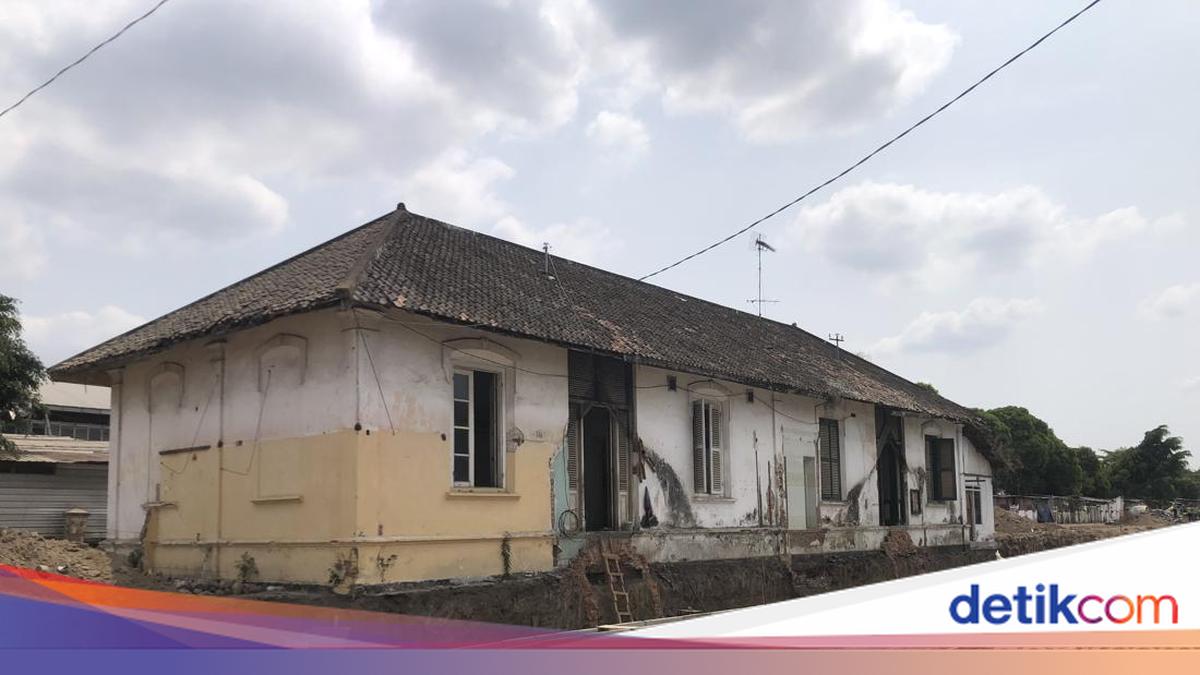
Eleven historic former official residences belonging to KAI in front of Lempuyangan Station in Yogyakarta have been demolished. PT KAI said the land will be used to expand the station area and build a replacement road.
“As an initial step in reorganising the area, particularly on the southern side of Lempuyangan Station, the station grounds are being expanded by separating the dedicated access route for passengers arriving at and departing from the station from the public road,” said Feni Novida Saragih, public relations manager for KAI’s Daop 6 Yogyakarta, on Friday (9 October 2026).
She explained that Lempuyangan Station needs a larger train-yard area because passenger numbers continue to increase on both long-distance trains and the KRL commuter service. In 2024, the station served a total of 5,392,700 passengers. That figure rose by 4 per cent to 5,605,414 in 2025.
“Every day, 12,586 long-distance rail passengers board or alight at Lempuyangan Station. The Yogyakarta–Palur KRL Commuterline carries 3,500 passengers. In addition to passenger services, Lempuyangan Station also handles freight,” she said.
Two historic houses remain
There were 13 old houses in the area, built in a Dutch colonial architectural style. PT KAI has retained two buildings, while the other 11 were demolished.
Feni said the two houses were spared on the recommendation of the Yogyakarta Cultural Office. She did not provide details about their future use.
“Before the demolition, KAI carried out thorough documentation of the houses, so they have been properly recorded,” she said.
KAI says the houses are not heritage buildings
Feni said KAI had coordinated with the Yogyakarta municipal government and local authorities through focus group discussions, presentations and coordination meetings. She said the former official residences are not heritage buildings.
“These 13 company-owned houses are neither Cultural Heritage buildings nor buildings designated as Cultural Heritage. The Yogyakarta City Cultural Office has officially stated that they do not appear on the city’s list of regional cultural heritage buildings or in its Cultural Heritage records to date,” Feni said.
Historian criticises KAI’s decision
Kandang Kebo, an independent Yogyakarta community focused on cultural and heritage preservation, criticised the demolition and raised concerns about the laxity of regulations governing heritage designation. It said demolition should be the last resort when dealing with historic buildings.
“It is very disappointing. Were there no other solutions? Sometimes we do not know what is happening; then suddenly a building is demolished. We are left shocked when it has already gone,” said Kandang Kebo chair Maria Tri Widayati, speaking to detikJogja by telephone on Saturday (10 October 2026).
“Demolishing a building should be the last resort, when there is no other option. In my view, preserving cultural heritage buildings remains an obligation,” she added.
She said the 13 buildings should have been designated as cultural heritage, given their age and importance in their time.
“Clearly they qualify: they are more than 50 years old, so they meet the minimum age criterion. They are significant because they once served a purpose and were connected with transport. Their knowledge value, architecture and history all give them significance,” she said.
Maria, who teaches heritage and cultural tourism at Sanata Dharma University, acknowledged the pressure to meet current needs, which she said had become increasingly substantial. However, she argued that other ways of meeting those needs were often not explored.
“As heritage preservationists, we lose out to the argument that today’s needs must be met. From what I have read in the news, the need to accommodate the growth in passenger numbers is very high. The area also gets congested, and people sometimes avoid going through there,” Maria said.
“In our view, the regulations are too lax. But because the buildings are not designated as cultural heritage, they are treated differently, even though the law says they may be treated in the same way as cultural heritage buildings,” she added.
Source: jawawa.id (https://jawawa.id/newsitem/why-pt-kai-demolished-more-than-ten-historic-houses-at-lempuyangan-station-1791759040)
Originally published by detikJogja (https://www.detik.com/jogja/berita/d-8702580/alasan-pt-kai-robohkan-belasan-rumah-kuno-di-stasiun-lempuyangan), translated from Indonesian