
Why Protests in Paris Turned Violent, with Crowds Looting Luxury Brands
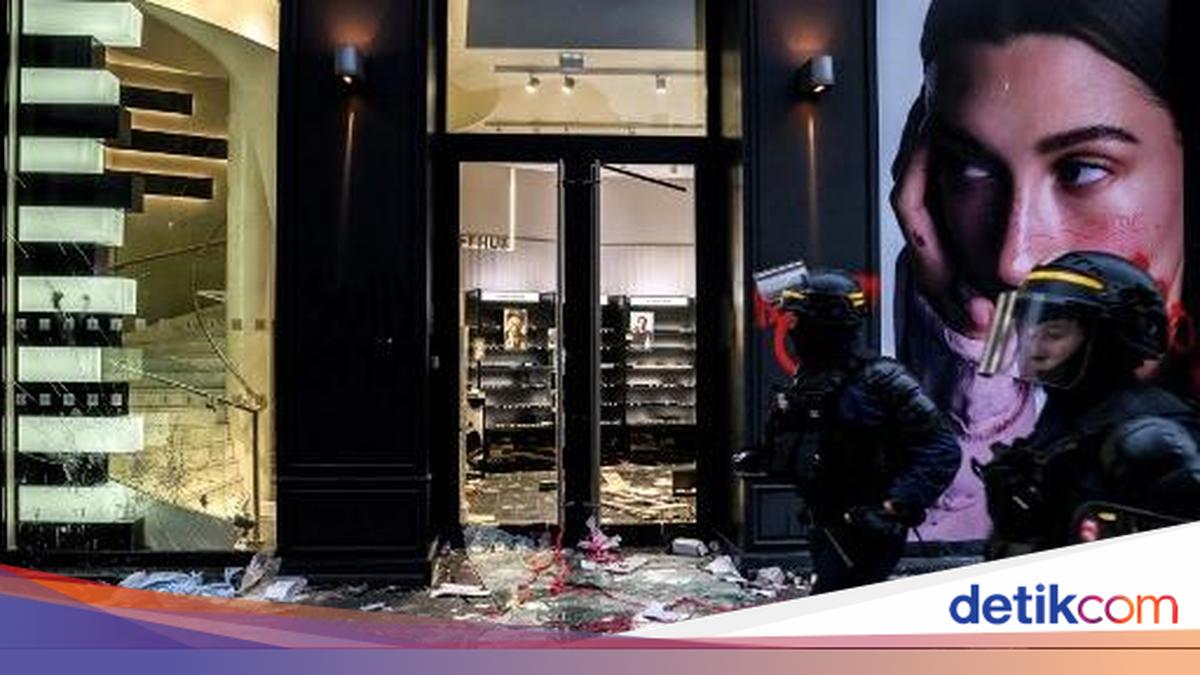
Riots broke out in cities across France as demonstrations against the rising cost of living and declining public services spread. Protests that had begun peacefully escalated into violence, fires and looting on a scale described as the worst in decades.
AFP and Reuters reported on Sunday (18 October 2026) that hundreds of thousands of people demonstrated peacefully in streets across dozens of French cities. However, groups of people resorted to violence, targeting public buildings, looting luxury boutiques and supermarkets, and attacking vehicles and police officers.
Buildings in several French cities were set alight and vandalised. In Limoges, rioters set fire to the town hall, while in Marseille demonstrators dressed in black forced their way into the town hall and defaced the building with anarchist graffiti. In Lyon, demonstrators also set fire to the city’s tourist office.
Protesters said most people had taken part in peaceful marches over the cost of living. They said much of the violence was caused by rioters intent on causing damage and clashing with police. Many demonstrators carried banners with slogans targeting the police, the president and the wealthy.
“We are fighting because the cost of living is too high, because fuel prices are too high, because secondary school pupils across the country are being attacked and brutally injured just for trying to protest and ask for more teachers and decent learning conditions,” said Lola, a 19-year-old protester in Paris.
Paris Deputy Mayor Emmanuel Gregoire said every street in the city had “been completely destroyed”. Masked groups of young people set fire to parked cars and looted shops.
Protests over the rising cost of living
The protests in France began last month in secondary schools in the northern suburbs of Paris. Anger over teacher shortages and poor facilities grew into a wider movement focused on inequality, public spending and living standards. The unrest is taking place six months before an election to replace President Emmanuel Macron.
The demonstrations were held on Saturday in Paris and other French cities. Protesters wearing high-visibility vests blocked roads, recalling the Yellow Vest movement that marked Macron’s previous term in office.
The protests addressed the cost of living, which has been partly driven up by the war in the Middle East. One demonstrator said she was fed up with low wages while living costs continued to rise.
“We’re fed up with working hard for very low wages while rents keep going up,” Regine Monfroid, a teacher, told AFP in Strasbourg in eastern France.
Other issues were also raised. In Paris, tens of thousands of people marched through the eastern and northern parts of the city in a major demonstration. Some chanted slogans including “Everyone hates the police” and “Macron, resign!”.
Another protester, 18-year-old secondary school pupil Kamil Alahyan, said he had joined the demonstration “for many reasons: the election coming up in 2027, politicians who lie, and the ultra-rich, who have continued to accumulate wealth over the past 10 years”.
Some demonstrators drew comparisons with the French Revolution of 1789.
“This is a revolution, we’re taking the Bastille!” some people shouted in Marseille as they forced their way into the mayor’s office.
In La Rochelle in western France, marchers walked behind a banner reading “Revolution or death”.
Protests descend into violence, fires and looting
Most demonstrations began around midday, although some gatherings started before the official protests were due to begin.
In parts of Paris, police fired tear gas as they fell back in the face of demonstrators. Many protesters wore black clothing, hoodies, masks and goggles to protect themselves from the gas.
Rioters tried to break into the Galeries Lafayette department store, smashed up a bank, looted a Lacoste shop and other boutiques, and raided an SFR mobile phone shop. Demonstrators also set fire to various objects throughout the day, including several cars.
Police used tear gas and water cannon against protesters who threw objects and fired fireworks at officers.
A 17-year-old boy lost his right hand when a crowd-control grenade exploded in the city of Saint-Etienne in southern France.
Police tactics came under criticism after demonstrators were injured, including a teenager who lost his hand after picking up a stun grenade. The police watchdog is investigating at least dozens of alleged cases of excessive force by officers.
Thousands arrested
French Prime Minister Sebastien Lecornu said the government would not be “intimidated” by the violence. He blamed the unrest on the “far left” and criminals, just months before next year’s presidential election.
“To those who clearly want to use this violence as a ‘warm-up’ before the presidential election, I say firmly: we will not allow ourselves to be intimidated. No one will impose their political agenda through violence,” he wrote on X.
About 1,200 people had been arrested in connection with the protests. Interior Minister Laurent Nunez said around 550,000 people had taken part nationwide, while the CGT trade union estimated the turnout at 800,000.
Lecornu said more than 150 police officers had been injured in the demonstrations, but did not say whether any protesters had also been hurt.
President Emmanuel Macron vowed to prosecute and punish those responsible for the attacks.
“We will all stand together against those who spread chaos, and who are only trying to undermine our institutions and prevent those who are making demands peacefully from doing so,” he wrote in a post on X.
Protests spread to Belgium, Portugal and Italy
Belgium, Portugal and Italy also saw smaller protests on Saturday as the cost of living rose across Europe. Demonstrators in Albania, meanwhile, protested against government corruption, a lack of jobs and poor education standards.
Several hundred people, mostly young, also demonstrated in Brussels, with some clashes with police. The protests were partly inspired by the demonstrations in France.
Belgian student groups said they were protesting against higher education costs and reforms they fear will make university education less affordable.
In Albania, police fired what appeared to be rubber bullets at demonstrators on the fifth day of mass student protests calling for Prime Minister Edi Rama to resign.
In Portugal, tens of thousands of people took to the streets of Lisbon after several days of unrest to protest over housing costs and other living expenses. House prices in Portugal have doubled since 2017, fuelling one of Europe’s worst affordability crises.
In Italy, a protest against the high cost of living in Milan descended into chaos, with police clearing the central cathedral square using tear gas. In Bologna, police used water cannon to try to disperse crowds and made seven arrests after another protest turned violent, the ANSA news agency reported.