
Why Preventing Child Marriage Is the Key to Breaking the Cycle of Stunting
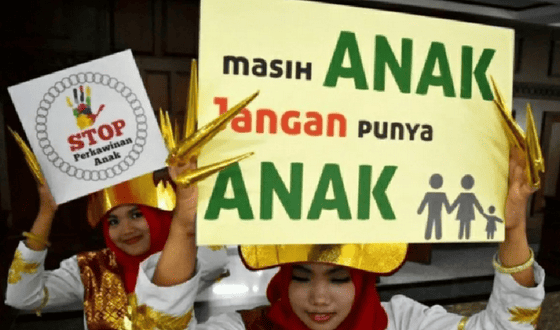
Indonesia still faces a significant challenge in reducing stunting to achieve Indonesia’s Golden Age 2045. One upstream factor driving this chronic malnutrition problem is the high rate of early marriage. Preventing marriage at a young age is not merely a social or legal issue, but a strategic medical step to break the chain of poverty and intergenerational health problems.
Stunting is the condition of impaired growth in young children resulting from chronic undernutrition, especially in the first 1,000 days of life (HPK). The relationship between early marriage and stunting is highly direct. When a teenage girl becomes pregnant, there is competition for nutrients between the mother’s growing body and the fetus she carries. Biologically, the pelvis and uterus of a teenage girl have not fully developed to accommodate a fetus. This unpreparedness often results in babies born with Low Birth Weight (LBW). Babies born weighing less than 2.5 kg are at much higher risk of stunting later if they do not receive extremely careful nutrition.
Teenage girls still require substantial nutrient intake for their own bone growth. When pregnant at a young age, nutrients entering the body are divided, and often the fetus does not receive optimal nutrition because the mother’s body naturally prioritises the mother’s survival, who is also in a developmental stage.
Beyond the impact on the child, early marriage places the mother at risk of serious health complications. These include: The lack of knowledge on child-rearing leads to inappropriate caregiving practices, which in turn worsen child nutrition and perpetuate the cycle of stunting within families.
Preventing early marriage is a long-term investment in Indonesia’s human resources. By ensuring women marry at a mature age, we give them the opportunity to grow physically healthy, mentally mature, and economically prepared to raise a generation free from stunting.
Medically and regulatorily, Indonesia’s minimum marriage age is 19. However, from a reproductive health perspective, ages 20 to 35 are considered the safest window for pregnancy and childbirth. Not always, but the risks are much higher. If pregnancy occurs at a young age, very close medical supervision and extra nutrition are required to prevent LBW and stunting.
Education on reproductive health in schools and families, as well as strengthening community economies, is essential to curb the high rate of underage marriage exemptions in various regions.
The Free Nutritious Meals Programme (MBG) is seen not merely as distributing meals at schools but as a strategic intervention to help break the nutrition problem chain among vulnerable groups.
Deputy Mayor of Depok Chandra Rahmansyah stated that cigarette smoke hinders children’s growth and development and triggers stunting. The KTR Task Force was asked to strengthen supervision.
Pemeriksaan dilakukan melalui pengukuran tinggi dan berat badan anak yang kemudian dicatat dalam Buku KIA atau Kartu Menuju Sehat (KMS).
Interventions include targeting adolescent girls. They must be healthy and free from anaemia through regular weekly iron supplementation.
Secretary-General of the Brigade Rakyat Nusantara (BRN), Ismarilda, emphasised the need for a holistic and sustainable approach to tackling stunting in Indonesia.
Source: jawawa.id (https://jawawa.id/newsitem/why-preventing-child-marriage-is-the-key-to-breaking-the-cycle-of-stunting-1779542539)
Originally published by Media Indonesia (https://mediaindonesia.com/humaniora/892523/mengapa-mencegah-pernikahan-dini-adalah-kunci-memutus-rantai-stunting), translated from Indonesian