
Why Pesantren Remain Relevant in the Era of Digital Disruption
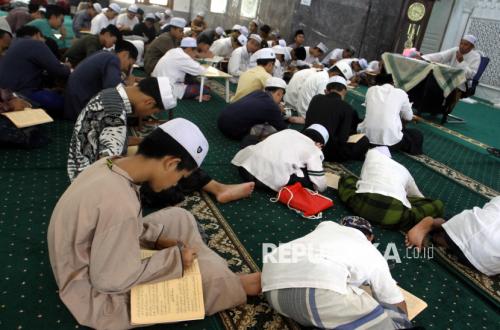
Digital technological advancements have transformed almost every aspect of human life. The ways in which we learn, work, communicate, and even acquire knowledge are changing very rapidly. The presence of Artificial Intelligence (AI), social media, big data, and various online learning platforms presents both opportunities and challenges for the world of education.
Amidst this wave of change, a question is frequently raised: are pesantren still relevant in the digital era?
This question is important to address because some circles believe that traditional educational institutions will be increasingly marginalised by technological developments. However, reality shows otherwise. Pesantren have not only survived but have continued to grow, becoming educational institutions with high adaptability. In many respects, pesantren offer values that are increasingly needed by modern society.
The digital era brings not only ease of access to information but also gives rise to various social issues. The spread of hoaxes, hate speech, cyberbullying, gadget addiction, instant culture, and the declining quality of social interaction are phenomena that are increasingly common. Technological progress, it turns out, does not always go hand in hand with moral maturity.
In this context, pesantren possess advantages that are difficult for technology to replace. Pesantren education is not only oriented towards the transfer of knowledge but also towards the formation of character, morals, and spirituality. An educational system based on exemplary behaviour (uswah hasanah), habituation, discipline, and twenty-four-hour supervision creates a comprehensive educational environment.
Thomas Lickona (2012) explains that effective character education must encompass the aspects of moral knowing, moral feeling, and moral action. These three aspects have long been naturally practised within the traditions of pesantren education. Students (santri) do not only learn about values of goodness but are also habituated to internalise and practise them in their daily lives.
While many educational institutions face difficulties in building student character amidst the dominance of digital technology, pesantren offer an educational model that places moral formation at the core of the learning process.
The Continued Need for Holistic Education
One criticism of modern education systems is their tendency to overemphasise cognitive aspects and academic achievement. As a result, many graduates possess high intellectual abilities but lack mental resilience, social concern, and moral integrity.
Since their inception, pesantren have developed a more comprehensive educational approach. Students are guided to develop intellectual, emotional, social, and spiritual intelligence simultaneously. They learn to live simply, independently, and responsibly, while being able to interact within a collective life.
This concept of education aligns with the idea of holistic education developing in contemporary educational literature. Miller (2007) asserts that education must develop the whole human being, not just their academic aspects. Pesantren implemented these principles long before the term ‘holistic education’ became popular in the modern educational world.
In an era full of uncertainty, the ability to adapt, cooperate, manage emotions, and possess a clear life purpose are competencies that are no less important than technical skills. These values have long been an integral part of the pesantren culture.