
Why peatlands catch fire easily and are difficult to extinguish
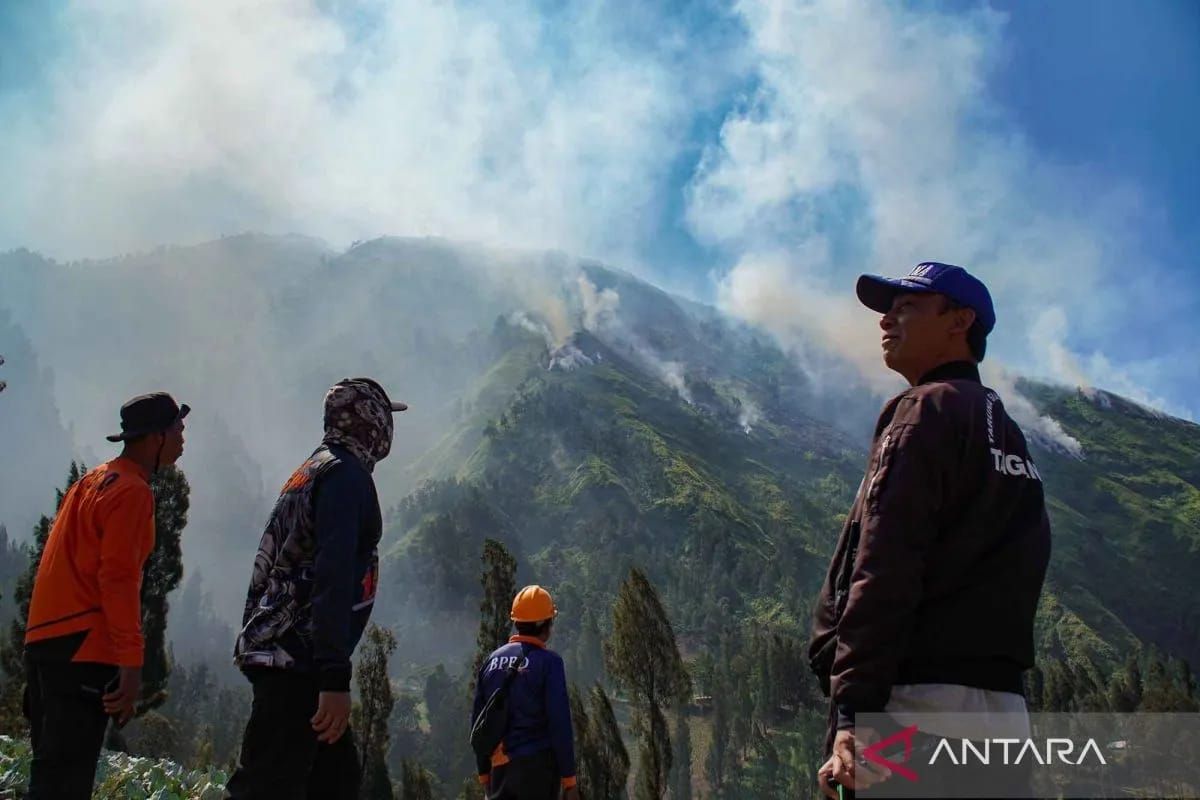
Forest and land fires have again become a concern in several regions of Kalimantan. The National Disaster Management Agency (BNPB) recorded thousands of hotspots detected in West Kalimantan, Central Kalimantan, and South Kalimantan in August 2026. The indicative area of burned land in West Kalimantan was recorded at around 38,310 hectares as of 19 August 2026, while in Central Kalimantan it reached 7,634 hectares.
The latest conditions in West Kalimantan also show why peatland fires are not easy to handle. Forestry Minister Raja Juli Antoni, who inspected a location in Kubu Raya Regency on Monday (24/8), found that although flames on the surface were no longer visible, smoke was still emerging from within the peat soil. This means that the disappearance of visible flames does not necessarily indicate that the fire is truly over.
Similar problems have occurred in other regions. In July 2026, a peatland fire in Nagan Raya, Aceh, required days of handling because the fire not only burned the surface but also spread underground.
So why do peatlands catch fire easily and why is the fire within them so difficult to extinguish?
- Peat stores a large amount of organic material
Peat is formed from the accumulation of plant remains that undergo decomposition in wet, low-oxygen conditions over a very long period.
Because it is composed of organic material, peat can essentially become a source of fuel when it is dry. The more peat that loses its water content, the greater the risk of the material burning when exposed to a source of ignition.
This is one of the reasons why keeping peat wet is an important part of preventing forest and land fires.
- Dry peat becomes highly flammable
In its natural state, peat has a high water content and is therefore not easily ignited. Problems arise when the groundwater level drops and the peat layer becomes dry.
The Forestry Ministry explains that very dry peat can change its properties, making it more difficult to reabsorb water. Under certain conditions, peat that has undergone extreme drying can become like dry material and more easily catch fire.
This condition usually becomes more risky during the dry season when rainfall is low.
- Fire can spread below the surface
This is what makes peat fires different from ordinary vegetation fires.
Fire does not always move as a visible blaze. On peatlands, fire can spread slowly through the organic layer beneath the soil surface.
As a result, field personnel may not see any flames, but the underground layer still retains heat and embers. This situation was seen in Kubu Raya, West Kalimantan, when smoke was still emerging from within the peat even though surface flames were no longer visible.
This characteristic makes the process of locating and extinguishing fire points more complicated.
- Extinguishing requires water to reach the burning layer
When fire is below the surface, pouring water on the upper part of the land does not necessarily extinguish all the burning points immediately.
Water needs to reach the part of the peat that is still smouldering. For this reason, personnel usually need a more thorough extinguishing and cooling process to ensure no embers remain.
The Forestry Ministry has previously explained that extinguishing operations on peatlands require cooling and mopping-up processes to ensure that embers below the surface do not reignite the fire.
- Fires can reappear after appearing to be extinguished
One of the biggest challenges is fire reappearing after it was previously thought to have been successfully extinguished.
Embers still remaining in the peat layer can reignite surrounding material when conditions become dry again or when oxygen is supplied. For this reason, personnel cannot simply ensure that surface flames have disappeared.
Continued monitoring and cooling are important to ensure no hotspots remain.
This condition is also the reason why fires on peatlands can take longer to be truly declared extinguished. In Bengkalis, Riau, for example, a joint team in July 2026 had to carry out cooling and mopping-up processes after extinguishing operations lasted about a week.
- Drainage canals can make peat even drier
The condition of peatlands is also strongly influenced by water management.
When water within the peat is reduced, the land becomes drier and the organic material inside becomes more flammable. The Forestry Ministry notes that in handling forest and land fires in Riau, the low groundwater level in peat was one of the challenges in extinguishing, in addition to dry weather, wind, limited water sources, and access to the location.
For this reason, maintaining good peat water management is an important part of efforts to prevent fires.
- Vegetation above peat can also become fuel
It is not only the peat layer that has the potential to burn. Vegetation growing above it, such as grass, shrubs, dry leaves, and twigs, can also become fuel when environmental conditions are dry.
When fire has already appeared on the surface, its heat can help dry surrounding material and increase the chance of the fire spreading to other areas.
The combination of dry vegetation on the surface and dry peat below makes handling even more complex.
Why do peat fires produce so much smoke?
Peat fires often produce large amounts of smoke because the material being burned is organic. When combustion is incomplete, various particles and pollutants can be released into the air.
The Forestry Ministry says the characteristic of peat fires spreading below the surface is also linked to the impact of smoke, carbon emissions, and health problems.
For this reason, the impact of peat fires is not only felt at the fire site. Smoke can be carried by the wind and disrupt air quality in surrounding areas.