
Why Must Madurese Shops in Yogyakarta Be at Least 300 Metres Apart? How the Rule Came About
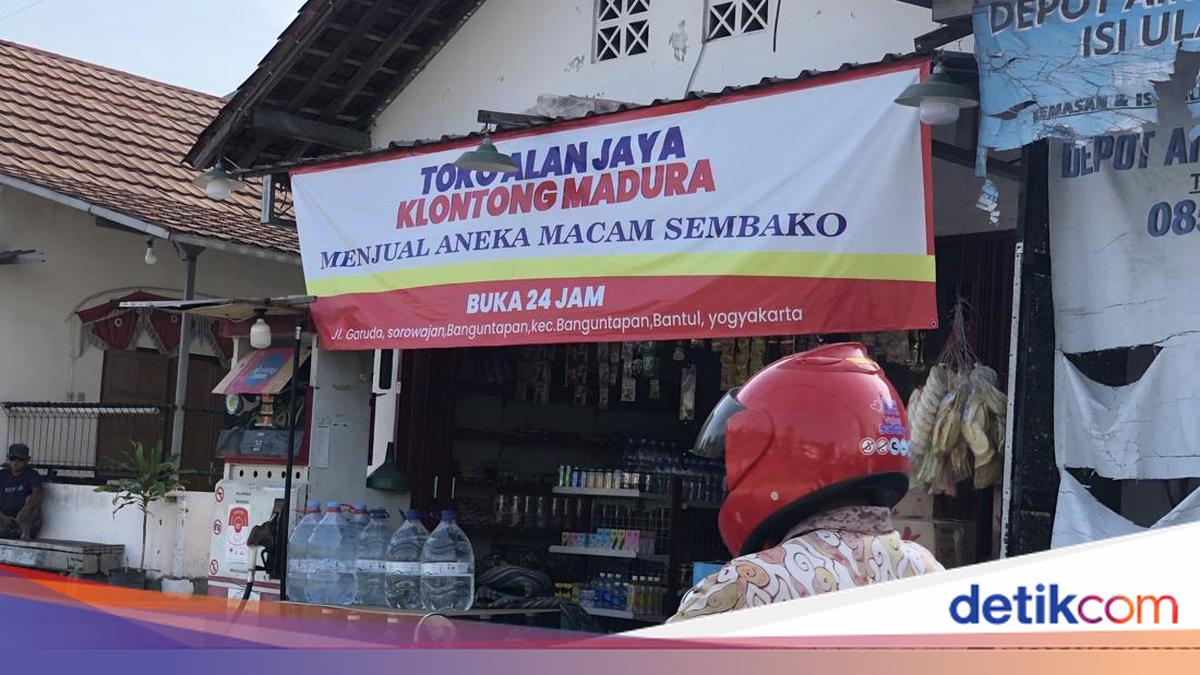
The Yogyakarta Madurese Community Association (KMY) has its own way of minimising friction between owners of Madurese grocery shops in Yogyakarta. One rule requires a minimum distance of more than 300 metres between Madurese shops.
“We’re doing this for the comfort of Madurese people themselves. I know Madurese very well: if shops are too close and competition becomes too intense, it could lead to carok [a traditional duel], or something else. Without a distance rule, they could end up fighting,” said Subur Adi Cahyono, head of KMY’s grocery-shop section, when met at his home in Bantul on Friday (16 October 2026).
He explained that before Madurese grocery shops became as widespread in Yogyakarta as they are now, their owners were affiliated with two associations. Neither had any rules, however.
KMY itself is a long-established association of Madurese residents in Yogyakarta, whose members work in a range of professions. At the time, though, it did not have a section dealing with grocery shops.
“KMY has been around for a long time, since the 1950s. But grocery shops weren’t part of KMY back then; they operated independently. KMY is the big home for Madurese residents,” Subur said.
“There are several groups within KMY: intellectuals, including lecturers; a legal aid organisation, where Madurese lawyers gather; and businesspeople,” he added.
As Madurese shops became increasingly common in Yogyakarta, KMY elders decided to bring grocery shops into the association over the past two years. The aim was to prevent friction between shop owners, who are predominantly Madurese.
“There are many businesses under the businesspeople’s section—17 types. They include satay sellers, barbers, dental workers, mung-bean porridge sellers, fried-rice vendors and cafés. Grocery shops are one of them. There are no other associations now; it’s just KMY,” Subur said.
After the shops joined KMY and a dedicated committee was set up to oversee them, the minimum-distance rule was introduced. All grocery-shop owners were involved in discussions about it.
Some owners initially opposed the rule. But after lengthy discussions, consideration of the risks and respect for local residents who also run shops, they eventually agreed on the distance requirement.
“At first they asked for one kilometre, but we didn’t agree. Then it was reduced to 500 metres, which I still couldn’t accept. I proposed 200 metres, but they thought that was too close. In the end, we agreed on 300 metres. For shops owned by local residents, the distance is 50 metres. The 300-metre rule is to leave room for others and prevent Madurese shops from monopolising the area,” he said.
Subur said the minimum-distance rule applies only to shops established after it was introduced. If Madurese residents have difficulty finding premises, KMY helps them locate a site so the rule can be upheld.
“The rule is not retroactive. It doesn’t affect colleagues who were already here before KMY took this on; that’s not a problem. Most committee members don’t own grocery shops, so that we can remain neutral—only one or two do,” he said.
“If someone comes to us saying they don’t know anyone here and have arrived from Madura or elsewhere and want to open a shop, they can ask us and we’ll find them a place and help. We regularly post notices in the group about kiosks for rent and shops for sale. Someone may have a relative or a newcomer who wants to set up there,” he added.
The rule is also being publicised in Madura
KMY has also worked with relevant stakeholders in Madura to inform residents about the rule, Subur said.
“Once we finalised the rule internally, we publicised it in Madura’s four regencies—to the four regents, four regional legislative councils and four police districts. We asked them to explain that KMY is the community’s home in Yogyakarta, and that grocery shops have their own rules,” he said.
Subur said KMY’s role also includes maintaining a peaceful environment for Madurese grocery shops in Yogyakarta, particularly when legal issues or crimes occur at a shop.
“These shops are vulnerable because they’re open 24 hours. If there’s a security problem—for example, a theft, a mobile phone being stolen, or someone buying something and not paying—we instruct people not to take matters into their own hands. They must report it to the group, and the committee will handle it. All shops must have CCTV,” he said.
“If people act on their own, things could get out of control. They must report incidents. The committee has a 24-hour security team working in shifts. Whenever someone reports an incident, there will be someone to receive it and coordinate with others nearby to go to the scene,” Subur said.
Source: jawawa.id (https://jawawa.id/newsitem/why-must-madurese-shops-in-yogyakarta-be-at-least-300-metres-apart-how-the-rule-came-about-1792288215)
Originally published by detikJogja (https://www.detik.com/jogja/bisnis/d-8711883/kenapa-warung-madura-di-jogja-harus-berjarak-300-meter-begini-awal-mulanya), translated from Indonesian