
Why May is Known as the Month of Mary: A Historical Explanation
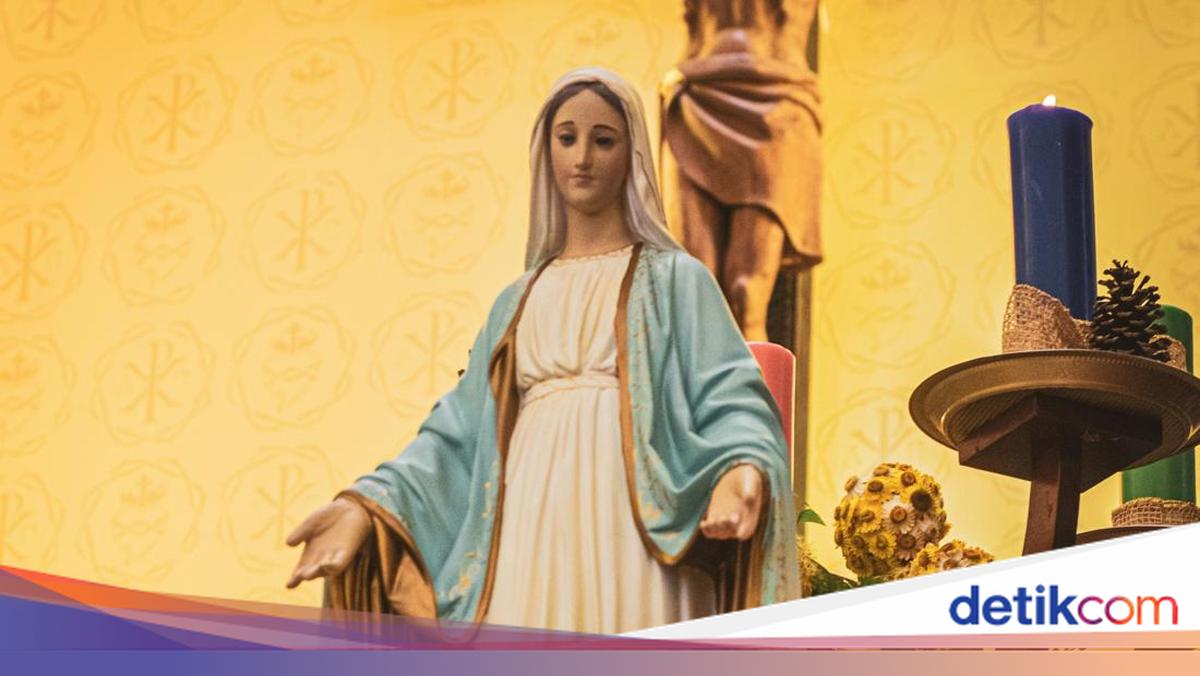
One of the months most important to Catholics is May, which is known as the Month of Mary. This month is a time of devotion to the Blessed Virgin Mary, mother of Jesus and an maternal figure for the Church, and is typically filled with the praying of the Rosary.
Quoted from the Catholic Culture website, May is expressly dedicated by the faith of the people to the Blessed Virgin Mary. During the Month of Mary, Catholics honour Mary through prayer, at home or in church, while also reflecting on the series of Rosary mysteries relating to the life of Jesus.
So, why can May become the Month of Mary? Since when did this tradition begin? Here is a review of the history of May as the Month of Mary, summarised from Cross Catholic Outreach, Catholic Culture, the Diocese of Atambua, and the Parish of Sedayu below!
The History of May as the Month of Mary
The veneration of Mary in May began in the late 13th century. Pastor Latomia from Rome is regarded as the person who began Marian devotion in May. At that time, he wished to deter immorality and direct the attention of his students to Marian devotion. From Rome, the practice then spread to other Jesuit colleges and became very popular in the 1700s. This practice then spread to the whole Church.
In 1815, the practice was encouraged by Pope Pius VII with the granting of partial indulgences to those who honoured Mary with specific prayers during May. In 1859, Pope Pius IX established a full indulgence for Marian devotions. Subsequently, Pope Pius XII designated May as a month of devotion to Mary in 1945.
Pope Pius XII himself frequently spoke of Marian devotions in May. In the encyclical Mediator Dei, he also referred to Marian devotions in May as another form of piety not fully included in the Sacred Liturgy, but having a meaning and dignity that could be regarded as an addition to liturgical worship.
Next, Pope Paul VI also wrote about the Marian Month devotions as a means to obtain prayers for peace in the encyclical Mense Maio published in 1965. He stated that May is a month of the piety of the faithful that has long been dedicated to Mary, Mother of God. He also encouraged warmer, more joyful, and uplifting practices to honour Mary and enrich Christians with spiritual gifts.
The writing of the encyclical Mense Maio was in fact related to the Church’s condition and the political situation at the time. Pope Paul VI wrote the encyclical while Vatican II was nearing its final stages and the Church was grappling with major reforms in liturgical, pastoral and missionary life. The appeal to pray through Marian intercession was intended to bring the Council’s work to fruition for the Church’s salvation.
The world’s condition in a political climate filled with threats of war, violence, conflict, and suffering at that time also concerned Pope Paul VI. Therefore, the Marian Month was also a moment to pray for peace, conversion, and renewal of life.
Pope Paul VI also asked all dioceses and parishes to hold special prayers during May and emphasised the importance of the Rosary as a form of honour to the Blessed Virgin.
To this day, parishes and the Catholic Church continue to mark May as the Month of Mary and celebrate it with devout liturgy, catechesis, and pastoral activities.
Marian Devotion Practices in May
The forms of homage to Mary take various devotional forms. In the 17th century, such devotions involved crowning statues and paintings of Mary with flowers or simple gold ornaments. This tradition was initiated by Pope Clement VII by adding two crowns to Salus Populi Romani, a painting of Mary nursing the infant Jesus. In 1838, Pope Gregory XVI restored the tradition and popularised the practice of crowning Mary. This practice was later adopted by Western Churches during the 19th century.
The procession of crowning Mary in May typically begins with taking the statue of Mary into parish streets or around the Church. People then bring the crowned statue to the Church while singing hymns or reciting the Rosary.
Another practice commonly observed during May is praying the Rosary and making pilgrimages to Marian apparition sites.
The Rosary During the Month of Mary
The Rosary is a prayer rooted in the Church’s tradition and developed in the faith of the people. This prayer is an Evangelical prayer with the Hail Mary grounded in the Word of God. Additionally, the Rosary is a Christological prayer because the Hail Mary refers to the name of Jesus and all the Rosary’s mysteries relate to the events of Jesus’ life.
In Mense Maio, Pope Paul VI emphasised that Mary leads the faithful to Christ. The Rosary is practised in May as a prayer to contemplate the face of Christ with Mary. This is also in line with Pope John Paul II’s statement in Rosarium Virginis Mariae, which describes the Rosary as a prayer loved by many saints, encouraged by the Magisterium, and a means to contemplate the face of Christ with Mary.
The Rosary itself is described as a contemplative prayer, so it cannot simply be repeated and must be undertaken with contemplation. In other words, increasing the number of Rosaries is not just about increasing the number of prayers, but also about deepening one’s way of faith, reflecting on Christ’s life, learning from Mary’s faith, praying for peace, and renewing one’s commitment to living as a disciple of Christ.
Pilgrimage to the Marian Grotto
In addition to the Rosary, Marian devotion practices in May are also often carried out by praying at a Marian Grotto or at Marian pilgrimage sites. These places help the faithful enter a mood of quiet, to repent, to bear life’s trials, and to learn to contemplate Christ with Mary.
The practice of pilgrimage to the Marian Grotto by Catholics was inspired by the Marian apparitions at Lourdes, France in 1858. Ka