
Why LPG Remains More Popular Than CNG: A Comparison of Safety, Infrastructure, and Efficiency
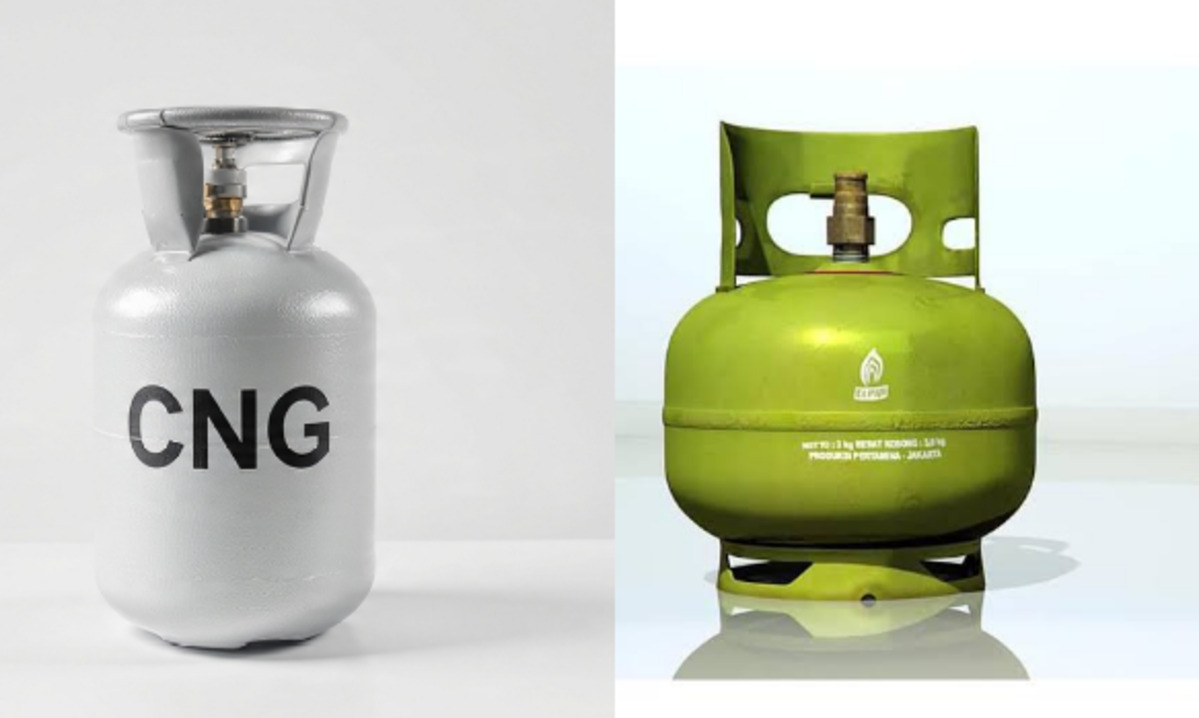
The question of why Liquefied Petroleum Gas (LPG) is far more popular than Compressed Natural Gas (CNG) often arises, particularly when safety is a primary consideration. Technically, CNG possesses characteristics that make it safer in certain leak scenarios. However, the popularity of an energy source is not determined by a single safety factor, but by the distribution ecosystem, cost, and ease of access for the end consumer. To understand why CNG is considered safer, one must examine the physical properties of both gases during a leak. Although CNG has an advantage in terms of its risk profile, LPG dominates the market due to the following structural and economic factors. LPG can be liquefied at low pressure, allowing a large volume to be stored in a relatively light and portable cylinder. This enables LPG to be distributed to remote villages by truck, motorcycle, or even carried by hand. Meanwhile, CNG remains in a high-pressure gaseous form, requiring very heavy and thick storage tanks, making retail distribution difficult without a pipeline network. CNG is heavily dependent on natural gas pipeline networks. In many countries, including Indonesia, gas pipeline infrastructure does not yet reach all residential areas. Building a pipeline network requires massive initial investment and a long time. LPG, as ‘energy in a cylinder’, does not require permanent infrastructure at the consumer’s location. For vehicles, CNG tanks are much heavier and take up significant boot space compared to LPG tanks. Furthermore, the installation cost of a CNG system in vehicles or industry is often more expensive due to material specifications that must withstand high pressure. Because of the constraints of gas distribution via pipelines, the number of Gas Filling Stations (SPBG) providing CNG is very limited and usually concentrated only in large cities. Conversely, LPG agents or sub-distributors are available in almost every residential neighbourhood. Governments in various countries continue to promote the use of CNG (or city gas via pipelines) to reduce dependence on LPG imports. However, this transition is a long-term endeavour. As long as access to pipeline networks remains uneven and high-pressure gas storage technology has not become lighter and cheaper, LPG will remain the preferred choice due to its practicality. LPG is more popular not because it is safer than CNG, but because it is more practical, easy to distribute, and has a mature market infrastructure. The safety of CNG is a technical advantage, but the ease of access of LPG is an economic advantage that is currently difficult for CNG to overcome for household consumers and small-scale public transport.