
Why Khamenei Is Being Buried Now, Four Months After His Death: Is His Body Intact?
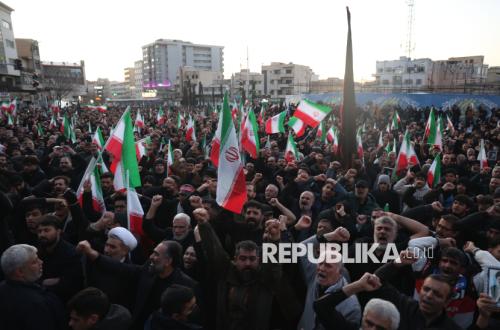
Only a few events in history can be compared to the mass funeral Iran is preparing for former Supreme Leader Ayatollah Ali Khamenei. The spiritual leader was killed in a US-Israeli attack at the start of the war on 28 February. His body has arrived in Tehran for a grand ceremony planned across at least five cities in Iran and Iraq, beginning on Friday. Government officials said the funeral on Saturday is expected to draw tens of millions of people, including several foreign dignitaries. Photographs in Iranian media and international agencies showed mourners carrying Khamenei’s coffin, draped in Iran’s tricolour flag, to the Grand Mosalla, one of the most important ceremonial venues in the Islamic Republic. Other images showed crowds at pre-funeral ceremonies dressed in black, with the coffin placed against a backdrop of red flowers and white butterflies fluttering in the air. The ceremony comes as Iran and the United States observe a fragile ceasefire after signing an initial agreement to halt the conflict. Pakistan, a key mediator in the US-Iran talks, said Prime Minister Shehbaz Sharif will attend the ceremony. Bihar Governor Syed Ata Hasnain and Minister of State for External Affairs Pabitra Margherita will represent India. China, Afghanistan, and Iran’s neighbours in the Caucasus region also said they would send representatives. Khamenei, a spiritual figure for many Shia, died at the age of 86 in an attack on his residential complex in central Tehran. His body will lie in state for three days at the colossal Grand Mosalla, which has been decorated with banners featuring his image and quotations. After the ceremonies in Tehran, his body will be taken to the holy Iraqi cities of Najaf and Karbala before being buried on 9 July at the Imam Reza shrine in the northeastern city of Mashhad, his birthplace. Perhaps more striking than the complexity of the funeral arrangements, which come more than four months after his death, is the symbolism of the ceremony itself. Iran’s ruling clerics are treating it as a display of public devotion to the Islamic Republic and proof that its revolutionary spirit still burns. Ayatollah Mohammad Saidi, Friday prayer leader in Qom, told state media that the massive turnout at the funeral procession of the martyred leader and other martyrs would essentially be another referendum for the Islamic Republic. The regime hopes to mobilise between 15 and 20 million supporters to flood Iranian cities, providing transport, accommodation, and food, to assert the strength of the theocratic state after surviving what it views as an existential war. Khamenei’s death and the rise of his son, Mojtaba, as the third Supreme Leader of Iran amid conflict with its greatest enemies, Israel and the United States, marks a pivotal moment in the Islamic Republic’s 47-year history. Mojtaba, who was seriously wounded in the attack that killed his father, has not been seen in new images since the war began. Reports indicate he will not attend his father’s funeral due to ongoing threats to his life.