
Why is Xi Jinping Visiting North Korea? Friendship or Bargaining?
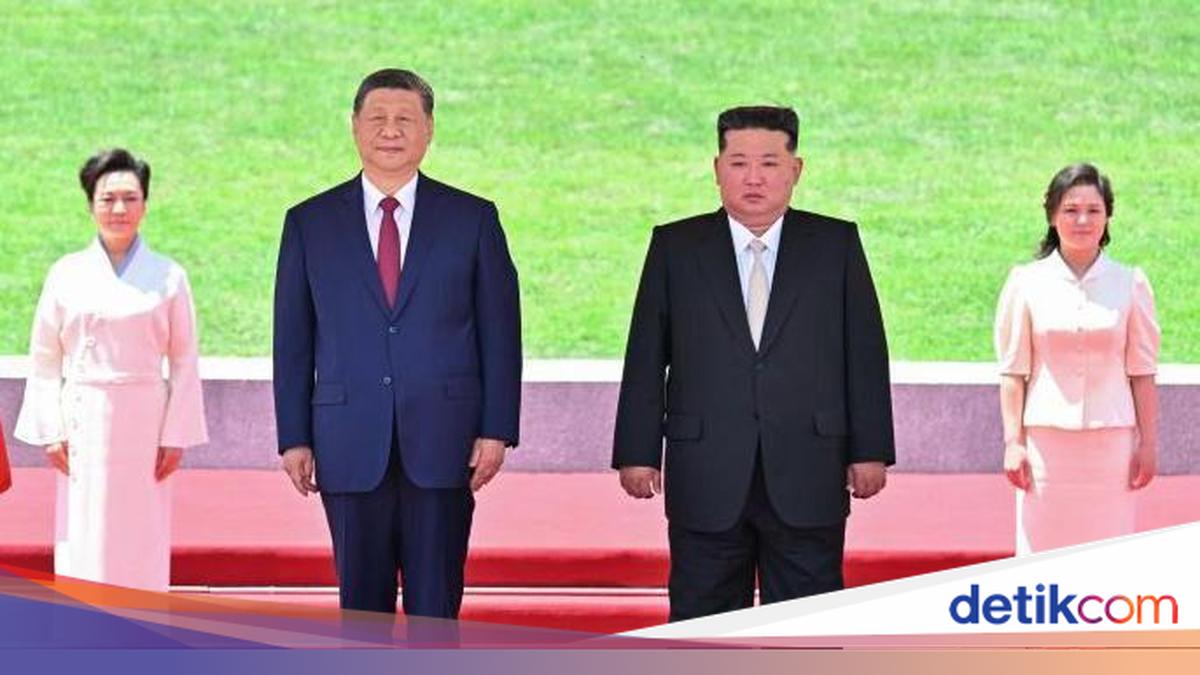
Beijing is attempting to reaffirm its influence over a partner that is strategically vital yet highly unpredictable. Chinese President Xi Jinping has pledged to strengthen relations with North Korean leader Kim Jong Un during a rare state visit to Pyongyang. Crowds gathered in the streets of the capital, from the airport to Kim Il Sung Square, to welcome the Chinese leader, with large banners describing the bond between the two nations as “unshakeable.”
Xi expressed his readiness to work with Kim to elevate bilateral relations to a “higher level.” However, the Beijing-Pyongyang relationship has not always been this close. Xi’s visit is viewed as more than just a reaffirmation of ties between neighbours; it is laden with broader geopolitical significance. For Xi, North Korea is a neighbour that cannot be fully controlled, yet cannot be abandoned. While both nations often describe their relationship as “intertwined in blood,” referring to the Korean War, recent years have seen growing mistrust.
China seeks stability on its borders and influence in Pyongyang without being dragged into a crisis triggered by North Korea’s nuclear ambitions. Consequently, Xi’s visit this week is likely more about bargaining power than mere friendship. Seoul believes China may be attempting to position itself as a mediator between North Korea and the United States, though Beijing may have other motives. Western diplomatic sources told the BBC that China is increasingly concerned about the expanding partnership between Pyongyang and Moscow.
Following his meeting with Russian President Vladimir Putin last week, Xi appears keen to ensure he can maintain control over Kim Jong Un, especially as Beijing asserts its presence on the global stage. The cooling of relations between Beijing and Pyongyang was subtly evident earlier this year, with minimal public messaging during the 75th anniversary of diplomatic relations in October 2024. Furthermore, the lack of high-level official exchanges throughout the year contrasted sharply with Pyongyang’s warming ties with Moscow.
North Korea’s closeness to Russia has caused unease in Beijing. Following the invasion of Ukraine, Pyongyang expanded military cooperation with President Vladimir Putin, culminating in a mutual defence pact. Investigations suggest that North Korean troops have been involved in the conflict, and Pyongyang is accused of supplying ammunition to Russia in exchange for oil and aid—a development that has unsettled Beijing. Ankit Panda, a nuclear policy expert at the Carnegie Endowment for International Peace, noted that China wants to protect its interests amidst the rapid convergence of Moscow and Pyongyang.
As North Korea becomes less dependent on China due to its relationship with Russia, Beijing’s bargaining position weakens. In response, China is attempting to reset the relationship. Late last year, Xi Jinping invited Kim to a military parade in Beijing, placing him alongside both himself and Vladimir Putin. This marked their first formal summit in six years, where Xi praised the trio as “good neighbours, good friends, and comrades in arms.”
Interestingly, no mention of North Korea’s nuclear weapons was made in public statements. According to Lee Seong-hyon of the Harvard University Asia Center, Beijing has “mixed feelings” regarding the Pyongyang-Moscow partnership. While the partnership complicates US strategy in various regions—indirectly benefiting China—the growing military cooperation could trigger a stronger trilateral military response from the US, Japan, and South Korea, which is a significant concern for Beijing.