
Why is the Rupiah Still Weak Despite BI Rate Hike?
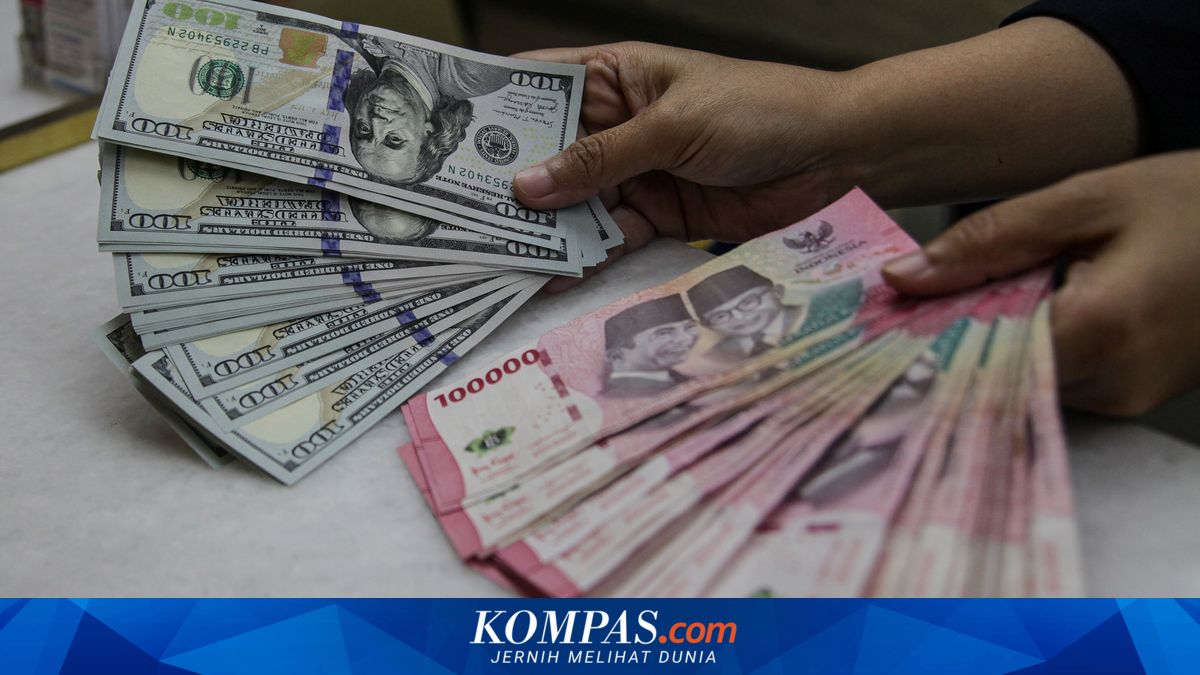
JAKARTA — The Bank Indonesia (BI) benchmark interest rate hike during this month’s Governor’s Meeting has failed to curb the rupiah’s depreciation. Although rate hikes are considered an effective measure to prevent rupiah depreciation, the currency closed weaker against the US dollar on Friday, 29 May 2026. According to Bloomberg data, the rupiah closed at Rp17,880.5 per US dollar, down 35.0 points, or 0.20%, from the previous trading day’s close. Syafruddin Karimi, an economist and professor at Andalas University’s Faculty of Economics and Business, explained that the 50 basis point rate hike to 5.25% and strengthened instruments like Bank Indonesia Rupiah Securities (SRBI) were insufficient to curb the rupiah’s depreciation. ‘The market does not just respond to rupiah yields but also assesses external risks, Current Account Deficit (CAD), depreciation expectations, fiscal credibility, and global interest rate trends,’ he told Kompas.com on Friday. With the forward market still hovering around Rp18,000–Rp18,200, investors demand higher compensation for currency risk. While foreign exchange reserves of around $146 billion provide a buffer, ‘the market is still testing BI and government consistency,’ he added. Karimi noted that monetary policy would be more effective with disciplined fiscal management, controlled imports, incoming export dollars, and coherent policy communication. ‘Rupiah cannot rely solely on interest rates; it needs cohesive policy credibility,’ he said. ‘This policy successfully turned a large outflow in Q1 2026 into a net inflow of $5.5 billion in Q2 through SRBI and Government Securities (SBN), preventing deeper depreciation,’ he added. Notably, BI previously raised SRBI yields and deployed around $10 billion of foreign exchange reserves this year, leaving reserves at $146.2 billion as of end-April 2026. Despite these measures, they were insufficient to halt the rupiah’s decline, prompting BI to aggressively raise the BI rate this month. Nanang explained that persistent external pressures, including a strengthening US dollar, high US Treasury yields, and risk-off sentiment from geopolitical conflicts, are to blame. ‘Thus, the 50 basis point hike and SRBI sweetener were insufficient to close the risk premium gap demanded by investors from Indonesia,’ he said. Moreover, BI research and historical studies indicate that interest rates effectively strengthen the exchange rate only in the absence of major non-economic factors such as political rumours, policy uncertainty, and social conflicts. ‘When these factors dominate, rate hikes merely limit damage rather than reverse the trend,’ he added.