
Why is the gold buyback price lower than the purchase price?
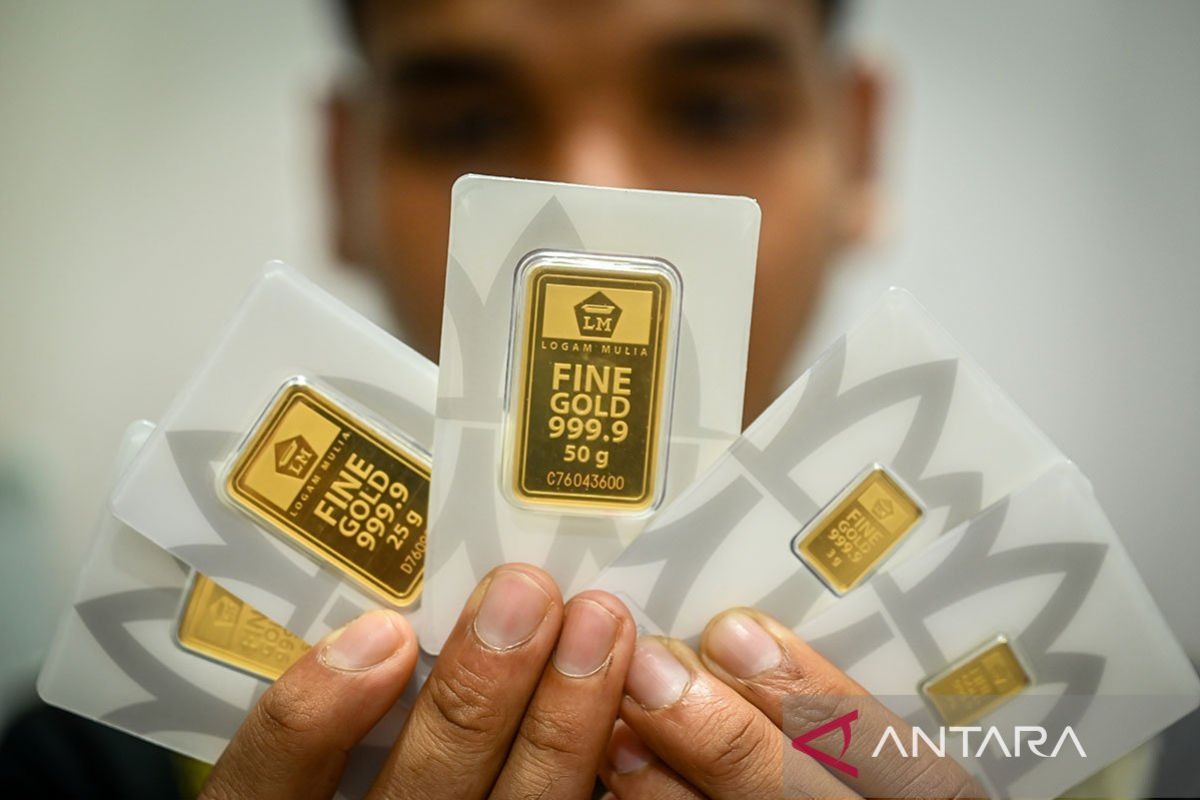
For those new to gold investing, one thing often causes confusion: when buying gold, the price can be quite high, but when attempting to sell it back, the buyback price is actually lower.
Even though the gold remains the same—the weight and purity are unchanged—the difference between the purchase price and the buyback price exists. This discrepancy is a common feature in gold trading, known as the ‘spread’.
According to Logam Mulia, the purchase price is what is paid when someone buys gold, whereas the buyback price is what is received when the gold is sold back. This difference is part of the gold trading mechanism.
There are costs involved in the gold selling process. The price of gold bars purchased by consumers does not only reflect the value of gold based on global market prices. Various costs are attached to the product, such as production, minting, packaging, distribution, and sales operations. Consequently, the price paid by consumers may be higher than the underlying market value of the gold.
When gold is sold back, the buyer or institution receiving the gold does not simply use the original purchase price. The buyback price follows market conditions and the prevailing price at the time of the transaction. For instance, Logam Mulia ANTAM explains that the buyback price follows global gold price movements and applies equally to various denominations and production years within its official buyback service.
Gold prices can also change after purchase. For example, if someone buys gold at Rp2 million per gram, and later global market conditions shift, the buyback price on that day might still be lower than the original purchase price. Conversely, if gold prices rise significantly, the buyback price can increase and even exceed the previous purchase price. Therefore, owning gold does not automatically guarantee immediate profit upon sale; the price increase must be large enough to overcome the spread between the purchase and buyback prices. This is why gold investment is generally more suitable for the medium to long term, rather than for very short-term trading.
In addition to the spread, the amount received when selling gold can be affected by taxes. In ANTAM’s current buyback service, transactions exceeding Rp10 million are subject to Article 22 Income Tax (PPh Pasal 22) of 1.5 per cent, which is deducted directly from the total transaction value. This provision is stated in the official Logam Mulia buyback simulations. This means that the buyback price seen on the official website may not be the full amount received if the transaction meets tax collection criteria.
Tax regulations for gold have also undergone changes. The Directorate General of Taxes explained that the government issued PMK Number 51 of 2025 and PMK Number 52 of 2025 to restructure tax provisions for bullion business activities, effective from 1 August 2025.
The physical condition of the gold also requires attention. For ANTAM gold bars, damaged packaging or lost certificates can affect the buyback process and value according to applicable regulations. Therefore, gold should be stored carefully, and packaging should not be opened or damaged haphazardly. However, the production year is not a reason for a lower buyback price in ANTAM’s official service; gold purchased years ago uses the buyback price applicable on the transaction day, not a price based on its production year.
So, does the price difference mean a loss? Not necessarily. The difference between the purchase and buyback price is part of the trading mechanism. Profit or loss is determined by comparing the buyback price, after accounting for applicable deductions, against the total initial purchase cost. As a simple illustration, if someone buys gold at Rp2 million per gram and the buyback price later rises to Rp2.2 million per gram, there is a gain of Rp200,000 before considering taxes or other fees. However, if the buyback price drops to Rp1.9 million per gram, selling at that time would result in a loss. Therefore, before buying gold, it is important to look beyond just the purchase price and consider the buyback price and the spread between the two.
Source: jawawa.id (https://jawawa.id/newsitem/why-is-the-gold-buyback-price-lower-than-the-purchase-price-1791161718)
Originally published by Antara (Indonesian) (https://www.antaranews.com/berita/5771100/kenapa-harga-buyback-emas-lebih-murah-daripada-harga-beli), translated from Indonesian