
Why Is Russia Secretly Expanding Putin’s Residence?
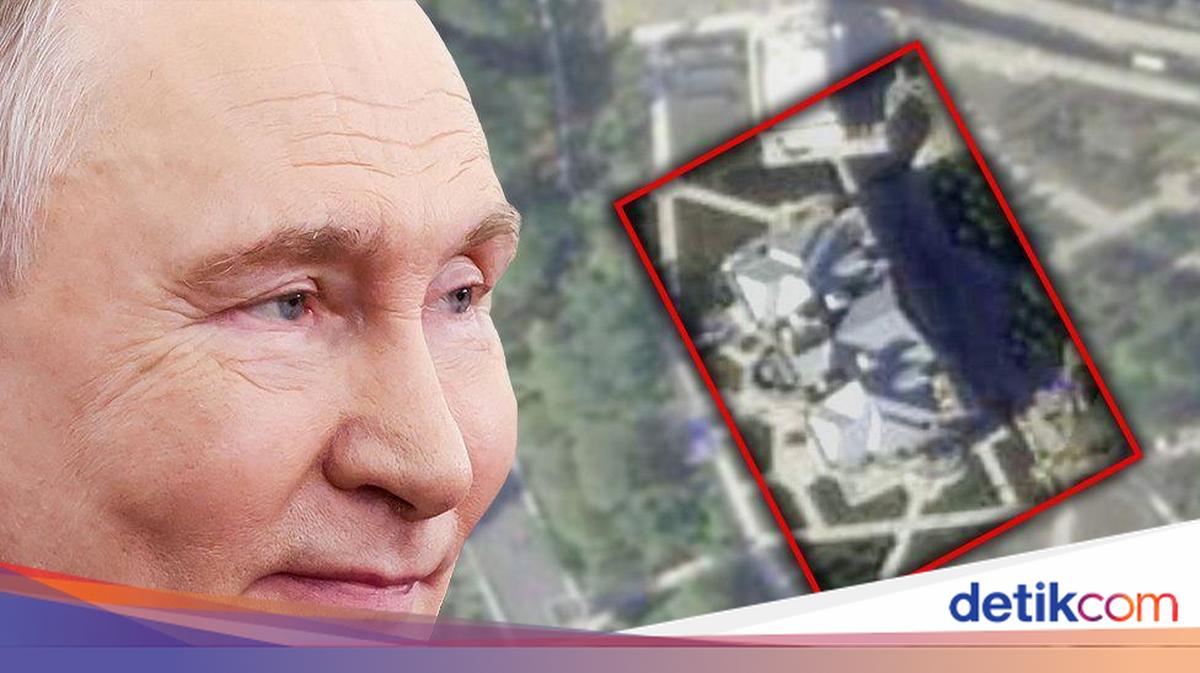
Court disputes, satellite images and construction job adverts offering accommodation by a swimming pool, free meals and cash payments have revealed how Russian President Vladimir Putin is expanding his residence on the Black Sea.
The Bocharov Ruchey retreat in Sochi was used by previous Russian leaders, from Nikita Khrushchev and Leonid Brezhnev to Boris Yeltsin.
Putin first stayed at the government-owned residence before his inauguration as president in May 2000. He has often hosted foreign leaders there.
In 2008, it became the official residence of the Russian president. This means the head of state can live and work there and perform all official duties, including those of commander-in-chief, said Vladimir Kozhin, head of the Department of Presidential Property Management of the Russian Federation.
Putin visited Sochi 24 times in 2021, a year before the full-scale invasion of Ukraine, but only twice in 2024 and 2025, according to the Financial Times. His reduced travel to the Black Sea coast coincided with Ukrainian drones reaching the shoreline more frequently.
However, an investigation by BBC News Russian has revealed that the Russian government is rebuilding the residence from scratch on a much larger scale and with significantly tighter security.
The demolition of the Russian head of state’s residence began in 2024, without any public announcement by the authorities. By September 2025, a large excavation had appeared at the site.
In 2026, Russia’s state security service, the FSO, strengthened protection around Bocharov Ruchey and established a security zone covering more than three square kilometres.
By autumn 2026, satellite images analysed by BBC News Russian showed the roofs of several new large buildings, covering a much wider area than the former residence.
However, not every part of the original complex has been demolished. Bocharov Ruchey-2, built for the 2014 Sochi Winter Olympics, remains intact. Putin continued to receive high-ranking guests there, including International Atomic Energy Agency chief Rafael Grossi in 2024.
The authorities have made no announcement about the new construction. But BBC News Russian’s investigation uncovered a trail of documents.
In a court ruling concerning a dispute between contractors, BBC News Russian found a reference to a state defence procurement contract with the code 2327202903572000000000000.
Information about such contracts is restricted, but the code reveals several important details. The first four digits indicate the contract’s signing and end years: 2023 and 2027. The next three digits, 202, are the FSO’s code, identifying it as the contracting authority.
By examining further court rulings concerning disputes with subcontractors working at Bocharov Ruchey, BBC News Russian found that the main contractor was TSI Group, registered in Crimea.
One dispute involved the Sevastopol design institute Voenmorproekt-30, which fell behind schedule only a few months after construction began, in early 2025. Breaches were also identified in the construction of a wall for the “main house”, work awarded to a company from Orenburg.
BBC News Russian also found social media and recruitment-service adverts seeking construction workers, including bricklayers, steel fixers and concrete specialists. Some mentioned Bocharov Ruchey.
“A residence is being built,” read one notice. “Access control system – Bocharov Ruchey.” Another warned: “This is a strategic facility.”
One advert, posted in January 2025, said builders were urgently needed for a two-storey building at a “restricted-access site requiring a pass” in Sochi, and offered cash payment. Another, later that year, referred to a four-storey building at a site with access controls and passport checks.
Putin (right) works out in his private gym at Bocharov Ruchey in 2015 with then Prime Minister Dmitry Medvedev. (Kremlin)
Initially, only Russian citizens with no criminal record could apply. “A background check is required,” one advert stated.
The requirements later became less strict. Applicants were also sought from Belarus, Kazakhstan and Kyrgyzstan. They were offered accommodation “in a hostel with a swimming pool” or in flats, three meals a day, free equipment and work clothes.
Preference was given to complete teams “with their own engineers and supervisors”, although individual workers on shifts were also accepted.
“Technical supervision is not strict,” one advert said. “Russia’s internal security service monitors the cash flow, so everything is fair and transparent.”
By 2026, the site was recruiting workers for interior work, including fitting lights, plumbing and installing doors.
“The volume is enormous; we need a lot of people – but they must be specialists,” one recruiter wrote, warning that the facility was “closed” and all employees would undergo security checks.
Construction Minister Irek Faizullin (left) and TSI’s Alexei Fomenko discuss the reconstruction of the Artek international children’s centre. (Minstroy RF)
TSI and its affiliated group, Transstroiinvest, are not newcomers to construction projects linked to the government and security services.
Before Bocharov Ruchey, Transstroiinvest had built another residence for Putin. In 2019, the independent Russian investigative outlet Project reported that the company was involved in constructing a state residence in the settlement of Oliva on the southern coast of annexed Crimea. The site had previously housed a state retreat used by the Soviet party elite and, later, senior Ukrainian officials.
BBC News Russian found court rulings confirming this, along with court documents that referred to the facility as a “presidential residence”.
Transstroiinvest continues to work in Russian-occupied Ukrainian territory, including on the renovation of Pobeda, Mariupol’s oldest cinema, in the city occupied by Russia in 2022.
Between 2022 and 2025, TSI also secured 54 contracts worth about US$330 million (around Rp5.9 trillion), according to state contract records, for the reconstruction of the Artek international children’s centre in Crimea.
BBC News Russian sent questions about the Bocharov Ruchey construction to representatives of Transstroiinvest, including property developer Alexei Fomenko, 47, believed to be a beneficiary of TSI; Putin associate Arkady Rotenberg, who has been linked to Fomenko; and presidential spokesman Dmitry Peskov. None responded.