
Why is pole climbing a 17th August tradition? Here's the history
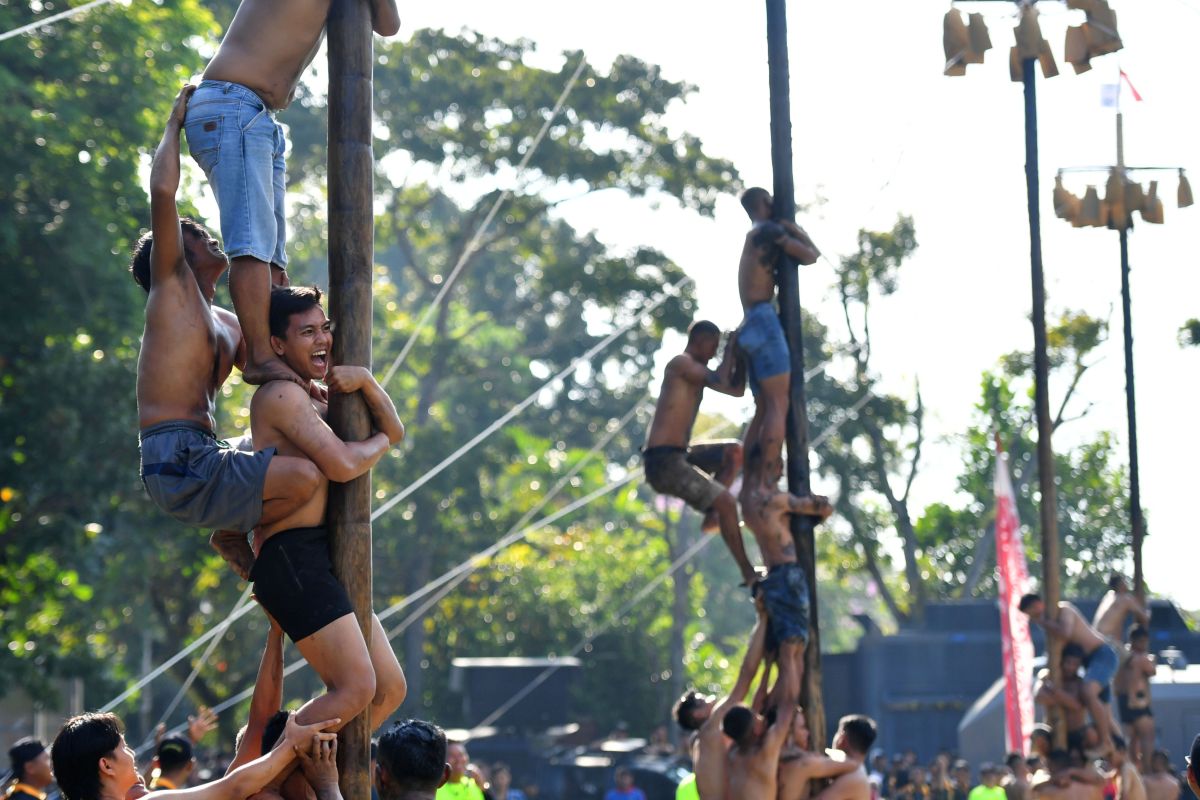
Panjat pinang has become a competition synonymous with the celebration of the Republic of Indonesia’s Independence Day every 17th August. Behind the festivity, this game has a long history dating back to the colonial period.
Panjat pinang involves climbing a betel nut trunk or a pole that has been made slippery to retrieve various prizes hung at the top. Participants usually form teams and support each other to reach the summit.
Originating from the colonial era, the history of panjat pinang in Indonesia is linked to the Dutch colonial period. The competition was reportedly held at various major events organised by colonial society, such as parties, weddings, and celebrations for the Queen of the Netherlands. Several sources also mention that this type of pole-climbing game bears similarities to a tradition in China known as qiang-gu. However, the history of the game’s origins has several versions, so information regarding its roots should be treated with caution.
After Indonesia gained independence, the meaning of panjat pinang evolved. The game, which previously had a colonial background, transformed into a form of public entertainment during the celebrations of the Republic of Indonesia’s Independence Day. Communities hold the competition in their neighbourhoods, schools, and various community activities. The prizes provided are also adapted to the needs and capabilities of the organisers, ranging from basic foodstuffs to household appliances and other items.
Panjat pinang is no longer seen merely as a competition to win prizes, but also as part of the independence celebrations that bring people together in a joyful atmosphere. The game is often interpreted as a reflection of the spirit of struggle. To reach the top, participants cannot rely solely on their own abilities. They must work together, devise strategies, and support one another. The slippery trunk means participants must repeatedly try after failing to reach the top. This condition is then viewed as a symbol of persistence and never giving up in the face of various obstacles.
The value of gotong royong, or mutual cooperation, is one of the main messages evident in this competition. Participants at the bottom serve as support for the others until one team member successfully reaches the summit and retrieves the prizes.
To this day, panjat pinang remains one of the most widely held competitions leading up to and during the Independence Day celebrations. Its popularity endures because the game can involve many people while providing entertainment for both participants and spectators. More than just a competition, panjat pinang has undergone a shift in meaning from a colonial-era game to a tradition closely associated with the independence celebrations. The values of cooperation, mutual assistance, persistence, and togetherness keep it relevant in the Republic of Indonesia’s Independence Day festivities.